Saturday, February 22, 2014

Joan Bertin: Banning Books: Where Do We Stand?

Joan Bertin is the executive director of the National Coalition against Censorship. One of the organizations founding members is Judy Blume.

Now in it's 40th year, in partnership with of over 50 organizations, the National Coalition against Censorship works to defend intellectual freedoms. They have a good success rate, about 80%, when they get involved with a book challenge before the book is removed from the shelf. It's more challenging if it has already been removed.

Young adult books are the most widely challenged.

Joan turns to Ellen Hopkins (sitting on the panel): "Thank you, Ellen, for always producing work for us to defend."

Most challenges fail when there is resistance.

There are particular sites which review and rate books (and other media) in subjective ways. A great story can be lost when those go through only trying to flag the number of time profanity is used. These reviews send a message to parents to be fearful.

Joan says that we can't stop these sites, but it's concerning when school districts use the reviews/ratings as criteria for what is used in their schools.

If you want to protect intellectual freedoms, report challenges early. Alert your publisher and encourage them to issue their own statement. It can be very important. As writers, write stuff and stand up for other writers under attack, and stand up for kids who deserve to explore literature. Get involved with the school board, or even run for the school board. Often those who want to ban books are the ones who run for the school board, not those who support intellectual freedom.

Ellen Hopkins: Banning Books - Where Do We Stand?

The extremely accomplished Ellen Hopkins
Ellen Hopkins is the bestselling author of eight novels for young adults.

She's also written more than 20 nonfiction books, as well as a couple of adult novels.

Ellen is no stranger to controversy when it comes to book content. In 2010, she was the most-challenged author in the United States.

Her books about tough contemporary issues such as drug use and prostitution have been frequently challenged. She fights back vigorously, knowing from personal experience how vital some of these topics are for young readers to encounter in books. Eighteen years ago, her daughter tried drugs, and has struggled ever since. Sadly, Ellen reported that her daughter returned to prison today, and Ellen has become the guardian to her three young grandchildren.

Ellen has made it her mission to show the consequences of these painful decisions in literature. She writes books to change lives in a positive way.

"I was damn well determined if I was going to turn one kid away from that path, I was going to do it," Ellen said. "We write for our readers. We know who we're writing for. We know where they're living."

"If it's offensive to some parent, I don't care," she said. Books can help kids who've experienced traumas like sexual assault understand that they're not alone. 

She urged all of us writers to tell the truth, no matter what type of story we write. "That's your job as an author, and we will stand behind you." 

Elizabeth Wein Keynote: Bearing Witness: Authorial Responsibility

Elizabeth Wein has been an SCBWI member since 1991. Her first five books for young adults are set in Arthurian Britain and sixth century Ethiopia, but she is best known for her recent World War II thrillers Code Name Verity and Rose Under Fire. Code Name Verity was showered with an array of accolades including the Edgar Award, Printz Award Honor Book, Boston Globe/Horn Book Award Honor Book, UK Literary Association Award, and SCBWI Golden Kite Honor Book. She and her family live in Scotland. You can find out more about Elizabeth at www.elizabethwein.com.


Elizabeth shares her story, from the last time she attended this conference being 12 years ago (when she had only one book out and a modest three book deal) to what she's learned since about the positive - and negative - aspects of success.

She speaks of tackling jealousy, self-consciousness about her own work, and the sense of wanting more recognition for years. Yet, when she looks back, she's "grateful it worked this way."

She now approaches her career with appreciation, and notes

"the tide comes and goes and comes back again."

She urges us to consider how important it is to maintain grace - in the face of adversity and success. (Things like not posting negative comments about anybody in any forum, not swearing in public, sending thank you notes etc…)

And then she speaks of how individual acts of professional courtesy have cumulative effects that are immeasurable. She lives this by shouting out to her writer friend Katherine Kirkpatrick, and even shares a poignant anecdote about Katherine's work - and challenges overcome - on her latest book, "Between Two Worlds."

Elizabeth continues to speak of responsibility being "something of a mantra" for her.

When asked about her message to young readers, she shares that running through everything she's written from The Winter Prince on the message is the same  - "Take responsibility for your own actions."

She reminds us that we, as writers, "are responsible for putting ideas into people's heads at the earliest of ages."

Elizabeth discusses research and the line between being a novelist and not a professional historian, the line between risk and responsibility, and our responsibility as writers and illustrators to our readers, the gatekeepers, in all our personal interactions, and even our responsibility to our imagined characters! This was particularly fascinating, as she talked about how it applies to our main characters, and even our villains, and how they have the task of taking responsibility for what they do as well.

She tells us a great story about researching 6th century coins in the British museum just to get a sense of the time frame she was planning to write about, and how a discovery she made looking at a coin in the museum became a major theme in her Lion Hunters series.

And another about how she could have hired a fact checker, but then she wouldn't have discovered, when she was trying to figure out what the Special Operations Executive called the plastic explosives they used in sabotage operations in Occupied Europe, the detail that plastic explosives smell like marzipan.

She leaves us pondering moral ambiguity and the responsibility we need to take for our actions - and stories.


Jane Yolen: Seven Essential Things You Need To Know About Writing In Verse

Jane Yolen is an icon. She's known as the Hans Christian Anderson of America… Or, as she put it when someone asked her about it in the session, The Hans Jewish Anderson!

Jane Yolen leading her workshop

Jane shared...
advice and poems
poems and wisdom
wisdom and insight
insight and advice
advice and poems
Jane shared... and we were inspired.

She encouraged us to try different forms and spoke about the distinction between writing poetry for little ones, for 1st through 3rd graders and up through Young Adult.

Some moments that shone so brightly they need to be shared here:
"You must always read a poem aloud."
"Words are never too big for children as long as they are the right words."
and

"We poets are code-masters"

Explaining if you want to go further into a poem, you need to encode it (with references, innuendos, deeper meaning, etc…)

She shares tips of where to submit poetry, ideas for collections she won't do (and that maybe attendees might consider) and reads us poems by many other master poets, her own published work, and even some as-yet-unpublished poems she's written that felt like gifts - because we heard them before the rest of the world.

We even got the perfect gift on our chairs:


A poem.

Jane's workshop was essential, honest and inspiring!

Sara Shandler: Developing and Selling a Series

Sara is the senior vice president of editorial at Alloy Entertainment, a creative think tank that develops and produces books, TV series, and movies.

She talked to us about how her company develops series, which she loves because she can stay with a great character for a long time.

Alloy has weekly brainstorming ideas where eight people pitch an idea or two. Every year, 10 to 15 ideas get developed. "There are no bad ideas, there are ideas that are just not right for right now," she says.

It even happens that ideas that have been pitched in the past are repitched and developed years later, because sometimes the timing just isn't right.

When they have a great idea, they partner with writers and develop them. Sara's job combines a bit of writing, agenting, and publishing. She shared a lot of tips with us about how to develop a series; here are three:

Have a clear concept for your series
You have to pitch an idea in a sentence. This is a good litmus test for whether your concept is clear. You have limited time to capture someone's attention, and there are a lot of ideas out there.
 
When Sara sends out queries, she sends out very short pitches, with a paragraph about the concept, a paragraph where we are in the story at its beginning, and a third that summarizes the essentials of the plot, with comparable titles, and information about the author.

She gets query letters that are just too long.

Don't try to think of a series. Think of a great idea.
Almost anything can be a series if you have a few things: amazing characters, ongoing narrative potential, a series obstacle.

Every book has an arc with its own contained story and has to feel satisfying.

"A series-long obstacle is super-important," she said. An ongoing love triangle like the one in Gossip Girls can work. So did the mystery of A's identity in Pretty Little Liars.

Love what you write. Write what you know. Write honestly because everything counts.
The best concept in the world will not be a successful book without amazing execution. It's hugely important.

It doesn't mean your book needs to be you. It's finding something of yourself that you identify with in your character. That will make the character go from generic to special. 

Art Director Lily Malcom: Seven Essentials You Need to Know About Creating Picturebook Art

Lily Malcom is one cool friend, I hear, and you can get to know her a little in this interview she was forced into doing with me.

Today, Lily gives us seven fantastic tips and I'm going to tell you about three of them, so don't say I never gave you nothing. All images in here are books Lily has worked on, except, of course, this first one, Lily is not an immortal vampire art director.


First she gives us this great quote from Sendak:

Caldecott’s work heralds the beginning of the modern picture book. He devised an ingenious juxtaposition of picture and word, a counter point that never happened before. Words are left out — but the picture says it. Pictures are left out — but the words say it. In short, it is the invention of the picture book.

Lily advises approaching the creation of the art and words for a picture book like hopscotch, each step gets you there and back again to develop a fully realized book.


Lily says, "Your art is a crucial part of the picture book. If anything, you could take away the words and still find meaning in the book. It's your job to make that happen by creating images worthy of attention."


Tip #1: Know your audience

In a nutshell, children aren't dumb. They are visual before they are verbal. Create beautiful work with all ages in mind and strive to have it work on all levels, what can you add that will make the reader want to reread that book, making it an instant classic for that family? 


Lucky for us conference attendees Lily is going to help us figure out how you do that, how you tease out those things in each picture book spread.

Tip #2: Mulling
Read the story then put it away. Do this as an author, designer or illustrator. Do it with your covers, your spreads, character designs. Time away from the project brings clarity.


#4 Understand the Page
Trim sets the tone of your book. The Quiet Book is small and therefore intimate, vs. a book about race cars or something like Along A Long Road which has an exaggerated landscape trim because it's all about distance and speeding from one end of the spread's edge to the other.


Lily says, "Understand the edges of the page, they are your friends, they can capture and frame your images for you and set a mood, if there's a lot of space between your character and the page edge things feel expansive, if they are busting into the sides, it can feel claustrophobic.


Layout of the page lets you balance images and text on a page and you can force people to read what you think should be "read" first. You have to think about this from the very beginning of the sketch process for the book. Don't leave it up only to the designer, think these things through.


Anica Rissi: 7 Essentials You Need To Know About Writing Contemporary Realistic Fiction

Anica Rissi is Executive Editor at Katherine Tegen Books, an imprint of HarperCollins, where she specializes in YA and middle grade fiction. She was previously an executive editor at Simon Pulse and an editor at Scholastic. Anica is drawn to YA novels with edge and grit: flawed protagonists, boundary-pushing plotlines, intense (or doomed) romance, unexpected or dark humor, and heart-crushing honesty. She loves middle grade stories that change what the reader thinks is possible in the world. Anica’s debut chapter book series launches in 2015 with Anna, Banana, and the Friendship Split (S&S BFYR). She tweets about bookish things at @editrixanica.

Anica Rissi


Anica is brimming over with advice that's pithy and pretty darn insightful, sharing her thoughts in a self-admitted "tough love" kind of speech. Having said that, there's a warmth and clarity to her words, mixing both the "love, gentleness and care" we're supposed to treat ourselves with as we're drafting our stories with the "deep tissue massage" we need to engage in when revising those stories.

She encourages us to not be afraid of showing that life is ugly, hard and beautiful, saying:
Honest fiction lifts the stigma of what it means to be another human with scars. And that's every human being, isn't it?
and challenges us to consider:

Do your details really matter or are they lazy shorthand?

She explains:

If I can tell what kind of person your character is because she has a blue streak in her hair, or her tights are ripped or she listens to Kurt Cobain to show she's unique or depressed - you have to do the work elsewhere to show those things about the characters even without those external signifiers.

What's unique about how your character shows sadness? If it's just a blue streak in her hair and listening to Kurt Cobain, dig deeper.

Anica talks about relationships in our writing, as in this discussion of the Best friend -

Why? What is it about that person that the main character gets from interacting with them that they don't get from being with other people?

"If they're really a best friend, I need to feel that chemistry."
No sidekicks or having characters in the book for the sake of being in the book - they need to be real people, with layers and shades of gray.

Some advice is not just wise, but uproarious, like

"Don't have your characters listen to 90s music just because you grew up listening to it. It doesn't make your character seem cool and retro. It just makes you seem really old."

Anica talks about so much more, including about how edgy you can go, how important it is to step back from your manuscript, and takes lots of questions - it's an amazing presentation!

Jeannette Larson: Writing Picture Books

Jeannette Larson is senior executive editor of Houghton Mifflin Harcourt Boooks for Young Readers.


The packed room starts by giving a loving shout out to all those many picture books we all loved as kids.

Because kids love picture books (and favorites stay with kids always), we've got to get it right and do it well.

7 Essential Ingredients of a Great Picture Book:

  1. Originality
  2. Rhythm
  3. Economy (less is more)
  4. Conflict
  5. Wholeness
  6. Purpose
  7. Authenticity 
7 Essential Ingredients of a Writer En Route to a Great Picture Book
  1. Curiosity
  2. Love of Language
  3. Observance
  4. Flexibility 
  5. Patience
  6. Courage
  7. Honesty

Jeannette shares bits of several picture books…always fun to hear.


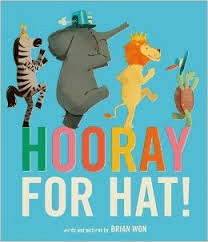
HOORAY FOR HAT will be out later this year. 

Tessa Woodword: Writing New Adult Fiction

Tessa Woodward sitting in a garden of books.
An eight-year veteran of HarperCollins, Tessa Woodward edits romance, women's fiction, mystery, and some creative nonfiction.

She gave us the seven essentials of writing New Adult fiction, a category that's so new there really aren't experts yet. In the past year, though, the category has gained steam, especially at HarperCollins and Simon & Schuster.

"We've taken New Adult and decided it's going to be a thing," she said. "And I'm glad, because I really like it."

Here's a sampling of the seven essentials she's learned along the way.

The first rule of New Adult: There are no rules.

The first NA book she encountered (TAKING CHANCES by Molly McAdams) had a love triangle, which is common in YA, but not at all in romance, which tends to be one guy, one girl, and a happily ever after ending.


Another rule that was broken: You can't set a book in college. This turned out not to be true.

Also, throw out the idea of what a writer is. Many success stories just wanted to tell a story, not be a writer with an MFA. Books can also come from anywhere, not just agents. The Internet and sites like wattpad have been huge.

Rule 2: NA is not YA with more sex

Most of them do have a lot of sex in them, but you can't just age up a YA and "add some dirty scenes." They are not the 50 Shades of YA.

At their core, NA novels are romances. YA is much more about coming of age and finding your place in the world, where NA is coming of age and finding your place in a relationship.

Rule 3: The audience isn't 18- to 24-year-olds

It's women who are older than that, primarily. And the titles tend to sell best in e-book (and it doesn't matter whether they are trade paperback, e-book original, or mass market titles).

"As long as you're going to have a great e-book publication," she said, "you're set." 

The books need to be high drama and high emotion, and after that, anything can work.

"Emotion is key. Oh, the drama in these books. I kid you not," she said. These arguably unrealistic fantasies take you out of your humdrum college experience with libraries and watered-down beer. "As crazy as some of them are, they're enjoyable."


Tim Travaglini and Abbi Glines: The Future of Authorship

One sign you haven't been trying to break into publishing long enough is if you haven't seen Tim Travaglini kiss his biceps and tell you his roller derby name is Harm's Way. Tim is a veteran of our industry in all capacities—editor, bookseller, marketer, soldier, tailor. He's currently the director of children's acquisitions for Open Road Integrated Media and continues to enjoy bow ties. He says what Open Road is doing is not necessarily a new model, they're preserving legacies and reviving backlists; picking up books from iconic authors whose earlier works may be out of print and whose rights may be available. Open Road is partnered with many children's publishers to produce digital versions of their backlists. There is some original children's publishing happening at Open Road, Tim says, but by and large those original titles are continuations of series that have gone out of print before ever getting to finish.


Abbi Glines joins us as a traditionally published and self-published author out of Alabama, and though I have never seen her kiss her biceps, according to her Twitterfeed she is a fellow big fan of New York and just got to see The Phantom of the Opera.

In 2009 Abbi decided she wanted to write a book, and when she shopped it around, she was turned down a whopping 55 times. She kept all of those rejection letters, including one from her current agent, "But I would have turned me down, too, I wasn't prepared." 

Abbi kept writing and in 2011 self-published. Her marketing efforts included getting on social media and it's there that she started "building a tribe." By sharing excerpts of her books on her web page, and videos on Youtube her social media presence grew organically (and today she has over 38,000 followers on Twitter). Five books later she was on major bestseller lists and was being contacted by literary agents. Even after getting some of her books picked up by traditional publishers, Abbi continued to self-publish, but says now she's going the traditional route because of more opportunities.

Lin: Abbi, you mentioned your first fiction was not good...
Abbi: BAD, it was bad. My first book was edited, but not well. Just because you can buy an editor online to edit your self-published work doesn't mean they're a good editor. 

Tammara Webber contacted Abbi to tell her how much she liked Abbi's first book's story, but that it was the worst editing she'd ever seen and Tammara wanted to help. She and Abbi have been friends ever since.

Lin: What are your thoughts about digital book sales and reaching audiences that aren't freely online (8-year-olds vs. teens who have nearly constant and unlimited online access)?

Tim: "The older you go up in age range, things that don't require art, the more success a digital book has... The bottleneck for other categories and genres is the devices themselves. The biggest you can get an image is whatever the limit is on the device..." Illustrations still aren't looking good on many devices, Tim says the iPad is an exception.

Romance does well digitally because their readers are voracious, you see those books at supermarkets, those titles can sell at a mass market level and those readers'll buy everything everywhere they can.
Tim's advice for other genres and categories: "Depending on the animal, you have to be aggressive with figuring out who your niche market is and then go and preach to them."

Lin asks Abbi why she embraced traditional publishing even though by doing so she went from keeping 100% of her books' profits to only 10%.

Abbi: It was definitely a pay cut to go from self to traditional publishing, I did it for exposure, to be on a shelf in bookstores, a Walmart, or a Target. It is helpful to have a publisher's support behind you, making sure you get your work well edited and designed and seen.


Jane Friedman: The Future Of Authorship

Jane outside
Jane (left, on the big screen) on the panel


Jane Friedman has spent over fifteen years in the publishing industry as an editor, publisher, and professor. Currently she serves as the web editor of the Virginia Quarterly Review at the University of Virginia, where she also teaches digital publishing and online writing. Her newest digital media initiative is Scratch Magazine (www.scratchmag.net), a quarterly magazine all about the intersection of writing and money. Jane was also the publisher of Writer’s Digest, and her expertise on the transformation of the publishing industry has been featured throughout many events and media, including NPR’s Morning Edition, Frankfurt Book Fair, Publishers Weekly, SXSW, and Nieman Journalism Lab.

Her opening statement on the panel reflects on how much has changed in the last fifteen years, saying,

"Now that everyone can publish, everyone does publish."

She raises important questions:

How is work discovered - and what's the role of companies like Apple, Google and Facebook who control how people reach each other?

What should be/will be publishers' role?

and

How do author careers get made?


On creating author platforms, Jane advises it should be organic, slow and about connecting with readers.

"Platform grows out of your body of work."

The panel discusses how the the bad rap of self-publishing "has disappeared or is rapidly disappearing" - that's a quote from Paul Aiken, executive director of the Author's Guild (which now accept self-published authors as members.)

Jane suggests there can be an experimental approach, with self-publishing mirroring technology startups - it doesn't have to be perfect the first time. And she referenced Abbi Glines' story that Abbi just shared on the panel of how her "The Vincent Brothers" (one of her first self-published books) wasn't as good in that initial launch, and when it was acquired for traditional publishing (Simon Pulse) she went back and spent a year to fix the book. She became a better writer and built her following as she kept writing and publishing.

The panel discusses niche markets, marketing, and what authors have to weigh between self-publishing and traditional publishing - it's a fascinating discussion!

Paul Aiken: The Future of Authorship


Paul Aiken, above, is the executive director of the Author's Guild, which advocates for the rights of writers in many ways.

He was part of a panel that spoke about the future of authorship.

One thing that's important to remember in this rapidly changing era: Even in so-called golden ages, artists have struggled, he said. "There's a tendency to romanticize the past... What's really changed in the last 10 years is the amount of retail shelf space that's available for books."

That shelf space has declined by 60 to 70 percent. This is particularly challenging with picture books, which need to be picked up and held, he said.

Success is still a mix of "challenge, moxie, and luck." And we all have to be able to adapt, he said.

Paul had lots of advice and insight for self-publishers. First, the guild represents self published members as well as traditionally published ones. For an associate membership, you have to have earned $500 a year from your writing. Full membership requires you to earn $5,000 a year.  How you earn it as an author doesn't matter.

"We don't care if publishers have taken a cut of your money," he said. "It's fine if you take all of it yourself."

What's more, any stigma on self publishing has disappeared or is rapidly disappearing. In general, though, genre publishing is doing better. Romance is working well for the self-published, picture books less so.

But you have to be careful. Scam artists have always been there. "If you see anything called a 'platinum plan,' get the hell away from it,"  he said. "There is a cottage industry set to prey on you."

"There is no cookie-cutter approach that's going to make you a bestselling author," he added. "Look for proof that somebody who's going to help you do whatever has succeeded at it."

There are people who promise you videos, marketing plans, high-priced editing: Be sure to check their credentials. The Author's Guild gets complaints all the time (no so much from guild members as from others).

Jean Feiwel: The Future of Authorship

Jean Feiwel is a pioneer in our field. As editor-in-chief at Scholastic, she created middle-grade series paperback. Currently Jean is at Macmillan where she launched Feiwel & Friends and a paperback program called Squarefish.

A year ago Jean was on a train looking over the bestseller list and noticed a self-puslished book called SLAMMED. She got it, read it, and loved it. She then went after it but lost it at auction. Jean went after another with the same result, and decided to take a different approach. As a fan of talent-based reality shows, Jean liked this idea of marrying it with publishing, having a fan-base bring forth new talent. With that idea, she created Swoon Reads, a teen romance imprint.


How it works:
1. Submit a manuscript
2. Readers rate and comment
3. Highly rated manuscripts are read by Swoon
4. Swoon-worthy books are given a contract

This month Swoon Reads announced their first list. Both print and e-books are release simultaneously.

Jean says the interesting thing you see when crowdsourcing books is a different kind of trend than publishers think there are out there.

Self-published authors ask: What do I need you for?
Jean: Our editorial, our marketing, our partnership. Publishers add something to the equation.

The Future Of Authorship panel begins!


Lin Oliver (far right) expertly moderates the panel of, right to left: Paul Aiken (Executive Director of the Author's Guild), Jean Feiwel (SVP Publishing Director MacMillian Children's Books), Jane Friedman (Web Editor, Virginia Quarterly Review), Abbi Glines (best-selling author of both self and traditionally published books), and Timothy Travaglini (Director of Children's Acquisitions for Open Road Media.)

Jack Gantos Keynote: #NY14SCBWI

Jack Gantos is the kind of guy who can even make a list sound funny.

This list, however, is only funny because of what it's missing: a Caldecott.

Check it out:
  • He won a Newbery for DEAD END IN NORVELT. 
  • He snagged a Printz Honor for HOLE IN MY LIFE; 
  • a National Book Award finalist spot for JOEY PIGZA SWALLOWS THE KEY; and 
  • A Newbery Honor for JOEY PIGZA LOSES CONTROL.
There are more, but you get the picture.

This literary legend talked to us about how he shapes characters and stories, cracking us up with tales and pictures of his childhood (including the time he thought he shot himself in the face).

An incredibly disciplined writer, Jack relies on a secret ingredient: "The rule of my life is that I always have to live next to great libraries, because I write ALL of my books in libraries."

In these libraries, where he spends 200 days a year, he works for eight hours a day writing and revising. Every book he writes has at least 100 drafts. (Yowser!)

He gave us great and hilarious advice about his approach to his work. If you want to start with a great book, great characters make all the difference in the world, he said. "The character will carry a weak plot, but a weak plot won't carry a lousy character."

Jack talked about several characters he loves: Max from WHERE THE WILD THINGS ARE, Miss Viola Swamp, Kevin Henkes' Lily.

As he ponders character when he's working, he does his best to organize the thoughts that come rather than control them.

"I don't know about you, but the way I think is very random. Thoughts bombard me from all angles," he said. "If you wait all day for the perfect thought to come into your mind, you will not get it."

For picture books, Jack draws a 16-box grid. The beginning ones contain character ideas. The middle, problem. The end is resolution. He uses 16 post-it notes.

"If you say a character feels something in a book, that feeling has to transfer into the reader." 

He also insists on two endings for each picture book, one that resolves the plot and one that satisfies emotionally.

On structure

We have to see the content of the story, but also how it's arranged--the structure. To demonstrate this, he told us the story of his childhood watch: why he wanted it, how he got it, and what happened to it.

SPOILER ALERT: It ended tragically, in a shower of broken glass and cogs.

Picture books and novels have the same structure. They start with character, setting, and problem. They move into action and plot, hitting a crisis. Then there is a resolution--a physical ending, which can be pushed farther into the emotional ending.

"That's really the prize of the work right there," he said of emotional endings.

On revision

He focuses on one element at a time.

First, he polishes the sentences to make a perfectly seamless vision. Then he lays in the emotions of the characters. Then he works on the theme, connecting the dots of what is the story about.

"I don't change the theme midstream. Everything should reflect on that theme."

Then he focuses on dialogue. Nothing builds a character faster, he says.

After that, he removes the words that don't matter. Like "like," about which he says, "Oh, my gawd, is there some other word?"

On the power of books

"The reason you read books is to change. You read books because you want to feel different. You want to learn something new."


Welcome and Introduction #NY14SCBWI

Can you feel the buzz in the air? The ballroom is filling up as we all anticipate the START!

That's the excitement created by more than 1000 people waiting to be inspired.

Steve Mooser, president of SCBWI, welcomes his best friend and co-founder of SCBWI, Lin Oliver, to the podium.

Here's the stats:

1,085 attending full time
867 women
153 men
65 unstated

From 47 states

(Come on, Dakotas! When will you join us?)

From 20 countries around the globe.

Among writers and illustrators in attendance. There's also a puppeteer, clown, chemist, Waldo Impersonator.

A round of applause for the Regional Advisors. They are the people who make the SCBWI world go round. Thank you, RAs.

The theme of the breakout sessions this year is: Seven Essential Things You Need to Know About

Lin introduces us to Kristen Fulton, an attendee of this year's conference.

Kristen tell us there's a secret to getting published and getting an agent. For her it started with turmoil. Kristin learned she had stage 3 breast cancer when her youngest was moving out of the house. After surgery left her unable to continue her job as a veterinarian, she asked: What's next? She had always wanted to write for kids. She discovered SCBWI and began attending SCBWI conferences around the country (a lot of them). Kristen now has an agent and two book deals with Scholastic.

Congrats!

Here we go, everyone! The conference starts NOW.

Team Blog Misses Suzanne Young!

Suzanne has been a member of Team Blog for several years. We're missing her this year, but her career has been picking up steam.

Here's the cover of the just-released UK edition of JUST LIKE FATE, a book she co-wrote with Cat Patrick.

Go, Suzanne, go! 


Buzz, Buzz, Buzz! The 2014 SCBWI Winter Conference Is About To Begin...

arriving...

schmoozing...

entering the ballroom...

getting ready for takeoff!

We'll Tumble 4 U

Over the years Team Blog has been covering these SCBWI conferences, one of the most popular things we do is tweet inspirational and pithy quotes about writing and illustrating. To keep these quotes alive a bit longer, we've created a tumblr site for them.

If you are old enough to get the Culture Club reference in the headline, then you might also be old enough to have no idea what tumblr is. In a nutshell, it's a way to post and share brief blog content and images.

You can repost these on your own blogs and Facebook, pin them on Pinterest, and enjoy and share them however you like.

Enjoy!

Thursday, February 20, 2014

The Conference Illustrator Journals Debut At #NY14SCBWI

We're excited about this new project!

A group of illustrators will share one illustration each that they will create during the conference, and we'll post that work here on the Conference Blog.

It's a way to shine a spotlight on some of SCBWI's amazing illustrators, and see the 2014 Winter Conference through their eyes.

Ahh, the possibilities of the blank page. What will the illustrations be?


Here's how the game will be played...

Each illustration will have something to do with attending the conference - an illustration of a moment, idea, inspiration, something said or something that resonated, or maybe even a glimpse of an illustrator's journal page from a workshop.

The featured illustrations won't be started until the illustrator arrives at the conference and will be completed and posted on the conference Saturday or Sunday.

And that's the plan.

Our Conference Illustrator Journal participants for #NY14SCBWI are:


Stay tuned to The Official SCBWI Conference Blog to see their conference illustrations!


Thursday, February 13, 2014

Don't Miss Your Last Opportunity To Attend SCBWI'S 2014 Winter Conference in New York City!


Registration for #NY14SCBWI closes tomorrow (Friday February 14) and there are just a few spots left...

Grab one, and you can be part of all the business, inspiration, craft, community and opportunity that SCBWI offers.

The 38 faculty are world-class, the schedule is packed with panels and keynotes and breakout workshops, there's a portfolio showcase, a gala, socials (International, Illustrator, New Member and LGBTQ Q&A) and so much more!

Team Blog will be covering the conference, which will give you a taste, but there's no substitute for being there yourself and claiming your place in the tribe.  We hope you'll join us.

Conference information and Registration are here.

Illustrate and Write On,
Lee


Tuesday, January 28, 2014

Lily Malcom: The Pre-#NY14SCBWI Interview by Jaime Temairik

Check out Jaime Temairik's rollicking, silly and informative interview with Executive Art Director and Associate Publisher at Penguin's Dial Books for Young Readers, Lily Malcom.


Lily shares what catches her eye in a bookstore, plays the "Kill, kiss or marry: Helvetica, Baskerville or Comic Sans?" game and even shares some of New York's secrets: like what's the human equivalent of a Scooby Snack? (Hint: Chocolate is involved.)

We even get to see her office.

To get to see Lily Malcom in person (and Jack Gantos, Sharon Draper, Kate Messner and Elizabeth Wein!), you'll have to be at the upcoming SCBWI Winter Conference in New York City, February 22 and 23, 2014. While the intensives on Friday February 21 are sold out, there are a limited number of spaces still available for the main Saturday and Sunday of the Conference.

You can find out all the details here.

We hope to see you there!

Illustrate and Write On,
Lee

Friday, January 24, 2014

Peter Brown: The Pre-#NY14SCBWI Interview by Jaime Temairik

Ready to snort milk out your nose? Grab a glass and click on this link to check out the hysterical chat Jaime Temairik had with conference faculty member Peter Brown.


Go read it now,

laugh,

watch the videos (one is fascinating, the other is some sort of lesson about all the things you shouldn't do in a book trailer - or maybe it's all the things you should)

and then check out all the information about the upcoming SCBWI Winter Conference in New York City, February 22 and 23, 2014. While the intensives on Friday February 21 are sold out, there are a limited number of spaces still available for the main Saturday and Sunday of the Conference.

We hope to see you there!

Illustrate and Write On,
Lee

Monday, January 13, 2014

Kate Messner: The Pre-#NY14SCBWI Interview by Jolie Stekly

Feb 21-23 is coming up soon, and in the ramp-up of excitement for the 2014 SCBWI Winter Conference in New York City, Jolie Stekly interviewed conference faculty member, award-winning author (of picture books and novels for teens) Kate Messner.


They speak about Kate having been a teacher (and how that influences her as a writer) and there's a lot of great insights into Kate's process, like this quote,

"Most days, after I write a scene or two, I go back and revise my outline, so it’s not a strict guideline but more of a fluid document that changes as I grow to understand my characters more fully."

Kate will be presenting as part of the Plot Intensive on Friday, and while all the Friday intensives are sold-out, you can still register for the main two days of the conference (Saturday and Sunday.)

Workshops are filling fast, and early registration ends tomorrow at 5pm Pacific Time.

We hope you'll join us! Go here for all the conference information.