Friday, August 5, 2011

Jamie Weiss Chilton: the Current Marketplace for Nonfiction

Jamie Weiss Chilton, an agent with Andrea Brown Literary, says there are two types of nonfiction.
 
NARRTIAVE NONFICTION should be engaging like fiction—that fact that it happens to be based on real events is like icing on the cake. It’s often illustrated rather than using photographs. Aurhors may use back matter to offer additional information.
 
INFORMATIONAL NONFICTION offers the facts with no narravtive elements. It uses information sidebars, indexes, italicized words, glossaries, and other elements to teach the information to readers. It’s more text-heavy.
 
She says when you think about the nonfiction you’re writing, consider the two categories. Research the market to see if there are other books on your chosen topic, and be sure yours has a unique slant.

 
There are nonfiction books for various age levels each with its own considerations.
 
Board books: You need a strong platform and credentials. Doing your homework is important. Often board book creators create the content and they may also create novelty formats. (ROCK AND ROLL COLORS is an example.)
 
 
Picture books: Today’s nonfiction picture books are different than they were in the' 80s and '90s. Nonfiction picture book text is now shorter and snappier, more witty, clever and funny. The language is accessible and age-appropriate. A strong story arc is important and there must be dramatic tension. Choose a figure, person or event with a dramatic arc. (DAVE THE POTTER is an example.)


Middle grade: Jamie says research is the key—you’re getting into a tremendous amount of research writing a nonfiction book of this length. It’s important for an author to have a strong platform. Also be aware that the cost of photo permissions is taken out of an author’s advance. Some authors use their own photos. (THE GOOD THE BAD AND THE BARBIE is an example.)


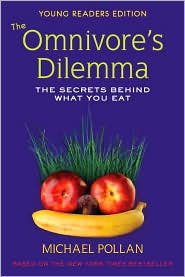
Young adult: Memoirs have been doing well and selling well and, again, must read like fiction. Also young readers adaptations (adult books, like THE OMNIVORE’S DILEMMA FOR KIDS) done over for younger readers. They are relatable and can be aspirational and light and fun or, on the flip side, depressing.


Fact-based or fact-inspired fiction: Perfect for when an author is inspired by a real story, but can offers facts in the format of a fictional story and thus avoid permissions for using names and places. (WHEN ANJU LOVED BEING AN ELEPHANT is an example.)
 
 
Here are some reasons for rejection from real rejection letter for nonfiction project Jamie has shopped to editors:
  • Unknown historical figure
  • Won’t appeal to a broad enough audience
  • Lacks cirriculum connection or other specialized tie-in
  • Similar titles are not selling well for the publisher or other publishers

Tina Wexler - The Five Things Your Manuscript Needs To Succeed


The packed room listening to Tina Wexler


Tina Wexler is a literary agent at ICM (International Creative Management) and represents authors for both the adult and children's marketplace. For children's she focuses on YA and MG "with a particular fondness for tall tales, contemporary sci-fi, and gothic love stories."

The room is full, with lots of people sitting on the floor, listening and furiously taking notes.

She describes herself as a "very very hands-on editorial agent" and starts her session by defining success – what we can work towards with these tools she’ll be presenting – that they’re not necessarily the secret to writing a best seller (no one has the magic formula for that!) but they will help us achieve success in terms of getting representation, and getting published.

On the surface, she warns us, her five tips sound simple, but that’s deceptive. She’s taking her time to explain why, with examples, we need to go deeper into each one:

Here' the simple version:

Your manuscript needs to get written, read, researched, revised and loved.

Now here are some of Tina's gems, unearthed when she went dug in:

When revising, look at the first decision your main character makes that really starts the story moving. Now try it the other way, and see where it takes you. Is it more interesting the new way, or did you get it right the first time? You won’t know until you try it…

Do some homework. Pick a topic from your manuscript (bee keeping, wormholes, something already in your story) and research it. And not just internet research. Get a book from the library. Go on a field trip. It will deepen your story.

Don’t just read your own pages out loud, have someone else read it out loud to you – it’s a great way to check if your sassy character dialog actually sounds sassy or... well, whiny.

She’s reading us different examples to illustrate her definition of voice:

The words you use and how you use them, and how the sentence length works to create a rhythm.
It’s the words that get the magic into the story..

The session ends with a great Q&A, with more details about what she loves and is hoping to find…

What an amazing opportunity to get the scoop directly from Tina!

Henry Winkler and Lin Oliver: Writing with humor and heart

It's hard to imagine two funnier, kinder people than Lin Oliver and Henry Winkler, the co-authors of the bestselling Hank Zipzer series—and now, the GHOST BUDDY series from Scholastic. 

Neither needs any introduction, of course: Lin co-founded SCBWI, and Henry is one of the best known actors in the world. Their collaborations—18 novels worth—are hilarious and full of heart, as was their session on writing.

Lin Oliver and Henry Winkler deep in discussion.
Note: This picture isn't as funny as the panel. Blame the fish.

When they collaborate, they meet in her office. Henry paces the carpet and talks while she types. When she gets an idea, he stops talking and she writes. He likes the new, larger carpet in her redecorated office (no word on whether this will lead to longer novels).

Henry revealed a secret about their new series, GHOST BUDDY. The voice of the ghost is the Fonz, and the boy who finds the ghost in his closet is Richie. Aaaaay.

On finding your emotional center: Henry confessed he had a hard time with his parents. "They were very, very, very short German Jews." His father spoke 11 languages, and in those 11 languages, 15 times a day, would urge Henry to take over the family business: buying and selling wood.

But Henry always wanted to be an actor. The same emotional insight he brings to his acting, he brings to his writing.

"The thing is, when you write who you know, when you write your emotional truth, nobody is going to say 'how could you have written me into your thing, your masterpiece, your book.' They never recognize themselves. They say, 'My goodness, you have a good imagination."

Your emotional life feeds you. You're writing what you know. "The emotional truth jumps from the page and into the eyes and mind of your reader."

If you write the truth, somebody is going to say, "Wow, how did you know me?"

Lin on what's funny: If you want to write with humor, you have to go to your deepest emotional part and stay there until it's funny. It has to come from something that's true and heartfelt. If something is sad and funny at the same time, it's the strongest funny you can have."

Henry on loving your characters: When you're writing, you love the people you're writing about. When you're acting, you have to find the humanity in the bad guy. Otherwise, you're just playing one dimension.

Lin on getting the humor deep: You can't lay a joke on top of a situation. It's better when the situation is inherently funny. You can anticipate the comedy when the situation is inherently funny. For example, when a dyslexic character triples the amount of chili in a recipe and gives it to an evil teacher who later shoots across the room as though she has a rocket beneath her skirt.

Laurie Halse Anderson: The Nuts and Bolts of Crafting a Creative Life

Laurie Halse Anderson is an award-winning author of many books for children.

You've got to love an author who starts her session with: So everyone’s screwed for time and not feeling very creative, huh? I feel your pain.

Laurie notes: I’m an author because of SCBWI. I’m an author because the authors I listened to at SCBWI told me the truth and I’m a grown up. (She could handle it.)

"Welcome to Laurie Beth’s Boot Camp."


On September 7, 1992 she had her moment when she took her child to the bus stop. On that day, instead of going to the Pancake House, she went and wrote in her journal, “I give myself 5 years to get published.” Notes she should have given herself ten years. (Although it did take her only 4 years.)

The Myths that Hurt Us
1. If you get published you'll be free from financial pressure.
2. Being published will solve all the painful personal conflicts in your life.
3. Full time authors who make a living writing their books belong to a club run by Jon Sciezska. 

Attitudes You Want to Grow in Your Soul
  • 24 hours in a day is more than enough.
  • The universe wants you to be creative.
  • Change equals discomfort. Discomfort won't kill you.
  • You have the intelligence to reclaim your lost time, but are you brave enough?
  • You have more control over how you spend your precious time and energy than you care to admit.

LIBBA BRAY: Writing It All Wrong: A Survival Manual

The delightfully funny and terribly wise Libba Bray (BEAUTY QUEENS, A GREAT AND TERRIBLE BEAUTY, Printz Award winner GOING BOVINE, and more) sets the scene...

You spend several hours writing, you hold off on the M&Ms, your poetic ovaries shutter with creative life. Then next day you open up that same manuscript...and the characters have all the depth of a Colorforms sticky. Your plot twist is pedestrian. You despair. You think there's just one way out of this: fake your own death.

I'm here to be bring you good news, (just like Jesus), Libba says: your novel probably does suck. It's OK--embrace the suck. Gettting it wrong is a necessary part of getting it right.

Libba talks about spending all day every day writing a novel that was ALL WRONG. She turned it in six months late and then got a 12 page, single spaced editorial letter calling out the wrong. She revised for months. And months. 12 or 13 hours a day. She gained 20 lbs. The novel had also put on weight--ballooning to 900 pages. And it still was not right, she says. But she soldiered on. And after more painful revision and bouts of self-doubth, she eventually got it right.

Here are some of Libba's suggestions on getting through getting it wrong:
  • Gather your tools for survival. Your book is in there, buried under the book you hate. Find the tricks that help you dig it out (play lists, writing groups, Pop-tarts...)
  • Ignore external voices. That thing you are writing it awesome--it's the only thing that matters. What's hot doesn't matter.
  • Lower your standards. Your writing will never be perfect. If you strive for perfection, you're setting yourself up for failure. Don't stive for perfect; strive for better.
  • Be open to changing format. Maybe you need to change your point of view. Or write in verse. Or change tense. Find what works for your story.


Commercial Break: CAMPAIGN for LIBBA BRAY to WIN a GRAMMY

INTERIOR HYATT CENTURY CITY CALIFORNIA BALL ROOM - AFTERNOON
(A room full of 1,300 people sitting on slightly comfortable chairs. We zoom in on CONFERENCE ATTENDEE #1 who has just paid $8.50 for a sandwich wrap of unknown origin and only had a few minutes to eat it. Next to him, CONFERENCE ATTENDEE #2 didn't even GET a sandwich and she is noticing the ballroom chandeliers look like crystals from Superman's man cave. She wonderis if you could microwave these super crystals, if the crystals would then turn into complete Thanksgiving dinners or maybe just a milkshake and a turkey burger.)

CONFERENCE ATTENDEE #2:
Libba Bray is speaking next, do you think she's brought snacks for us?

CONFERENCE ATTENDEE #1:
No, and please stop nibbling my arm. Have you read BEAUTY QUEENS yet? I got the hardcover, and I also got the audio book. Did you know Libba reads the audio version and does, like, ten different voices?

CONFERENCE ATTENDEE #2:
Talking about the audio version of Libba Bray's BEAUTY QUEENS is the ONLY THING that can snap me out of this hunger madness. It has to be one of the best audio books I've heard in a long, long time. It's not only well-produced, it's a fantastic, thought-provoking and hilarious story, I want to give a copy to every teen girl I know.

CONFERENCE ATTENDEE #1:
Me, too! It should totally win a Grammy.

CONFERENCE ATTENDEE #2:
You have graham crackers?

CONFERENCE ATTENDEE #1:
No. I'm saying if the award for best spoken-word album could be won by popular vote, we should totally start an online campaign for #BeautyQueensAudiobookShouldWinAGrammy

CONFERENCE ATTENDEE #2:
Shhhhhh! Libba's starting! I think I see a package of Swedish Fish in her pocket!!!

Yoga at the Conference with Lori Snyder - tonight (Friday) night

I found a quiet moment in one of our two hospitality suites (The Bel Air and The Malibu room - both on the California level) to talk with Lori Snyder and find out more about tonight's yoga class for conference attendees - from 7:30pm - 8:30pm in Constellation II


Lori's a lovely presence, and it should be a great hour of stretching and breathing... and in that way that yoga has, will be relaxing and energizing at the same time!

Enjoy, and Namaste.

Children's Publishing: 5 Publishers Give an Industry-Wide Picture

Panel: Debra Dorfman, Beverly Horowitz, Jennifer Hunt, Allyn Johnston, and Julie Strauss-Gabel


Allyn Johnston: Beach Lane Books Imprint at Simon and Schuster. Publish 18 to 20 books per year. Mainly picture books.

Julie Strauss-Gabel: Dutton has gone through a change, becoming a small boutique publishing middle grade and young adult fiction. Dutton is imprint of Dial Books for Young Readers.

Jennifer Hunt: Vice President of Acquisition and Development and Editor-at-Large for Dial Books for Young Readers.

Beverly Horowitz: VP Publisher Delacorte, focus on middle grade and young adult.

Debra Dorfman: Editor at Scholastic. Her focus is on middle grade and chapter book series.


Question: Any particular genres that are endangered or growth spurting?

Beverly Horowitz: Believes with the demise of Borders and the many shifts in the publishing community, we have to have new thinking. She doesn't believe genres are going to die. Believes there is an opportunity. The independents who have survived have stronger potential. We shouldn't be afraid of the ebook. We are all more nimble than ever. As complicated and things are, things are more bullish than not, especially in the kid's market.

Debra Dorfman: Believes we're going to be seeing more books sold in non-traditional book stores. Many big box stores are now expanding their book areas.

Julie Strauss-Gabel: If you look at the success stories, in the children's market, we still have schools and libraries and there is no one way to publish a book to success. There's more than one journey.

Jennifer Hunt: Something that makes her hopeful is that kids are always in the forefront of innovation.

What kinds of skills do creators books need to have to help market a book or for a book to find its path?
Debra Dorfman: Important to put yourself out there. Work with your publisher and arrange school visits. To have a website. Helping to create your own buzz.

Julie Strauss-Gabel: Social media, or in person, only works when it's genuine. Do what is natural to you. People can tell when you're being genuine.

Jennifer Hunt: While there's an upside to social media, she's also seen it create a lot of anxiety in authors.

Tell us about one of your favorite upcoming books for your list:


Debra Dorfman: A series called GHOST BUDDY by Lin Oliver and Henry Winkler

Berverly Horowitz: ALL THE EARTH THROWN TO THE SKY by Joe Lansdale

Jennifer Hunt: COUNTING BY SEVENS by Holly Goldberg Sloan

Julie Strauss-Gabel: THE FAULT IN OUR STARS by John Green and THE DISENCHANTMENTS by Nina Lacour

TEN LITTLE CATERPILLARS by BILL MARTIN JR. and STARS by Mary Lyn Ray

Donna Jo Napoli: Sources of Tension and How to Use Them


Donna Jo Napoli is an award-winning author of many books for children, ranging from picture books to young adult novels. 

The tension is startin, even before Donna Jo takes the podium, as this room is jam packed. It's standing room only as people line the every wall in the room.  I’m literally tucked in a corner on my knees as all hang on her every word.

“Your story has structure. Every point in it has a screw. Your job is to tighten it.”

“The job of the writer, the job of any artist is to disturb.”

You can look for sources of tension in: Plot, Character, Setting, Timing (Deadlines and Choice of words/rhythm)

Donna Jo has the sweetest tone to her voice, but as she speaks about tension, she brings some edge as she continues to ask, “How can we make it worse.”

As attendees give examples, the worse they are, the happier she seems to be about it. So great.

If you start with a fever pitch, you’ve made a great burden for yourself as a writer, because how do you build. But you can find ways.

Nighttime tends to make more things more frightening.

You must make the reader trust you. You (as the writer) telling the reader does not mean they'll believe you. Your reader can believe what they can understand.

Once the reader believes you, then you can just tighten those screws.

If it’s scary then make it terrifying.
If funny, make it hilarious.
If sad make it tragic.

Take it to the extreme while maintaining your authority as the truth teller.


Steven Malk and Jon Scieszka: No Holds Barred

I highly recommend listening to Jon Scieszka whenever he speaks, but especially when he's with agent Steven Malk! As funny as I'd hoped, their session called: No Holds Barred: An Agent and an Author Give Outspoken Advice on Writing, Submitting, Promoting and Everything in Between, was great.


I think one of the best points was when Steven talked about making career choices. He suggested that author should find a career they'd like to aspire too. It's not about money, but about business choices that most reflect your goals. Jon said that he didn't fully understand the importance of having a plan until he started working with Steven who helps guide him in the right direction.

The back and forth between the two was hilarious! Soccer shorts, The Three Little Pigs Christmas... the jokes kept it lively.


Steven offered some steps toward success, starting with the most important: Write a Book. He suggested learning about the classics and had handouts. Read across the genre to form a bigger picture and foundation.

The talk was really inspiring! Be sure to check them out whenever you can!

LGBTQ Poolside Chat

Lee Wind hosted another great LGBTQ chat today by the pool. The cabanas were overflowing with attendees, including Arthur Levine, Bruce Coville, Laurent Linn and Judy Blume! This was a great chance for authors and illustrators to meet and begin conversations that can continue through the week. Honest and open, attendees shared personal experiences and ideas.


One thing most mentioned was the desire to see more LGBTQ characters included in stories, but not having them BE the story. A true reflection of our diverse community. We discussed picture books, chapter books and YA novels, plus Arthur Levine gave great advice on using your own feelings to portray true human experiences for your characters.

Judy Blume told the group that the most important thing is to write the story and not to self-censor. And Bruce Coville told everyone to not operate out of fear, or it will constipate your story.

Inspiring, the LGBTQ chat is a great experience I look forward to every year!

Julie Strauss-Gabel: A Fiction Focus

Julie Strauss-Gabel's workshop, A Fiction Focus, was fantastic! Julie is the Vice President and Publisher of Dutton Children’s Books. Her authors include: Ally Condie (Matched), Gayle Forman (If I Stay), John Green (Looking for Alaska), Nova Ren Suma (Imaginary Girls), and Stephanie Perkins (Anna and the French Kiss).

Julie's looking for writing with exceptional quality and commercial appeal. She talked about some of the changes at Dutton, a focus shift.

One of the highlights was hearing about the authors she works with, including John Green. He's a great example of genuine social media interaction, and as an author who grew over time.

Julie is not looking for what's popular--she's looking for what's next. Her key interests are books with an exceptional voice, originality, and a twist. Highly recommend seeing her speak if you get the chance!

Have A Manuscript Critique At The Conference? Agent Jill Corcoran's Best Advice For You!

Herman Agency literary agent Jill Corcoran shares what not to do - and what you should do - during your manuscript consultation!


Great advice!

Laurent Linn: Judge This! Anatomy of Creating Book Cover Art

Laurent listening to the voices in his head. They are talking about monkeys. In fact, the voices ARE of monkey origin.

What Laurent looks like when the monkey voices tell him to do a cover titled in Comic Sans.

Lovely lovely Laurent Linn says the cover of your book can make or break it. And the important voices that decide what a final cover will look like are:
  • The author
  • The editor
  • The sales and marketing team (they are your friends!)
  • The publisher
  • The art director, in this case, Laurent Linn
  • The voices in Laurent's head

First cover evolution story
Lottie Paris Lives Here
by Angela Johnson, illustrated by Scott Fisher, publishing in a few months.

One of Scott's first cover sketches:

Not only is this cover for the first book, but for establishing what may potentially be the branding of an entire series. The character is important, but so is the setting and some of the props and the question was whether to have all of these non-main character elements on the front cover, or wrapping around from the spine onto the back, or anywhere near the cover. This sketch has elements of props and Lottie's house, and the VOICES decide it should just be Lottie interacting with the type. So Laurent asks Scott for something different.

One of Scott's character-focused cover sketches with type interaction:

Laurent likes this, but rather than explain the tweaks he wants, he can just mock something up in Photoshop and show Scott. Laurent asks Scott to do tons of posture and pose sketches of Lottie. Scott did! And the mock-up below is based on pose #18 from a group of 25 and Laurent's Photoshop mock-up:

Laurent says be prepared to go through all of these sorts of iterations to get to:

Second cover evolution story: 
by Spike Lee and Tonya Lewis Lee, illustrated by the totally amazing Sean Qualls

Laurent likes to give the manuscript to the illustrator and ask "What's your idea for the cover?" before directing them on what Laurent (or his inner monkey voices) might have in mind. Here's a quickie version of the sketch-to-final with the captions as Laurent's (OR MAYBE IT WAS THE MONKEYS TALKING) take on what was or wasn't working for the cover sketch.
Lovely but Sad
Too sophisticated
Could be taken too literally, those are some big [damn] steps
Final painting, but not quite working, Laurent loves the lettering
Laurent plays with it in photoshop
Sean's final painting

Ooo, now we are seeing the evolution of THE DAGGER QUICK cover by Amy June Bates, which is a middle grade cover. IS IT A COINCIDENCE THAT THERE IS A MONKEY ON THE COVER?


Laurent and his monkey voices says illustrators should STRONGLY PONDER doing illustration work that would fit for middle grade books. Shove some black and white spots and a color cover in your portfolio, yo.

Spots of monkeys.

  • Fun fact about Laurent: He doesn't play with cover type too much until the final art is in so he can be inspired by it.


  • Fun fact about Laurent's inner monkey voices: They can sing any Gilbert & Sullivan song in up to four-part harmony.
OH, my goodness. The art for Scott Gustafson's EDDIE is crazy amazeballs.

And then I started hearing monkey voices when I saw a sneak peek of the art for a teen retelling of PINOCCHIO. These photos do NOT do the three cover sketches justice.

Laurent wanted some of the above elements combined and then asked the illustrator to leave room for the title and this is the final.

CHECK OUT THOSE FRICKING WOLVES, man! So good. Who is this illustrator? My newly acquired inner monkey voices were shouting about bananas so I missed hearing the name.

Now it's getting juicy, Laurent is talking about making a cover for a book about undertakers and souls and watches (no monkeys.) Wish you were here to hear!

Liesa Abrams on commercial middle-grade fiction

Liesa Abrams
Liesa Abrams is executive editor at Aladdin, an imprint of Simon & Schuster. (She also owns 40 Batman T-shirts and apparently had a Batman-themed wedding, which sounds too awesome to believe, even if it didn't get crashed by the Joker.) Her books include DORK DIARIES, BEYONDERS: A WORLD WITHOUT HEROES, and the PENDRAGON series.

She led a Friday-morning breakout session on the sweet spot of middle grade fiction: commercial books, and started off by talking a bit about Aladdin, her imprint, which publishes picture book through middle grade, with a special focus on MG titles.

Middle grade is hot, she says. YA gets lots of attention, but many of the big properties of late have been middle grade:  Percy Jackson, Diary of a Wimpy Kid, Eragon, Harry Potter.


As a perpetual 12-year-old boy, she finds middle grade to be an exciting age to write and edit for. She still vividly remembers lying on the couch reading THE LION, THE WITCH, AND THE WARDROBE for the first time. "I don’t think reading has ever been the same as it was back then," she says.


She offered a few helpful definitions and things to shoot for. First, middle grade covers a wide spectrum. It's often defined as books for readers ages 8-12. So you have to think about whether you're shooting for the younger or the older end of the spectrum. Generally, your characters shouldn't be older than 12 or 13--but your story isn't necessarily MG just because your characters are that age.

Another key consideration is to make the various components of the book relatable to kids in the middle-grade market. The plot, the theme, the voice ... they all have to resonate. Middle-grade readers have a different world perspective than a YA audience. A middle-grader wants to know how they fit into the world. A YA reader wants to know what sets them apart.

She also talked about the importance of hook. It's no less vital in a MG book, despite the perception to the contrary. A hook isn't plot. It isn't theme. It's not necessarily fantasy or supernatural. It's the thing that sets your book apart. It must be easily summarized. It can sometimes be a format thing (a book in diary or text-message format, or a mix of text and art.

You have to be careful with sex and language in middle grades (moreso than with YA). If there is any--even though those things are part of the lives of younger kids--parents will complain about it. The shorthand for this stuff is "content," and Liesa got a huge laugh when she said she had to reassure her marketing department by saying "this is a book with no content."   


Friday Keynote - JERRY PINKNEY

Jerry Pinkney is speaking this morning! Here's a link to a slideshow of his book covers and a few quick questions with Jerry in addition to a link about his touring show, WITNESS.

Jerry's talk title, A Sense of Place: Real and Imagined, is as broad a title he could think of to cover what's so important to his work, environment, but Jerry's decided to change his title in honor of something his father used to say upon starting a job (he was a jack-of-all-trades for construction and remodeling.)

His dad would stand in a room he was about to fix or beautify and say:


"THIS IS MY WORK." 

So Jerry is saying that to us! We're getting a sense of how Jerry builds his stories and artwork.

Jerry gives us a bit of his history, this link is a good start!

My favorite anecdote—serendipity: Jerry's grandfather worked in a pencil factory, so Jerry had a lot of pencils to draw with. As a kid on a corner selling papers, he would sketch passersby while waiting for a sale, and one of his regular customers noticed Jerry's sketches. And this customer invited Jerry to come see his studio: 

That's when the seed of possibility was planted, that a person could grow up to make images every day for work.


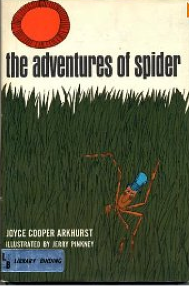
He shows us his first book, ADVENTURES OF SPIDER, first published in 1965, STILL IN PRINT and reissued.


HEART: When you look at his images and read his stories, it's always about going along for part of the ride of Jerry's discovery of the story, characters and environment.When he was working on the book GOD BLESS THE CHILD, he interviewed people that had lived through the sharecropping experience and worked to convey in his art and text that initial sense of surprise and delight he got listening to their answers.

HAND: Jerry does his preliminary sketches on plain old 8.5 x 11 copy paper in marker.

HEART: Jerry loves working with Hans Christian Anderson tales, their heartbreaking main characters are ones he's able to re-set into more modern day settings in 19th or 20th century America, when children were still being treated poorly (not that they aren't today! He brings up Bruce Coville's comment about the bullies of today, but for Jerry he's shining a light on the children under slavery and early-century child labor.)

HAND: Jerry's very inspired by past illustration masters. He says he's always straddling the shoulders of illustrators past, drawing from their amazing images to inform his compositions and technique.

HEART: Even in Jerry's tales and fables, their fantasy is resting on an element of reality.

HAND: Jerry does pencil sketch after pencil sketch of real wild animals for his fables and bible stories.


Jerry's now talking about making the art for THE OLD AFRICAN, too good to type during.

Allyn Johnston & Marla Frazee: Why We Still Love Picture Books (Even Though They're Supposed to Be Dead)


Allyn Johnston is the Publisher of Beach Lane Books, an imprint of Simon & Schuster. Allyn and Marla Frazee have worked on a number of pictures books together (ROLLER COASTER, WALK ON, MRS. BIDDLEBOX, A COUPLE OF BOYS HAVE THE BEST WEEK EVER, BOSS BABY and more.)

Marla read the manuscript for an upcoming picture book called STARS. Allyn points out the unexpected language, that fact that is doesn't call out how it should be illustrated. It intrigues her.

Picture books, Allyn says, need to tell the story with both the text and the illustrations. The artist has to figure out how to do page turns, when to ramp up the emotions. A picture book has to build to a satisfying ending. They are written to be performed--and this is something that a lot of new writers forget. You have to think about the fact that you're writing something that will be read aloud. That's the key goal.

In the manuscripts Allyn gets, bad rhyme is a common problem. She also sees lot of manuscripts that aren't picture books but feel like they should be part of a chapter book. She's looking for manuscripts that give her "the feeling" a good picture book should. It's a rare manuscript that has that kind of strength, she says.

Allyn says writers should not send illustrations notes with their manuscripts--99.9% of the time, they are not necessary.

Marla disagrees with the notion that readers should be able to follow the story of a picture book without text. For books like ALL THE WORLD, she tries to think about what the text feels like when she's approaching the illustrations, allowing her illustrations to evoke a feeling rather than offering a literal interpretation of the text. She's prefers text that is not specific.


STARS will be published in October by
Beach Lane Books, but it's available in
the conference bookstore.

Debra Dorfman: After Acquisition: Then What?

Debra Dorfman

Debra Dorfman is Vice President and Publisher at Scholastic. She does series, licensing, non-fiction and commercial YA, and in this Pro Track workshop she's talking about what happens after your book is acquired.

She's explaining how it works differently at different houses, and is giving out a thick handout on how it works at Scholastic.


So how does acquisitions work?

First, an editor falls in love and champions your book.

At the acquisitions meeting, the editor is joined by

Marketing
publicity
finance
and a rep from book clubs and book fairs

all of whom weigh in with their views on the author and the manuscript.

As editors and champions of your book, they want to know about you because it gives them ammunition - if you have a website or blog, they want to know about it.

At the meeting, the editor presents their idea of how much to offer for the book and their vision for royalty, format and publication date... And they hopefully hash it out! She's sharing that editors even get nervous in the acquisitions meeting because if they're at that meeting - they really want to acquire your book!

And she's now walking us through a case study - and the acquisitions memo - for acquiring the "I Survived" historical series.

She's taking questions now, and sharing more about the inner workings of publishing in general and Scholastic in specific after the book is acquired - covering apps, ebooks, marketing, author videos...

Here's a great quote from Debra:

Part of my mission is to stay on top of our books - you have to champion each one.

Really interesting!

First-time conference-attendee orientation

The 40th annual SCBWI Summer Conference has begun, and the first event was an optional first-timers attendee led by Jolie Stekly, a member of SCBWI Team Blog and a recipient of the organization's volunteer of the year award.

Jolie Stekly
Jolie, a conference vet, is helping newbies understand what to expect from the weekend.

She warmed us up by asking a variety of questions--Is this your first time here? Are you a writer? An illustrator? Both? Are you a man? (These events are known for being packed with women--just wait till you stand in a bathroom line for the first time.)

If you were here in this room right now, you might want earplugs. People are introducing themselves to each other and the noise is impressive!

A few tips from Jolie:
  • If you swap business cards, write a reminder on the back so you can connect the card to the person.
    Chelsea Mooser of the SCBWI
  • If you're able to be yourself, then you have no competition. So don't feel as though you're in a competition with the people next to you. The SCBWI is a supportive tribe (with more than 22,000 members worldwide).
  • Passion, patience, and perseverance will see you through
  • If there's a book you want to buy, get it before the speaker does a keynote. Books do sell out. 
  • With editors and agents, be respectful and interested in them as people (and don't slide manuscripts under the bathroom stall or ask to pitch). Good conversation topics are things the editors and agents said in their sessions, and the books they've worked on.
And here's an assignment useful for all participants: Write down three reasons you decided to attend this conference. (Achievable goals--editors and agents do not carry bags o' contracts to hand out at conferences.)

Jolie has walked all of us through the many events planned throughout the conference: the published attendee book sale, manuscript and portfolio consultations, the poolside dance party, the Golden Kite luncheon and more. (She also revealed that Judy Blume is here. THE Judy Blume.)

More:
Jolie Stekly on Twitter
Jolie's Monday morning writing prompts blog
Judy Blume on Twitter

Bruce Coville's Keynote - Tips On The Writing and Illustrating Life


Bruce is giving the rapt audience of 1,342 of us twelve tips - they're funny and interesting and unexpected... Here's three of them:

1. Take acting or storytelling lessons. What's the essence of acting? Entering the internal life of your character. And what better tool could you have as a writer?

2. Take your art seriously, and take yourself seriously as a business person. Our culture tries to de-fang artists by linking the idea of being an artist with being a "starving artist" - because if you're an artist and doing your art properly, you're dangerous. Bruce says of himself,

"I became a children's book writer because it was the most subversive thing I could think to do."


So learn to read contracts. Royalty statements. Negotiate. Provide for your retirement. Insure yourself.


3. Scare yourself. Be fearless. Cole Porter said, "Courage is Freedom."

Bruce says, "If you don't jump, the wings never come." And it's writing, so if you jump and fall, you can just back up ten pages and try again.

So when you think you're at the end, see if there's more, if you can push forward, make there be more at stake...

Bruce is sharing so many great moments and tips, and just told a story - wove a story - that made tears come to my eyes.

okay, I have to share one more brilliant moment...

"A good book is like other books, a great book is only like itself."
And that was a great keynote!

Now the room is on its feet, giving Bruce a standing ovation...

Bruce Coville's Keynote - Prepare To Be WOWed!

Bruce Coville is a master storyteller, author and Publisher of Full Cast Audio who has written nearly 100 amazing books (like "Jeremy Thatcher Dragon Hatcher" and "My Teacher Is An Alien") that have earned him millions of readers and fans, including, well, me!


Bruce starts out by welcoming all of us to the 40th gathering of our tribe...

And then he gets serious: He's talking about how our politicians give lip-service in our culture to "children being our most important resource" - but there are so many examples of how librarians are being fired, how education is being shortchanged...

And we, the writers and illustrators for children, are one of the last lines of defense against the barbarians inside the gate...

The struggle is long-term, and if we look back and then to today, we are making progress.

He shares a great anonymous quote:

Craft without inspiration leads to basket-weaving.

But inspiration without craft leads to modern art.

You may like modern art but you don't want your book to read like it was painted by Jackson Pollack.

And how well we write our books and illustrate them influences how we shape the arc of society towards the moral good.

He shares a letter from an adult who had read one of Bruce's books as a child, who became inspired to make the world a better place and later joined the peace corps, and when he signed up, the scene in Bruce's book was prominent in his mind.

We can never reach one child the way a teacher does, but if we're lucky, and we do our writing and illustrating well, we can reach hundreds of thousands of kids, and impact the world...

Inspiring!

Steve Mooser & Lin Oliver: 40th Anniversary Conference Opening Remarks

SCBWI Steve Mooser opens the conference talking about starting SCBWI 40 years ago and encourages attendees to be friendly and meet other conference-goers, as you are sure to make lifelong writing friends as he has.

Lin Oliver gives stats on attendees:
  • 1,342 people are attending the event--the most ever!
  • More than 150 men are attending--also the most ever
  • 42% of attendees are published
  • There are attendees from 49 states (get on it South Dakota!)
  • Attendees are here from 20 countries

Lin reitterates: Don't be afraid to reach out and talk to other conference-goers.

Now for the faculty parade. They are all introducing themselves using a sentence with the word "40" in it. Here a few examples:
  • 40 perfect pages.
  • 40 is the new 30.
  • It took me 40 hours to get here.
  • I was on the far side of 40 when I published my first book--it's never too late for success.
  • Moses wandered the desert for 40 year looking for the promised land--this is it!
  • An editor's work week is not 40 hours.
  • In 40 years the Kindle will probably be what the victrola is today.
(Oh--and Richard Peck is here as a surprise guest.)

Wednesday, August 3, 2011

SCBWI TEAM BLOG Pre-Conference Interviews: The Master List

In the months leading up to the 40th Annual SCBWI Summer Conference, TEAM BLOG has had the pleasure of talking to many of the faculty members who will be presenting at the event.

Here's a list of links to all the interviews (by Alice, Jaime, Jolie, Martha, Lee, and Suzanne--who will all be live blogging the conference as it happens from the opening remarks on Friday through the last Intensive on Monday).


AUTHORS

AGENTS

EDITORS

ILLUSTRATORS

FIRST-TIME ATTENDEE