Creative Lab: TRUE REVISION with Elana K Arnold and Eliot Schrefer
The plan ahead for our 7.5 hours together:
Session 1: What have I made?
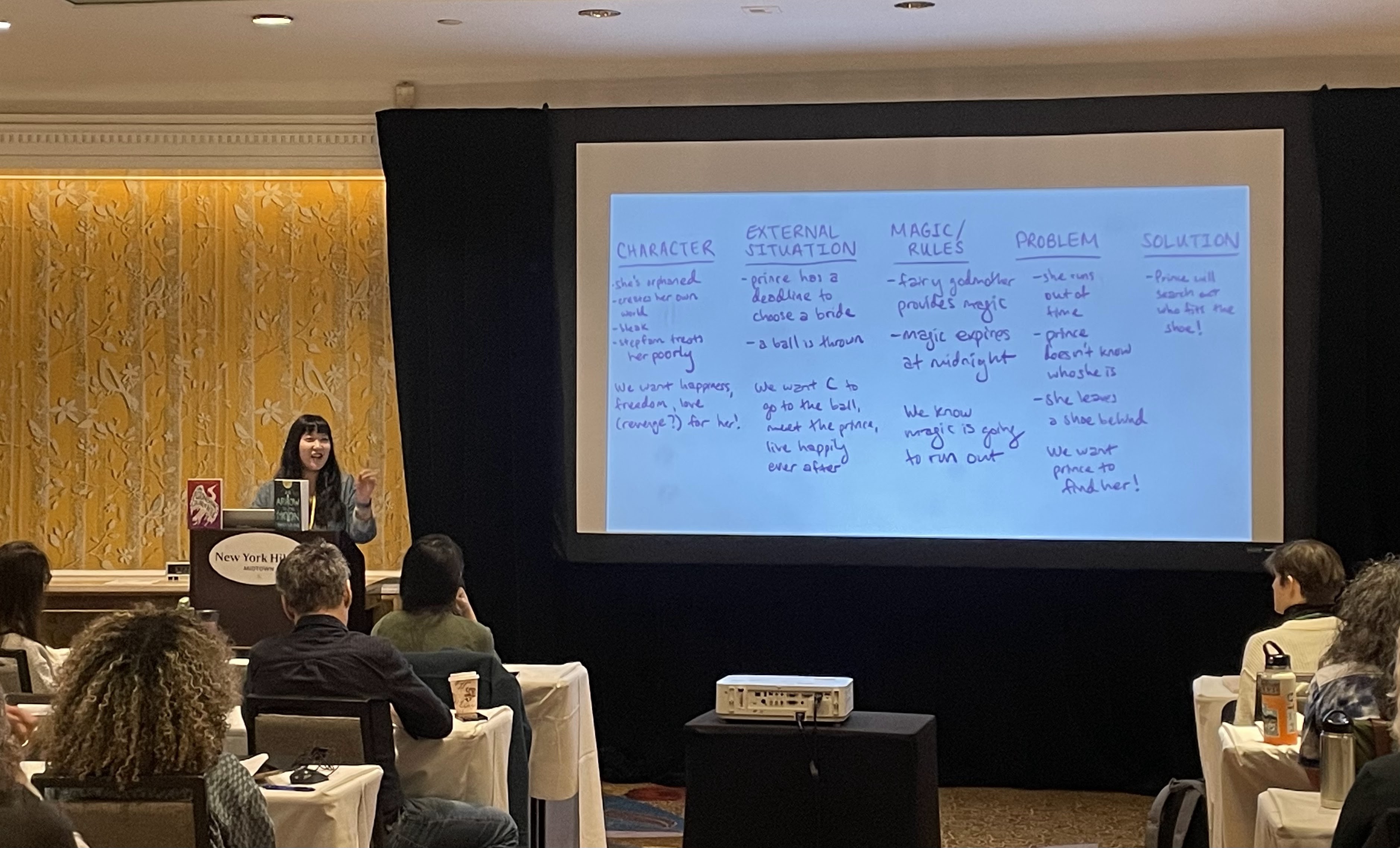
Taking a hard look at what we've actually made, rather than what we intended to make. We'll make a story map and looking at settings.
Session 2: What haven't I considered? We'll look at tension and scene building, as well at the rhythm of five pages.
Session 3: The full novel diagnostic. We'll leave with a plan for working on the revision when we go home.
So, friends, it looks like some productive work is in store. I'll give you a peek inside as we move through the three sessions.
In this first session, we get a peek inside the way Eliot maps plot and Elena shares amazing insight to the ways setting can work even more for our stories.
Here's a great suggestion and something you can try:
Elana and Eliot send off to consider what we love about our projects. This is an important consideration because we so often look at what's wrong with our work instead of what's right. Elana encourages us to lean into what we love and others love about our work.
⭐️ ⭐️ ⭐️
In session 2, we are looking more micro-level; at sentences, openings, and scenes and how it all relates to the whole.
Here's a takeaway that might be fun to look at:
Read the first paragraph of THE HUNGER GAMES. Note with each sentence what information it gave you and/or what question(s) has it made you consider.
A tip from Elana: find what you think is the strongest scene in your book. Let it be the gold standard and know that all of your scenes can be just as good.
Here's a peek at the list generated of what attendees thought were key takeaways from day 1. (The last one will have to remain a mystery.)
⭐️ ⭐️ ⭐️
In session three we are going into manuscript triage, making a list of all the things we need to do in order to get by the end of this draft, and ascribing deadlines that feel realistic.
Here's a great tip from this morning's session: If you have family and friends who aren't writers, a great way to get feedback from them is to ask them to read the first half of the book and to report back on what they think is going to happen. Then you can decide what you want to fulfill and what you want to subvert.
If you're wishing you were here in True Revision or were here and still want more, Elana will be teaching her
Revision Season course online and she's offering a discount (Spring23).