Showing posts with label revision. Show all posts

Saturday, February 10, 2024

Creative Lab: Kate Messner - Revision Half-Marathon: Revision Strategies to Get Your Novel to the Finish Line

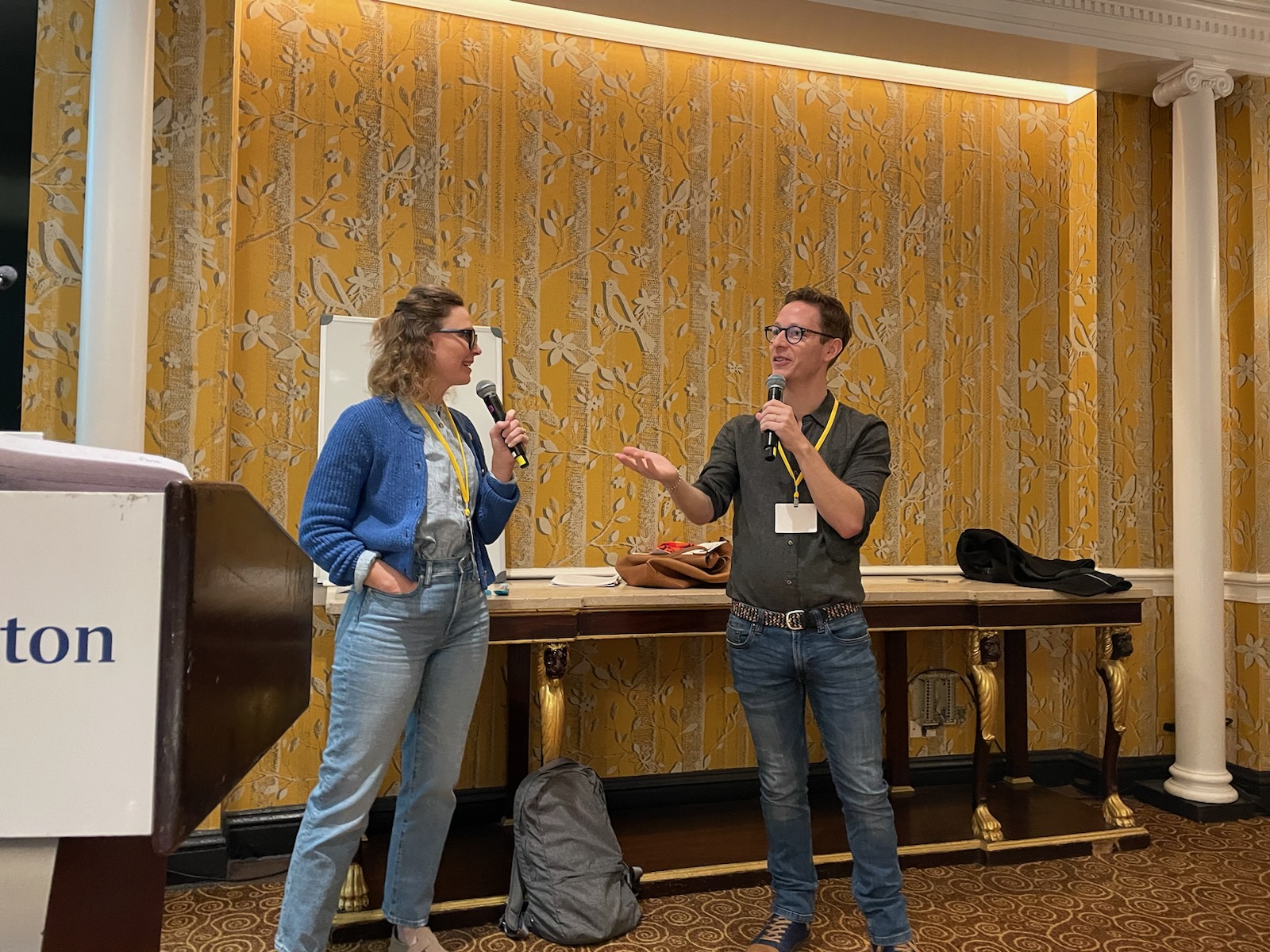
This conference features two opportunities for deep dives in Creative Labs. While we can't share that deep dive in this space, here's a little taste of what we were up to. 

In Kate Messner's Revision Half-Marathon, we're off and running. Kate has us working on many elements related to character, story, and writing. 

In mile one, Kate share's a tip I've personally learned from her before, and still use with all my writing.  Complete the following sentences.  


These sentences will be a guide to the work you do as you revise your manuscript. The choices you make should connect to one or both of these, and often to the second. 

Happy revising! 


Saturday, August 5, 2023

Time to Play: Revision as a Practice of Creative Openness with Melissa Manlove

Melissa Manlove is an Executive Editor at Chronicle Books in San Francisco. She has been with Chronicle for 19 years. Her acquisitions encompass picture books, chapter books, nonfiction, graphic novels, and novels in verse. When acquiring, she looks for fresh takes on familiar topics as well as the new and unusual. An effective approach and strong, graceful writing are important to her. She has 22 years of children’s bookselling experience. 

Melissa invites us to stretch. Like, physically get up and stretch. And then consider this. That we want to stretch enough to feel it, but not cause us pain.


It's the stretch, the middle point of where we feel it (without pain) that there is growth. Stasis is what we are easily capable of, where nothing is changing. If there's pain, we are not capable yet. There is no growth in stasis or pain. Many of us were raised to think there are only these two places: easy on yourself and too hard on yourself. 

In the middle is compassion. Where you know you're worth the effort and capable of growth!

Melissa give us the equation:


Reading

Melissa expresses the value in reading mentor text, and lots of them. Read a lot, and then read a lot more. Ask yourself many questions about those mentor texts, including: What did I love? What did I hate?

Ideating

Melissa recommends keeping an idea journal--writing every kind of idea down. "The more ideas you write down, the more ideas you will have."

Drafting

Melissa recommends an hour of quick drafting. Starting with brainstorming a whole lot of "bad" ideas, reflecting and then drafting several of them, and then reflecting some more. 

Revising

Defamiliarizing can help us get past the trouble of seeing what we have written and what we want our manuscripts to be. Try recasting your story as a picture book, middle grade, graphic novel, a poem, etc. (as something it is not currently). 

Other things to try: Write the longest and shortest version of your story. Explore structure. Explore voice. In this stretching place, Melissa encourages everyone--explore, reflect, explore, reflect. 

And then Melissa shares something really powerful sends hearts flying on the screen. The opposite of play is not work. The opposite of play is depression. Play is practice! 

So, PLAY!

.

If you want to view this session to hear the full content, along with the rest of the conference, register at https://www.scbwi.org/events/summer-conference-2023. Replays of the conferences will be available until September 10, 2023. 

Saturday, February 11, 2023

Creative Lab: TRUE REVISION with Elana K Arnold and Eliot Schrefer

Creative Lab: TRUE REVISION with Elana K Arnold and Eliot Schrefer

The plan ahead for our 7.5 hours together:

Session 1: What have I made? 

Taking a hard look at what we've actually made, rather than what we intended to make. We'll make a story map and looking at settings.

Session 2: What haven't I considered? We'll look at tension and scene building, as well at the rhythm of five pages. 

Session 3: The full novel diagnostic. We'll leave with a plan for working on the revision when we go home. 


So, friends, it looks like some productive work is in store. I'll give you a peek inside as we move through the three sessions. 

In this first session, we get a peek inside the way Eliot maps plot and Elena shares amazing insight to the ways setting can work even more for our stories. 

Here's a great suggestion and something you can try:

Elana and Eliot send off to consider what we love about our projects. This is an important consideration because we so often look at what's wrong with our work instead of what's right. Elana encourages us to lean into what we love and others love about our work. 

⭐️ ⭐️ ⭐️

In session 2, we are looking more micro-level; at sentences, openings, and scenes and how it all relates to the whole. 

Here's a takeaway that might be fun to look at:

Read the first paragraph of THE HUNGER GAMES. Note with each sentence what information it gave you and/or what question(s) has it made you consider. 

A tip from Elana: find what you think is the strongest scene in your book. Let it be the gold standard and know that all of your scenes can be just as good.

Here's a peek at the list generated of what attendees thought were key takeaways from day 1. (The last one will have to remain a mystery.) 


⭐️ ⭐️ ⭐️

In session three we are going into manuscript triage, making a list of all the things we need to do in order to get by the end of this draft, and ascribing deadlines that feel realistic. 

Here's a great tip from this morning's session: If you have family and friends who aren't writers, a great way to get feedback from them is to ask them to read the first half of the book and to report back on what they think is going to happen. Then you can decide what you want to fulfill and what you want to subvert. 

If you're wishing you were here in True Revision or were here and still want more, Elana will be teaching her Revision Season course online and she's offering a discount (Spring23). 

Thursday, April 2, 2020

#SCBWIdigital Launches with Kate Messner's "Big Picture Revision for Middle Grade and Young Adult Novels"

As a member benefit during this global health crisis, SCBWI has organized a series of eight free workshops - today, April 2, 2020, was the first, and it was taught by Kate Messner.

A screen shot of Kate Messner beginning her #SCBWIdigital workshop from her home.


Kate is a former TV news reporter and middle school English teacher, and her award-winning books span genres and categories. Kate is
“passionately curious and writes books that encourage kids to wonder, too.” 
Her titles include award-winning picture books like Over and Under the Pond, Up in the Garden and Down in the DirtThe Brilliant Deep, and How to Read a Story; novels that tackle real-world issues like Breakout, All the Answers, and The Seventh Wish; mysteries and thrillers like Capture the Flag, Eye of the Storm, and Wake Up Missing; the Fergus and Zeke easy reader series; and the popular Ranger in Time chapter book series about a time-traveling search and rescue dog.

Who attended? As Lin Oliver shared in her introduction, just on today's digital workshop “We are 3,000 people strong.” And she encourages all of us to know that we're part of this wonderful community.

Kate starts out by sharing that, in this extraordinary time,
“Expecting normal productivity in a period that isn't normal just isn't going to work out. Be kind to yourself.”
Her first 3-minute exercise is for each of us to write two sentences about our current work-in-progress:

The first is to answer "My book is about ___________________."

This is the cover copy.

The second is to answer "But underneath that, it's really about ________________."

This is the heart of the story.


As an example, Kate shares that for her book The Seventh Wish, her first answer is:

"My book is about an Irish dancer who catches a wish-granting fish."

Her second answer is:

"But underneath that, it's really about accepting the things we can't change instead of holding on to wishes."


A screen shot of one of Kate's very helpful slides.


The next exercise was about finding your character's knot, the thing that makes them tick. Example: For Harry Potter, his knot was "what happened with his parents," and his being "desperate for their love."

Kate advised us to consider not just our protagonist's knot, but our antagonist's knot as well. It's what drives their actions and motivations, too.

There are more revision exercises, covering point of view and narrative distance, and with the use of multiple examples, we're urged to have the structure we choose serve our story.

Kate also answers attendee questions, including 'How do you know when your manuscript is ready to submit?," and offers ideas for getting back into a manuscript that you've put aside.

There's so much more, including multiple ways to use (and select) mentor texts, and Kate's favorite revision tool, "The Big Picture Story Chart."

It's a session packed (PACKED!) with great information, exercises, and tips to get us revising our middle grade and young adult manuscripts.

Thank you, Kate!

Stay safe, all.
Lee

Sunday, August 3, 2014

Linda Sue Park: The How of It: Making Every Word Count

Here's a fun fact about Linda Sue Park: She once was a contestant on jeopardy. Yes, she is that smart. Which is why this room is packed and ready to soak up her brilliance.

Linda Sue has written novels, picture books, and poetry for younger readers, including A Single Shard, winner of the 2002 Newbery Medal, and the New York Times bestseller A Long Walk to Water. Lin Oliver also introduces her as adorable, fun, and full of energy.

Stealing a note from Tim Gunn (from Project Runway), Linda Sue tells us, "Don't bore the editor."

We need to make every word count. But how do we do it? By using the tools of the writer's craft.

Linda Sue shows us photos of the many illustrators tools: brushes, paints, pencils, etc.


What do writers have?


WORDS

As writers, we all use the exact same tool. That's all we've got so we have to use those words to the their maximum potential.

Linda Sue speaks to those in the room who believe they have a submission-ready manuscript. When you think your work is submission ready, Linda Sue suggests putting it away. Not for hours, but for a month. Or even two.

When you pull it back out you can make it better still, but how?

Linda Sue shares many practical way to examine the words you're choosing. Here are a few:


  • Choose a scene in your manuscript that has a lot of dialogue in it. Rewrite it entirely in dialogue alone. Then go back in and reinsert only the narrative that is completely necessary. 
  • Choose a small section of your manuscript and put it all caps. Doing this can make you examine the words differently. 
  • Read your manuscript out loud. Linda Sue reads each manuscript (even novels) at least two times before she submits. Have someone read it out loud for you, especially if it's a picture book.

Words are everywhere right now. They have become one of our cheapest currencies, which makes it even more important for the words in our stories to be special.


Saturday, January 28, 2012

Cheryl Klein: Revision

Cheryl Klein is the Executive Editor at Arthur A. Levine Books (Scholastic).

The point of revision is re-visioning, helping it to become the book it wants to be.

Revision in three parts

1. Vision: the big picture, what is your story. Know what the core of it is.
2. Examination: Look at what the book actually is.
3. Action: Get to work.

Cheryl has oodles of advice and techniques to share for revision, reminding the room that if you try them all, you are likely procrastinating. It makes sense then that her first piece of advice is: Know how you work best.

Write the spine of the story in one sentence. This will be useful in elevator pitches and family picnics.

Some important and useful questions when thinking about character:
What is your character's joy?
What is your character's pain?
What does character want?
What would your character do to get it?

Change the font of your book before you read it. The change will make it feel less familiar.

Use a spreadsheet to track information in a manuscript.

Write a synopsis of your book from another character's point-of-view.

Know that you don't have to solve all the problems in your book at once.

Monday, January 9, 2012

#NY12SCBWI Pre-Conference Interview with Cheryl Klein


...In which Martha Brockenbrough chats with Scholastic Editor Cheryl Klein about Cheryl's upcoming breakout sessions on revision on the Saturday January 28, 2012 of the conference.

And it's a testament to Cheryl's genius on the subject that just from reading this interview, I have a whole new inspiration for my current revision (Defining my story "Points," and putting them at the top of my to-do revision list!)

I've seen Cheryl speak before, and I can't wait to learn more from her!  You can, too - Registration for the Lucky 13th Annual SCBWI Winter Conference is still open.

Hope to see you there!

Illustrate and Write On,
Lee

Monday, August 8, 2011

Writers Intensive Panel: Making the Most of the Critique Experience


l to r: Aaron Hartler, Allyn Johnston, Alessandra Balzer, Jennifer Hunt

SCBWI's Aaron Hartzler moderates a panel of editors offering advice on critiques to a room full of writers awaiting them. Allyn Johnston (Beach Lane), Alessandra Balzer (Balzer & Bray), Jennifer Hunt (Dial) are the panelists.

Aaron asks about the anxiety that can come from critique situations.

Alessandra stresses that editors are on your side. Jennifer says that there is not a writer in the world who couldn't use some critique. Allyn confesses that editors are nervous too--it's pressure for them to have to deliver something helpful to writers on the spot.

Voice, characterization, dialog, pacing are the types of things that you'd see in an editorial letter and those are areas writers should be considering, Jennifer says. Those are the kinds of things that she listens for. With a short critique, she focuses on voice and characterization.

Alessandra stresses that, in group critiques, you listen to others, pick out the positive elements, and balance out the positive and negative when offering feedback. When you're taking feedback, again, listen and be open to the comments--they might not all be relative but they're all worth considering.

Jennifer says that is you're the person getting a critique, you shouldn't spend your time talking when you could spend your time listening. She also recommends after a critique meeting or group session, you think about your suggestions for a week before making changes so you have sufficient time to soak them in and consider them. She says that editors are your allies, and it's better to hear about something that doesn't work from an editor than later, down the line, in a revieiw. Editors are like the good friends who tell you, you have a beautiful smile, but there's some spinach in your teeth.

Friday, January 28, 2011

Writers Intensive Panel--The Process of Revision: Challenges & Rewards

l to r: Aaron Hartler, Nancy Conescu, Rachel Griffiths, Michelle Poploff

SCBWI's own Aaron Hartzler moderates a panel of editors offering post-critiqe advice. Here are some highlights.

Nancy Consescu (Dial): Revision is a process. Post critique, you have to consider the various comments, decide how to address things, and try different things until you get to what works. She asks her authors to start with making big changes that will resonate through the manuscript. She suggests really looking at your chapter endings and be sure you're giving readers a reason to turn the page. Also really look at the dialogue specific to each character to be sure what they say rings true to each character. She stresses, as you work with an editor, that there's a period of digesting the suggestion that must take place.

Rachel Griffiths (Scholastic): She hopes that a manuscript has been revised maybe ten times by the time it gets to her. She suggest that writers pay attention to what you're feeling as you read it--does your mind wander, is something is confusing? If you're ever stuck on a revision, you just work on it, go over things over and over again, and it eventually it can turn into something magical. She reads through and looks for one flash of greatness in a mediocre manuscript, and suggests her authors revise the rest of the pages to get to that level. She hopes that's authors take about 50% of her revision suggestions and that they don't work with the suggestions that don't feel true to them. She stresses the importance of working on your craft because that's what makes you get better and better and grow as a writer.

Michelle Poploff (Delacorte): (Note: She was the editor for this year's Newbery winner MOON OVER MANIFEST by Clare Vanderpool, the first debut author to win the award in 30 years. Also note: She's found four authors at SCBWI conference over the past few years.) The revision process between writer and editor varies depending on authors preferences and working style. She always tells authors to read out loud and she's a big fan of writers groups, saying that if you belong to a writing group, they can be very helpful advocates. She also suggests writers let things percoloate for a while as you revise. Revision is like redecorating, and sometimes you rearrange all the furniture in the room, and still there's still a lamp that's in the wrong place. She wants authors she works with to take their time to do the very very best they can on revising.

Monday, August 2, 2010

Gennifer Choldenko: Rewrytz: How to be your Own Best Editor

Gennifer Choldenko is an award-winning author of many books for young readers.

(This used to be Gennifer's license plate.)

Gennifer jumps right with tips on revising.

Do get time away from your manuscript. You need to get some distance from it.
Don’t be lazy. This is where time away really helps.
Good work takes time.

Don’t be defensive. Open your mind to what people say without being a doormat and doing everything everyone says.

Every writer needs an editor. Getting feedback doesn't mean you didn't do a good job.

Do be patient with the process.

Some of us are late bloomers. Some of us need to learn our way to things.

Don't be a good girl. If someone suggests you make a change that you know isn't right for you, then don't make it. In the end, it's not going to work if you just do what somebody says.

The goal is to make your book better, not check off every item of the critique letter.

Do follow your instincts.

Do revise as creatively as you can.
 
Do have courage.
 
Do believe in yourself.

Monday, August 10, 2009

Bonny Becker: Be Wise, Revise--Endings

By now, Bonny knew more than her premise (the what happens); she knew her theme (the why it happens).

She revised her ending, had been through five or six big revisions, and she brought her manuscript to her critique group. She showed us a list of a dozen bullet points outlining what her critique group thought what was wrong with her manuscript.

At that point she went back for the fine tuning, line by line, punching up that language and the conflict, cutting, thinking in terms of images, making sure she's using vivid verbs, and always being willing to "kill her darlings."

Bonny Becker: Be Wise, Revise--Middles

Bonny continues through her manuscript, realizing there's something wrong with the middle. She again realizes her middle is too far from the core action of her premise.

A couple of rules from Bonny:

Pay attention to that tiny voice that tells you something is wrong.

Look to condense, compress, distill. Eliminate the good for the great.


POSTED BY ALICE POPE

Bonny Becker: Be Wise, Revise--Beginnings

The first things picture book writers need is a premise, she says.

Then she gets into her first draft of the story. She's reading an early draft of a Bear and Mouse story in which she had problems with the middle. When that happens, Bonny says, you probably have a problem with the beginning.

In the draft she's reading she realized that her story started too far back from the premise.

Bonny quotes Ursula Le Guin:

"In revision, as a rough rule, if the beginning can be cut, cut it."

She revisited and tweaked her premise, and went back and revised her beginning, starting closer to the action of the story.

POSTED BY ALICE POPE

Bonny Becker: Be Wise, Revise

Golden Kite winner (A Visitor for Bear) Bonny Becker is walking us through a revision one of her picture books.

Write your story knowing you're going to revise it many many times. This is something Bonny didn't know when she started out as a writer, but now that's her mindset going into her projects. Jane Yolen told her says she does up to 40 revisions on a picture book she's writing.

POSTED BY ALICE POPE