Showing posts with label comics. Show all posts

Saturday, August 5, 2023

The Art of the Pause: Illustrating Graphic Novels with Rivkah LaFille

Rivkah LaFille (pronounced “lah-fee”) is a children’s writer, illustrator, and graphic novelist who currently teaches online at Kids Comics Unite while also working on a graphic novel about Creative Writing with First Second as well as a YA graphic novel with Candlewick.

Rivkah's session was the perfect one-hour craft class—I was blown away by how well paced the session (on pacing!) was—and am sure session attendees will all become comics pacing experts (a reminder the Zoom replays of all the breakout sessions are free to all registered conference attendees for up to a month after they've been posted). 

If you're reading this before September 9, 2023 then you may still have the excellent opportunity to sign up for SCBWI Nebraska's amazing sounding, virtual 16-week(!) graphic novel writing workshop with Rivkah.

Rivkah's session explored the many ways pacing can be controlled in a comic. To start I loved the way she used the repeated image of a ticking clock to simply and elegantly show how you could speed up or slow down a reader's time on a page by adjusting panel size and amount per page. That variation alone lets the comics maker achieve different visual rhythms per page similar to how authors vary sentence length in prose to vary reading tempo:


Real world examples of various visual rhythms like in FRIZZY by Claribel Ortega and Rose Bousamra

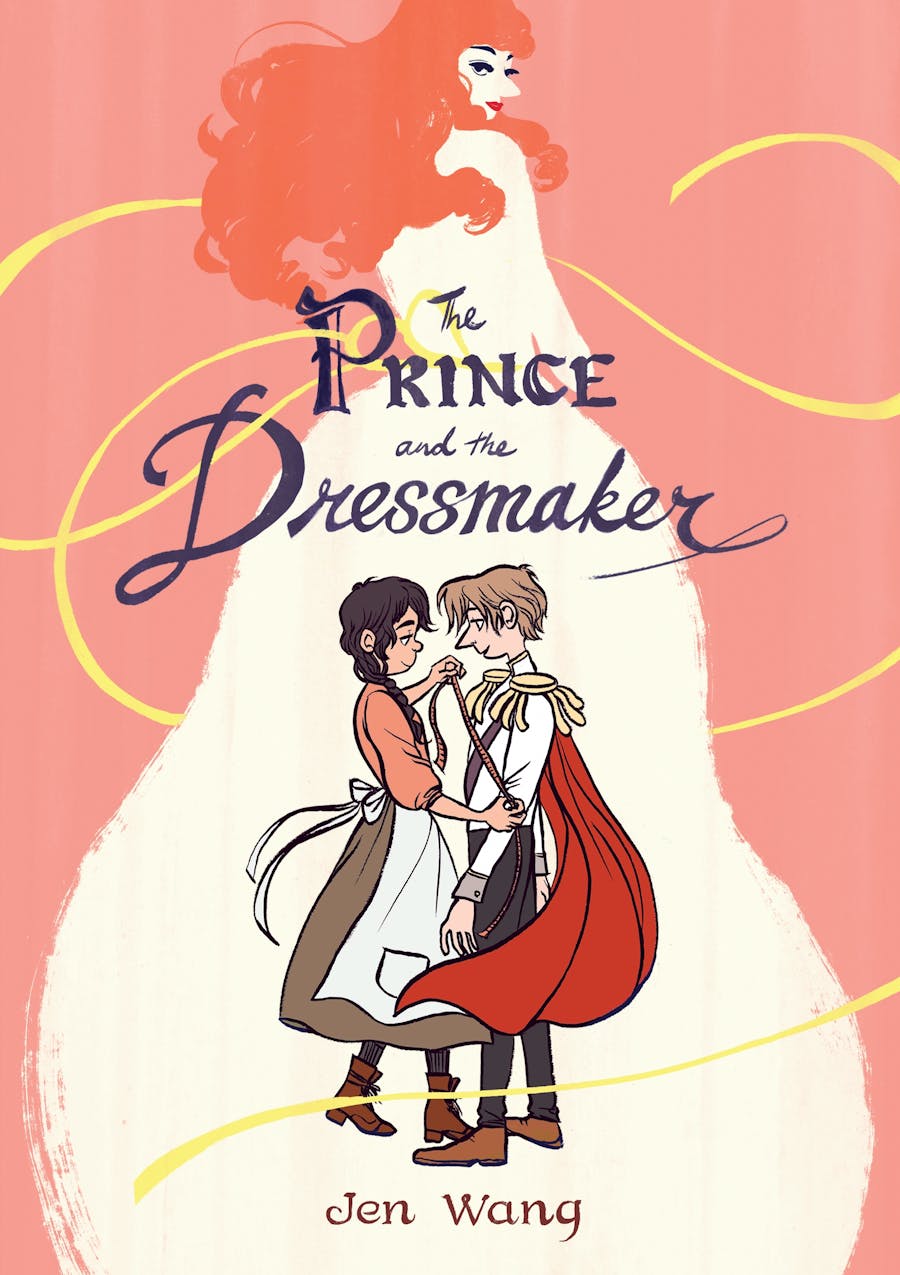
And in Jen Wang's fantastic THE PRINCE AND THE DRESSMAKER


Besides panel frequency and sizing, Rivka shares with attendees the other key ways comics makers can control the speeding up or slowing down of a scene, for example how and where lettering and/or speech bubbles are placed in a layout using, among others, pages from Vera Brosgol's BE PREPARED and Raina Telgemeier's GUTS:


Rivkah also shared a really cool drawing and writing exercise attendees could do at home to try out on their own work to vary and improve pacing. Excellent session for any comics creators wanting to learn how to make humorous scenes more effective, dramatic scenes more tense, gain better control over action scenes, and have better control over a book's tone and pacing in general.

Really hope to check out Rivkah's next workshop:


Saturday, February 11, 2023

Creative Lab: Breaking the Frame: Exploring the Expanding Universe of Graphic Novel Illustration with Jen Wang

Jen Wang is the award-winning NYT Bestselling author and illustrator of several graphic novels for young readers including Stargazing, The Prince and The Dressmaker, In Real Life (co-written with Cory Doctorow), and Koko Be Good. She is also a co-founder and organizer for Comic Arts LA where she lives in Los Angeles.

She started off the graphic novel creative lab with Writing with Pictures: Applying Art to Narrative, a deep dive into the fundamentals of visual storytelling in comics. Jen shared how she uses her layouts, pacing, and panel composition to convey emotion, manipulate timing, and enhance the narrative. Jen doesn't consider herself an illustrator first. She really only illustrates for her stories, so she thinks of herself as a writer who does drawings to support her words.

Jen believes being a seasoned illustrator is not what makes for a great comic, it’s more important what you have to say. The combination of a personal style and voice is what makes it unique to that person.

Jen wants people to not feel intimidated to consider exploring, comics are a medium available to however you want to express yourself.

But they DO require an intensive amount of drawing, at minimum you’ll have done at least a hundred pages of drawing, if not more typically 200 pages! So by the time you’re done, you’ve basically Malcolm Gladwelled yourself into being a legit graphic novelist. Jen learned many things from her first forays into long-form comics, knowledge that continues to inform how she works even today.

Lessons on layouts, pacing, and panel composition are illustrated with examples from a variety of comic works, including Jen’s own books, as well as inspiration from film/tv and photography

Participants in the lab then did some simple drawing exercises to explore our voices and approach with the techniques learned during the lab.