Showing posts with label character. Show all posts

Friday, July 31, 2026

Creating Memorable Characters That Stand Out on the Page


Sharon G. Flake is an award-winning author of over 1.8 million copies of her books sold globally.  Her work is taught in elementary schools , middle to high schools, as well as at college.  Most known for her classic novel The Skin I'm In, Flake has authored fifteen books including novels, picture books, short story collections and more.  

 Sharon loves young people, young readers. She feels she died and went to heaven to get to be able to write for younger people and be in their presence. She tries to crate work that is worthy their attention. We often think about what editors/agents/reviewers think of their work, but we should keep the young people, our readers top of mind.  

Some tips for creating memorable characters:

1. Let your character show you the way. 

Get out of the characters way and let them lead the way.


First sentences do a lot of heavy listed. The first line of THE SKIN I’M IN, “The first time I seen her, I got a bad feeling inside.”

You want to create characters that have texture. 

Sharon often doesn’t know who’s going to show up. She’s good at saying to the characters that do show up, “I’m going to let you lead the parade.” She says, “It’s not really my story. It’s my character’s story.”

You might wonder how that come out? Sharon says, your character knows you. They know what you value. They know what you like. They know what’s important to you. 

Sharon ask the room: How do your values show up on the pages of your book? 


2. Learn to erase yourself from your story. 

Sharon doesn’t want the author Sharon Flake to show up on the page. She wants it to be the kid, the character. 

Keep checking yourself: Would a kid this age say this? 


3. Give your characters a nearly impossible test.


4. Learn to slip into somebody else skin.


Saturday, February 1, 2025

Creative Lab: Creating Characters Your Readers Love with Erin Entrada Kelly


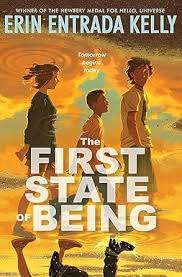
Erin Entrada Kelly is the author of several NYT bestselling books, including THE FIRST STATE OF BEING, a Newbery Medalist and National Book Award finalist.  

What a treat to dive into character with the most recent recipient of the Newbery Medal.

Erin takes attendees on a journey back into childhood memories, character building, and the ways in which building character allows plot to unfold. 

The session was packed with gems. Here are a few:

Create conflict and tension using the contrast between your character's interiority and what they say. The reader will anticipate the moment when the character will finally speak their true thoughts. 


Make a list of "good" character traits (eg. honest, loyal, confident...)
And then find the flip side of that coin, for example:
honest ---> blunt
loyal ---> codependant
confident ---> arrogant 

This is where Erin starts. With a character name. And age. And a handful of these traits. Add some wants and fears, and then starting asking the most important question "why" and the whole plot unfolds. 


Saturday, August 2, 2014

Bruce Coville: Plot, Character, and the Emotional Life of Story

Bruce Coville is the award-winning and beloved author of over a hundred books for children and young adults.

Bruce says plot and character are inextricably linked. You can't talk about plot without talking about character. You can't talk about character without talking about plot.

Bruce is a plot writer.

The best story telling energy has a bridge between male and female storytelling energy.

A great ending is both a surprise and inevitable. It is not a coincidence.

You can use a coincidence to start a story. The further along the coincidence occurs, the less believable it is.

What is a good story? Three thing Bruce loves to find in a story and also tries to put them in his own work. He likes to call them: Ha, Wah, and Yikes.

  • A belly laugh
  • A tear
  • A gasp of surprise

If all three are in a story, the reader is bound to be satisfied.

Story recipe: Take somebody you like and get them in trouble.

By asking questions and inventing scenes that answer those questions you write a story.

Stories happen when characters have to choose. Make your character make a tough choice. Your character's need will drive the action.

Plot happens when desire meets obstacle.

If you've never heard Bruce Coville speak and you get the opportunity, don't hesitate for a second.


Friday, August 1, 2014

Maggie Stiefvater: Building Characters with Heart

Thank you to Marquita Hockaday for the photo. 

Maggie Stiefvater
is the #1 New York Times best-selling author of the novels Shiver, Linger, and Forever. Her novel The Scorpio Races was named a Michael L. Printz Honor book. She has also written the Raven Cycle series among many books for young adults.

For Maggie her primary concern, above everything else, is character.

“For me what really pulls a book through are the humans.”

She notes that what is true for her might not be true for you.

She sees herself not a good writer but a better thief. She can’t create anything from scratch, not characters that actually breath and walk on their own.

She starts with people who have a real human heart and sees it more as creating portraits of people.

You need to know the rules of character building. You can't go around breaking rules without knowing the rules you're breaking. If you know the rules, and break them anyways, then it’s experimenting.

Some rules: 

·      The narrator should be a character who shifts the plot the most. (This rule is very central to commercial fiction.)

·      The narrator should be the character who changes the most. An intriguing character is one who is both internally and externally active.

·      Characters should be sympathetic and relatable ( a rule Maggie disagrees with). You should understand why a character does what they do, but it doesn’t have to be choices you would make.

·      It’s bad writing to write yourself into a character (Maggie also disagrees with this). She believes accidentally writing yourself in is bad writing, but doing it on purpose is creating a portrait of yourself. 

Maggie creates characters subtractively: when she's stealing from real life it’s often a matter of subtraction. From The Scorpio Races she stole from her brothers. One of the characters is very liked by readers, the other is not. So she has one happy brother, one not so much. But if she wrote them exactly as they are they’d be all over the place, so she focuses on the first idea she gets of them, developing the character from there.


Sunday, August 4, 2013

Kirby Larson: Creating Characters through Figurative Language

Kirby Larson is the Newbery-honor-winning author of HATTIE BIG SKY, along with many other beloved books.  She's multi-talented, writing everything from nonfiction picture books to historical middle grade novels.

She talked to a beyond-capacity room about taking one-dimensional words and turning them into three-dimensional actors in our books.

She talked about the manipulations we make as writers to buy our readers' time--along with the risks we have of creating characters who feel nothing more than pawns.

Memorable characters are ornery, lively, funny, disobedient,  persistent, she said. They return from the store with a dog instead of the macaroni they were supposed to buy, for example.

Kirby quoted Mary Oliver's Poetry Handbook: "In figurative language, a familiar thing is linked to an unknown thing as a key to unlock the mystery or part of the mystery that is unknown."

Your character is one of the unknowns and you can use figurative language to unlock that mystery, Kirby says. When Kirby was writing Hattie Big Sky, she read everything from 1918 she could get her hands on: letters, newspaper stories, memoirs. This was so she could her understand her character's voice, which is essential to the story.

No matter what, research is going to be part of your process, even if you're not writing historical. This is because our characters have interests that we don't.

"I spend so much time researching, you can't even believe it," Kirby said. "But it really pays off. I'm able to ground myself in the world and the character."

Vocabulary is the key building block to creating figurative language. Kirby wrote letters as Hattie to almost all of the characters in the book. She also wrote a form of poetry called a cinquain. These things didn't end up in the book, but they helped her understand her characters.

She also talked to us about illusions and analogies, giving examples from a variety of books, including BECAUSE OF WINN-DIXIE by Kate DiCamillo and ZELDA AND IVY by Laura McGee Kvasnosky.

Her breakout session was every bit as charming as her books (even if we had to sit on the floor). 

Kirby Larson's website

Saturday, July 31, 2010

Caroylyn Mackler: Creating Characters That Come to Life

Warning: DO NOT read to the end of this post if you DON'T want a couple of great questions to ask yourself about your character.

When starting a novel, one of the first things she thinks about when creating character, are the details and the quirks that make a person (a character) who they are; those things they continuously do that make them them.

We're writers. We don't film it. We write it. So the language around the character is important. Each character has their own way of speaking.

Carolyn suggests reading your book out loud for many reasons related to language. "Nothing beats reading your book out loud."

Another essential piece is research. Research was very important while writing TANGLED. She wanted all four characters to have distinct voices. She spent time speaking to a teenage wrestler for hours to help her write a teen boy (Dakota). She also spoke with a teen actress, as well as sat in on an audition for a teen role to help her write the character Skye.

Carolyn asks questions about her characters. If she has a day when she gets stuck, she does something she calls Questions. She once heard Paula Danziger say she wants to know what the inside a characters closet looks like.

Questions:
1. What does you character keep hidden in his or her underwear drawer? If nothing, then where do they hide things?
2. Who would your character call/text/email/send smoke signals to when something good happens? And what would that good thing be?