Saturday, August 3, 2013

Mac Barnett Keynote: What You Need To Know About Making Books For People Who Are Often Shorter Than You and Sometimes Have More Trouble Tying Their Shoes

Mac Barnett giving his keynote to a packed ballroom

Mac Barnett is the author of some remarkable picture books, like Extra Yarn (which won a 2013 Caldecott Honor and the 2012 Boston Globe-Horn Book Award for Excellence in Picture Books), Oh No Not Again! and the middle grade Brixton Brothers mysteries.


Lin Oliver introduces him as "smart, quirky, funny and contemporary."

Mac starts off his keynote by reading to us from his picture book Guess Again?  He has the room laughing - and proves that he is indeed smart, quirky, funny and so of the moment -- setting up our expectations and making us laugh when we're wrong!

"Art is a lie that makes us realize the truth" - Pablo Picasso

Is a quote Mac has been thinking about a lot.  He even has a ven diagram about it, truth and lies as two circles that overlap -- and that center where they overlap is art, or what he likes to call WONDER.

He tells us about discovering that sense of wonder when he worked at a summer camp and he would tell extraordinary stories with cliffhangers to the campers -- stories that would go on for an entire week.  He's making us laugh again, and tying it all into a discussion of the suspension of disbelief.

Mac speaks about the tutoring center 826 LA (for which he's on the Board of Directors) and how the store in front, "The Echo Park Time Travel Mart" sells products across time, like robot emotion chips.  Their broken slushie machine has a sign that says "Out of Order: Come Back Yesterday."  He explains how the store is like a "book in three dimensions" and how that is linked to his creative process of writing picture books.

He's discussing meta-fiction, and tells us the incredible story of how there's a hidden offer inside his book, Billy Twitters and His Blue Whale Problem, to get your very own blue whale.  Some kids (very much kids like Mac was) actually send away for the whale, and in return they get a letter from a Norwegean law firm explaining that there's been a customs delay in delivering their whale, but offering a phone number that they can call to leave their whale a message.  Some of them call, and after some whale sounds, they hear a beep, and they leave a message!  Mac plays us the adorable phone messages that one child, Nikko, left for his very own whale, Randolph.

Not an actual photo of Randolph, who is not an actual pet of an actual child reader... but on some amazing, wondrous level, this is absolutely Nikko's pet blue whale, Randolph.  Look, Randolph is even smiling (and perhaps burping at the same time - he really enjoyed the soda Nikko sent him.)

Mac shares his wonder at how he gets to do something "weird and strange and bold and experimental ...and have kids accept it into their lives."

He challenges us to experiment ourselves because "childhood is, by nature, experimental."

It's an inspiring talk - and Mac's books in the conference bookstore are sure to sell out!

Editors Panel: Namrata Tripathi

Namrata Tripathi is the executive editor at Atheneum Books for Young Readers, a small imprint of Simon & Schuster. Namrata has worked with many great writers and illustrators, but she has loved the opportunity to publish a lot of debut writers like, Jon Rocco, Julian Hector, and John Corey Whaley.

What makes an evergreen and what makes a hit?

To add to what the other editors already shared, Namrata mentions that sometimes when the terms "evergreen" or "hit" are used to discuss a book,  the words are given a qualitative definition. And,  even though you can't break it down in a quantitative way, it's interesting to think about it that way.

A book's success is unknown until time passes and it's revealed. It's a nebulous topic in that way.

Discussion turns towards how much marketing is influencing acquisitions. There are strategies that the editors employ, including bringing their allies aboard before going into the acquisitions meeting.

What might be a kind of objection that you would anticipate facing? 

It doesn't really matter what the objection is, a part of Namrata's job as the editor has a lot to do with chemistry. Something in her bones starts to vibrate and she has to have the book. It's like falling in love.

Namarata uses her husband as an comparison: "Even though he is cute, I can't convince Lin to feel the same about him as I do."

"We have to go into an acquisitions with that focus, feeling the passion to that degree and convey it viscerally."

In children's publishing, one's value as an editor is not based on being a hit machine.

There's a tell that let's Namrata know she's found a project she should pursue: When she has finished the book and she has put it away, if her mind has not stepped away from the story and it's characters, it's a clear sign. A lot of it has to do with voice and that the characters feel true and a real.


Editor's Panel on Hits and Evergreens: Allyn Johnston

Allyn Johnston's an editor everyone dreams of working with. In her 24
Editor Allyn Johnston
years of children's publishing, she's shepherded some of the most wonderful books into shelves. Her authors and illustrators include Mem Fox, Lois Ehlert, Marla Frazee, Cynthia Rylant, Avi, M.T. Anderson and more.

Her imprint at Simon & Schuster is called Beach Lane Books, where she is vice president and publisher. Andrea Welch is the senior editor there (and is also at this conference).

Lin Oliver introduced Allyn as "our resident grump." This, people, is fiction.

Most of her long career has been based in California. They publish about 25 books a year, mostly young picture books, but also do novels for older readers. They've bought 15 manuscripts from people who've heard them speak and sent manuscripts in that way--so conference success stories can happen.

When she considers a picture book, she asks, "Does this thing have the power to do the magic with the word and pictures and the voice and the performance an adult does when they're reading aloud to a young child?"

What makes an evergreen and what makes a hit? 

Most editors are looking for long relationships with authors and illustrators we work with. "We aren't making the decision to buy your one project."

She's done 27 books with Lois Ehlert. All 27 are still in print (some via Harcourt). "That to me is extremely moving and gratifying."

The math of whether a book is "successful" is complicated, she said. "If we spent zillions of dollars on a book, it could be on a bestseller list for a long time but still might not earn out."

But a book that gets on a state list and goes into reprints--suddenly you've sold 100,000 copies. "You want the earn out when you're doing our job." It's not so much about bestsellers. 

Editors do a lot of behind-the-scenes maneuvering to acquire manuscripts. Anticipating the objections of others is a key part of the job.

"The great Sid Fleischman used to say to writers, 'point to the problem,'" Allyn said. "If there's a weakness, make it a strength."

Mostly, though, it's essential for editors to love the books they acquire. It's a bummer, she said, when you acquire something you don't really love and you have to find an artists and talk about it at marketing.

What quality do you respond to in a book? 

Allyn told us the story of how she acquired ALL THE WORLD, the Caldecott-honor winning book by Liz Garton Scanlon and Marla Frazee. A the time, she was working with Marla on another project. It wasn't going well, but Marla had sorted things out and was on a roll when Allyn got an email from Liz Garton Scanlon, an unagented writer who'd heard Allyn speak at a conference.

"I read it because it's very brief. And I called her as soon as I was done. I hadn't shown it to one other person at the house. I said, this is stunning and we're going to buy it."

Allyn sent it to Marla Frazee who was working on something else. She told Marla to drop what she was doing and illustrate the book. Marla wasn't so sure we wanted to, but she did.

The manuscript felt universal, and timeless. It struck an emotional chord and a fabulous satisfying ending--all keys for Allyn.

"It had some clunker stanzas in that draft, but it was all the things I dream about in a picture book manuscript just sitting right there," she said.


Editor Panel: Melissa Manlove

Melissa Manlove is a total mensch—not only is she willing to be searched for in tonight's faculty scavenger hunt, she's been a great addition at any conference I've ever seen/heard her at, she shows you stuff on her iPad (AND THEN LET'S YOU HOLD THE iPAD), she used to be a bookseller and still helps out at one on Saturdays (besidesand she has delightful footwear.
Melissa with the amazing Grace Lin, (http://www.gracelin.com/) picture stolen from the amazing Anna Alter blog (http://annaalter.blogspot.com/)

She's been an editor at Chronicle Books for nine years which makes her less than six degrees of separation from the Chronicle gift department's new Moomin notebooks, potentially the greatest notebooks known to mankind. Or Manlove.


She mainly publishes picture books (fiction and non-fiction) as well as older nonfiction and poetry.

Lin asks the panel what makes an evergreen and what makes a hit and is there any crossover for the two.

Melissa's answer:

Books that are hits may say something true about our current culture versus an evergreen book that may say something true about human nature.

Melissa asks if this has something to do also with a perceived shift in the industry from having a long backlist versus focusing more on finding a big splash. At Chronicle Melissa says they still think about the long backlist, and that they have room on their list for what most refer to as mid-list authors.
One of Melissa's books
On topic of sales, does any category sell better? 

Melissa says it really varies book to book, for example, an excellent nonfiction book may sell moderately for trade, but library and book club sales for it may be through the roof.

When Lin asked about manuscripts that spoke to the editors, Melissa's answer is that it's a marriage of voice and topic, the dance between the two can be really powerful. 

For example, when an agent approached Melissa with a picturebook manuscript about the subnivean zone, she wasn't sure if she should say gesundheit, but that book became Over and Under the Snow, which is a quiet and magical book. 

Another of Melissa's books

Editor's Panel on Hits and Evergreens: Claudia Gabel

Claudia Gabel is an executive editor at Katherine Tegen Books, an imprint of Ha
Editor and author Claudia Gabel
rperCollins Chidlren's Books. She acquires middle grade and teen fiction across the genres. Recent titles include MILA 2.0 by Debra Driza, THE WARD by Jordana Frankel, and HEMLOCK by Kathleen Peacock.

She's also an author, and her books include the mash-up Romeo & Juliet & Vampires.

The Katherine Tegen imprint publishes "quality commercial fiction for young readers." Some of their titles include the DIVERGENT series, the GONE series, and the SEPTIMUS HEAP series.

Claudia acquires and develops middle grade and teen fiction--not just from agents, but working on they develop in-house at HarperCollins. She approaches agents and writers to write those.

"I'm looking forward to scouring the field here and seeing what comes up."  

What makes an evergreen and what makes a hit? 

Sometimes what can make an evergreen and a hit is a close examination of a particular time in our history's culture that is very resonant.

"The Book Thief for me is a book that will stay in the canon because there is a close examination of a time period and an event that changed the face of the world. Another thing going for it is a storytelling hook. Having Death as a narrator was really genius and made this book stand out."

Things are different in the adult world (Claudia worked there for five or six years). The focus on hits there was "soul-crushing." She once discovered a book she loved and her boss wouldn't buy it because it wouldn't sell at the rate they wanted it to.

Children's books are less focused on bestsellers. "There's so much more room to fall in love with things and share them with the readership."

Diversification on editors' lists helps keep them competitive. "If you're only publishing the same kind of thing over and over again and you're going to dig yourself a hole."


Editors Panel: Andrea Pinkney

Andrea Pinkney

Andrea Pinkney wears two hats, and wears them well.  She's a New York Times best-selling and award-winning author of more than 30 books for children and young adults, and is a Vice-President and Executive Editor at Scholastic!

She starts with some show and tell of some of the books she's edited, including Exclamation Point, Glory Be (a SCBWI Success Story!) and Drawing From Memory.


From her editor's perspective, Andrea shares that she works with notables and newcomers, and that she is always looking for the next newcomer who will be notable...  (and she says this looking around the ballroom!)  She tends towards books that are multicultural and is "particularly fond of things that don't fit in a box."

She compares her acquisition thought process to a marriage.  First, you have chemistry with the person, then you feel smitten, you have an emotional connection, and you feel yourself falling in love.  Similarly, Andrea asks herself about a book,

Am I still going to feel this way two years from now?  Twenty years from now?  Will my grandchildren feel the same way about it that I do?

Will it stand the test of time?

Sometimes books like Hunger Games land at the exact right moment to be a hit, but Andrea thinks with our world of wars and reality TV shows that that book has what it takes to be a perennial.

There's lots of discussion on the panel about the ins and outs of acquisitions meetings, and Andrea gives an example of how she championed "A Wreath For Emmett Till" - the Marilyn Nelson book that went on to win a Coretta Scott King and Printz honor!


The editors panel also explores the what (and why) of books staying in print, the influence of genre on a book's success, the new Core Curriculum, and much more.

What a great way to find out more about Andrea and her colleagues, and get this insider's view of publishing!

Editors Panel: Donna Bray

Donna Bray is co-publisher and vice president of Balzer & Bray, an imprint of HarperCollins, and she's a speaker on the editors panel: What Makes an Evergreen, What Makes a Hit. Some of Donna's titles include the Wildwood series by Colin Meloy and Carson Ellis, Extra Yarn by Mac Barnett, illustrated by Jon Klassen, and Heart and Soul by Kadir Nelson. 

 
When it comes to the books she looks to acquire, Donna is drawn to books that break new ground.  She looks for stories that are bold and have heart. And she's very interested in books that cross genres.

Publishers can try to recreate a hit, but that doesn't guarantee the book will work. Success is dependent on so many things: the story, the publisher, the timing. Sometimes a publisher doesn't know what will become a hit until it happens. And it's good to go back and see what made the book successful.  

Donna points out some of the common qualities of hit books. They explore universal emotional truths, hitting the reader's heart in some way. The story speaks to a moment in time. And it's her belief that quality is what makes a story stick around.

Children's books are so different from each other and there are a lot of ways to be successful in the industry. If a book gets on a state list--which may not come out until two years after the book was published--it can revive sales and give the book staying power.

The Editors Panel Begins! What Makes An Evergreen A Hit


Lin Oliver introduces the Editors Panel.  From left to right: Namrata Tripathi, Andrea Pinkney, Donna Bray, Claudia Gabel, Allyn Johnston, Melissa Manlove, and Lin Oliver (standing)


Kirby Larson: Where's Papa Going with that Ax? Whispers of the Past in Contemporary Middle Grade Novels

Lin welcomes our first keynote speaker of the morning as one of our local heroes. Kirby is a loyal member who also wrote the Newbery Honor book HATTIE BIG SKY. She now has a sequel HATTIE EVER AFTER, and many other beloved books for kids.

Last year Kirby was honored with the Crystal Kite by the West Division of the SCBWI for the FRIENDSHIP DOLL. This story was inspired by an old photo of a young girl from Montana with an Asian doll. Kirby explored how such a doll would come to be loved by this little girl. In 1927, beautiful artisan dolls were created and sent from Japan as Ambassadors of Friendship. There was genius there: "bypassing the screw-up adults to try and build peace one kid at a time."

As a child, Kirby adored her grandma, although her grandma wasn't a hugger and didn't even like reading. Kirby wondered what it was that created their bond. Then Kirby learned that as a child, when her mom was ill and only able to feed her, her grandma did the rest, keeping her safe.

Someone kept us safe during our newborn writer stage. They've kept us safe, and warm, and dry: our book grandmother.

"I admire anybody who has the guts to write anything at all." ~E.B. White

As writers we all need a community to support us, and possibly a grandmother for our books.

When Kirby's daughter was home with strep throat, Kirby read and reread books by Patricia Reilly Giff to her. Then Kirby studied those same books as a writer. "Patricia lit candle for me, so I could find a way in the dark. Someone has done that for you."

There are whispers of past works in the contemporary. You've possibly had someone dismiss your manuscript, told it is something that has been done, but Kirby shares the many echoes that have come from the greats of the past that now appear in new and wonderful novels for kids.

The writers before us leave breadcrumbs for others (like us) to follow.

"Leap and the net will appear." ~John Burroughs

Each time we write, we step on a thin cable over a wide crevasse with no net to catch us. Plus there are those many rules that people throw our way to try and knock us off the line. It's amazing we even pick up the pen or paintbrush. If you lose balance, just grab the wire and hold on. Someone will be there to rescue you.

Listen to Mister Rogers, you are not alone. All those writers that have come before, they have your back. Someday, someone will see the work you've done, and that's all they will need to be led into their own story.

The LGBTQ Q&A

Once again it was my honor to host the Lesbian, Gay, Bi, Transgender and Queer Question and Answer Event!

Our conference faculty attending as special guests were editor Arthur A. Levine, editor Emma Dryden, author Kristin Venuti, agent Tracey Adams and author Ellen Hopkins.

We had over fifty conference attendees attend, and the questions and conversation covered a range including:

Writing the "other"
Post-gay (post-trauma) stories
The need for editors, agents and authors to go outside our comfort zones

There was a lot of discussion about recognizing that when you write an LGBTQ character, that's not the sum total of them as a person.  It's part of who they are.  And you need to write the other parts, too.

As Emma Dryden said so eloquently,

"Stop thinking about them as queer and just think of them as people."

It was a wonderful gathering, and many attendees stayed around afterwards to mingle and socialize (Which was when I remembered to take these photos!)


Friday, August 2, 2013

Friday night is SOCIAL!

Illustrators

And more Illustrators

Talking to other Illustrators!

The International Socialites

The Peer Critiquers, hard at work


The Nonfiction Social


Thanks to Claudia Pearson for the photos!

YA World Building Panel: Cynthia Hand

Cynthia Hand wrote the UNEARTHLY series about Clara who learns she is part angel.

Because there is an angel element to the story Cynthia had to incorporate Heaven and Hell in her world building. A big source of inspiration was C.S. Lewis' THE GREAT DIVORCE. Cynthia created parallels of this world both in Heaven and Hell (for instance, if there is a tattoo parlor in the real world, there is also one in Heaven and Hell).

Ransom Riggs: Did you run into any problems with your world building in Book 2?

The hard part for Cynthia was having to keep so much information in her head while writing a trilogy. "It keeps getting bigger and bigger, and harder and harder." But, Cynthia had mostly figured out the rules, which made it fast and easy writing for her.

Ransom Riggs: When you were writing subsequent books, was there anything you wished you hadn't locked yourself into in Book 1?

One things that was tricky for Cynthia in her following books was that she made the full angels so powerful in Book 1 that they couldn't be beaten by half angels in the books to come. She had to come up with their sort of kryptonite to solve the problem.

Ransom Riggs: How do you suspend the reader's disbelief when you're writing something fantastical?

Cynthia has a theater background and at first thought about setting like a stage where she dropped walls down around her characters and gave them furniture to sit on. It wasn't until later that someone challenged her to make her setting in an atmosphere where her characters could breathe. It's the unexpected detail in a setting that is going to make a setting seem more real.

Cynthia set her angel story in Jackson Hole, WY, which was a cool choice. Ransom asks her about making that choice. 

In 1988, Cynthia's family visited the Yellowstone forest fire which had a big impact on her. She knew she needed a forest fire in her story, as well as a normal-sized high school, which brought her the location choice. That setting led her to the characters, like Carter who is a cowboy.


YA World Building Panel: Tahereh Mafi

Tahereh Mafi, owner of many fine shoes, is also the author of many fine books in the form of the Shatter Me series.

Tahereh's series has dystopian and paranormal elements to its world, but she wasn't thinking about world building when she started writing, nor did she plot any of that stuff out beforehand. She was first driven to write her story because of an image she had of her main character stuck in a rough spot, and by asking questions about why the girl was in such a rough spot, Tahereh's plot and world began to build themselves from there.

She watches a lot of documentaries and gets some of her ideas this way, actual genetic mutations caused by our environment in the real world/animal kingdom led her to wonder what would happen to humans if put in similar situations (I think we have an in-person example of environmental mutation effects in Jon Scieszka, but no one brought that up on the panel. Yet.)

Second books are always hard, whether or not there's a world to build. Tahereh tells us a little about Shatter Me's book 2 and some of the world building problems you have if your main character or narrator are unreliable. Usually you've built up enough rules in your first book, though, that you know how to follow form and make your second book's world ring true.


YA World Building Panel: Brodi Ashton

Brodi Ashton

Brodi Ashton is the author of the Everneath series.

Everneath, book one

Neverfall, the novella bridging book one and book two

Everbound, book two


The panel talks about the challenge of second books in triologies, shares how each of them came to build the worlds of their novels, jokes about story bibles (and how a number of them didn't finish theirs),  and agrees on how sometimes it's hard to remember what happened in book one...

Brodi tells us she even has a character in book three agonize that they can't remember something that happened in book one!

She explains the story of Everneath, her contemporary take on the Persephone myth, and tells us how she figured out the world of Everneath with a pen and a paper plate.  (And yes, her world is in the shape of a circle!)

The discussion yields lots of great insights, including Brodi's comment,

"You can build a world that specifically challenges your character's specific flaws."

And she discusses how you can use details to ground readers in reality so you can introduce them to new things in your world and they'll keep their disbelief suspended.

From starting out feeling she didn't have a world-building bone in her body, Brodi has clearly become an expert.  She'll be leading a workshop on Saturday afternoon, "World Building from the Ground Up: Ten Questions to Ask Yourself Before You Hammer The First Nail, and Ten Aspects That are Often Overlooked by Beginners."

YA Worldbuilding Panel: Veronica Rossi

Veronica Rossi
Veronica Rossi is the author of a NYT bestselling trilogy that started last year with UNDER THE NEVER SKY and picked up this year with THROUGH THE EVER NIGHT.

She joined Cynthia Hand, Brodi Ashton, and Tahereh Mafi in a panel moderated by author Ransom Riggs about world-building in young adult novels.

The book is about a world fragmented into two groups. One lives in an enclosed city with technology, no disease, long lifespans. There's also a primitive, tribal society vulnerable to storms and hunger.

"I did not know what I was doing when I started out" with worldbuilding. "I went with where my interests were."

She started with the question about how dependent we are on our technology and devices. Where are we going to go with that? That became the underpinning of the series.

She also did lots of research (which included staring at walls). A key bit of learning: no matter how much pre-planning you do, you can't figure it all out beforehand.

Did she have any problems in her second book? 
The biggest challenge was to keep the enclosed city alive in the story even though it mostly focused on the outer world.

Her character had to feel at home in the inner world even though she wasn't there. She used the virtual reality device she created in the first book, where characters could really experience a place they weren't in, to keep it alive.

World-building pro tip from a wiser Veronica Rossi: Don't create a world with two distinctive cultures in your first attempt at world building.

Did writing through two sets of eyes affect things?
This was by design. She wanted to see how a girl from a protected society would look at people who lived a primitive, tribal existence. Playing with each character's lens was fun for her.

How do you suspend a reader's disbelief as you're creating a fantastical world? 

Everything that happens in her story is a leaping off point. Her characters love fiercely. They fight fiercely. They make mistakes. They betray people. That is the thing that allows people to relate to the story. Even though the world is not like ours, they are going through the same kind of hardships and stumbles, first love--"all those great things we experience"--and they relate to that. 

Did you start with setting or character?

They really came about at the same time. "I really started with opposites. Past, future. Male, female. I wanted to play with what happens when you put opposed things together."

For her, character is an elusive thing. It's as though the characters are already there, but she uncovers them or reveals them from the fog of her unconscious.  That's a process of just thinking about the story and planning as much in advance as feels good. "The writing is where it all comes to life."

Veronica Rossi's website
Veronica Rossi on Facebook
Veronica Rossi on Twitter

World Building In YA Novels Panel


The YA Panel is underway!  From right to left, Moderator Ransom Riggs, Tahereh Mafi, Veronica Rossi, Brodi Ashton and Cynthia Hand.

Look for posts on each author to come...

Steven Malk's Workshop - The Big Picture: How To Take Charge of Your Career and Chart a Plan

Agent Steven Malk of Writers House represents some of the biggest names in our industry.


Steven Malk during his presentation

And of course, the guy who helped Jon Scieszka, Lane Smith, Marla Frazee, Kadir Nelson, Loren Long, Sara Pennypacker, Jennifer Donnelly,  Sonya Sones, Adam Rex, Mac Barnett, Jon Klassen and Cynthia Ryland take charge of their careers had a lot to offer the rest of us!

The room was packed.  Packed!

Steven started out by telling us the single biggest mistake he sees authors and illustrators make is to not have a career strategy.

He walked us through illustrator Mary Lundquist's SCBWI success story, letting us see how Mary's clear sense of what she wanted to do, her focus and her willingness to work hard paid off... from him spotting her work in the portfolio show at this very same conference last year to deals for three books!

He then gave us tips on planning our careers, of which I'll share only a few here:

Take a deep breath and slow down

"If this is a career you intend to have for twenty or thirty or forty years, it's worth taking the time to have a plan."

Know your history - know the books out there

"There's a conversation that's been going on for decades and you want to join in and be part of it."

and

Get Your Priorities Straight

Figure out what's important for YOU.  Is it:

Creative control?
Awards?
A close relationship with an editor?
Lots of readers?
How often do you want a new book to come out?
How much do you want to travel?

(Those aren't mutually exclusive, and there's no right or wrong answer -- but you should know what you're aiming for, as it will influence the choices you make...)

Steven shared some of his must-read books, talked about being "very optimistic about the business," and concluded with answering many questions from the session attendees.


Matt de la Peña: Slow Your Roll: Exercising Patience and Restraint in Novel Writing

Matt de la Peña is the author of four young-adult novels and a fifth forthcoming YA novel, THE LIVING, as well the picture book A NATION'S HOPE: The Story of Boxing Legend Joe Louis. He teaches creative writing at NYU and Vermont College.

In speaking about story, Matt says the writing should be about the characters and the story. As the author, don't pass judgement on your characters before the reader has the chance to experience them first.

"I don't believe that every reader has to get everything in your book." For instance, the author might be drawing parallels that some readers realize yet others don't but are still able to read on.

A difference between film and literature is that the reader takes ownership of a book. As she reads, she is the one that makes the characters move through the story, and when she finishes reading, it resonates with her longer. Films act on you, and instead of having to picture what's happening, it's given to you.

While in an MFA, a professor told Matt how much she was enjoying his story, but that he needed to "slow the F_ down".

Matt realized he had been trying to make a highlight in every paragraph, that he was showing off. Now Matt's goal is to create a true collaboration with the reader.

"Sometimes the slow build is the best build."

Before something really big happens in your story, slow down.

Challenge yourself to only use internal dialogue if it's unexpected to what the reader is thinking.

Erica Perl: Discoverable Me - Innovative Ways to Attract Spotlights for Your Books

Award-winning author Erica Perl
Erica Perl writes picture books and novels, her most recent of which, WHEN LIFE GIVES YOU O.J., was a Sydney Taylor notable book, Amazon.com best book of the month, and state book award finalist for two states.

She's also the vice president of publisher and author relations at First Book, a nonprofit that delivers new, high-quality books to the kids who need them.

She talked to a standing-room-only crowd of people about new ways to get our books noticed in an increasingly challenging marketplace.

Her first book, a picture book, came out in 2005 (she was a long-time SCBWI member as she worked her way toward publication). She started us off with a tour of her 2005-era promotional efforts: a wordy email, a flyer without a picture of the book's cover, postcards, events (often wearing a hat), even articles in the SCBWI newsletter.

"I'm not here to tell you that you have to go out and have hats knitted for you or do crazy, over-the-top stunts to get people to notice your book," she said.

You want your efforts to go beyond the people you reach directly. You want to reach the "big mouths"--people who will talk to people you're not talking to yourself.

These can include bloggers, librarians, and others, maybe someone unorthodox ... such as your dentist's friend who works at a company that wants to give a bunch of kids books.

Then there are gatekeepers (librarians, for example). @MrSchuReads is a great example of someone who does a lot to get the word out about books he likes.

Other circles: ShareMyLesson, a site run by the American Federation of Teachers. We might not think of this as a place for authors and illustrators, but anyone can join for free.  There are other sites like this.

In classrooms, she does an exercise with kids to help them find rhymes to lines in her book. The teacher writes them down. They can then use those to write their own books, which serves teachers.
She also teamed up with another author, Ayun Halliday, who wrote ALWAYS LOTS OF HEINIES AT THE ZOO (illustrated by our faculty member, Dan Santat).

She shared many ideas beyond this of really smart ways to reach readers, including ones that worked with her middle grade novel WHEN LIFE GIVES YOU OJ, about a girl who makes a dog out of an orange juice container.

Erica had made so many smart moves--she no doubt invigorated a lot of authors and illustrators who've felt overwhelmed by marketing their work. And for sure, attendees will never look at an OJ container the same way again.

Gill Evans: Landslides and Digital Tremors--Should We be Afraid?

Gill Evans is the editorial director and fiction publisher at Walker Books in London. Her keynote is titled Landslides and Digital Tremors--Should We be Afraid? Navigating a New Landscape of Storytelling and Publishing.


Gill started her keynote talking about the different types of digital publishing, and some of the benefits of each. She pointed out that publishers are no longer the gatekeepers of storytelling. Digital publishing has given stories another route to readers.

Fanfiction, for example, is way of experimentation where readers can immerse themselves in the book world and interact within it the way they want. Fanfic sites are filled with aspiring authors, and some have gone on to find success in the publishing world.

Fanfic and online fiction are a great source of feedback, which many authors crave. And social media can create a seamless extension of content.

This new 360 vision of publishing offers many opportunities for development, and holds advantages for both authors and publishers.  

Giuseppe Castellano: An Introduction to the Art Department

Caught the last half of super Giuseppe Castellano's talk and got there just in time to see the cool test drawings of Giada de Laurentiis's Recipe For Adventure cover done by a couple of illustrator contenders. 

Giuseppe mentioned later that these test drawings are often paid work, and artists have between one and three weeks to make something. Choosing the winning cover is a collaborative effort—AD, editor, author, and more may weigh in on it—even if Giuseppe finds all of the artists, the winner may not ultimately have been his top pick. Though we can all agree, whoever picked the Giada cover artist picked well, this is Francesca Gambatesa's final cover:
out soon!

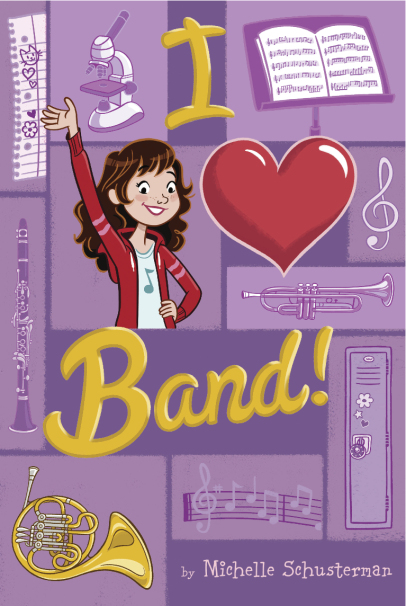
And sometimes nobody wins from the original test group of illustrators. For Michelle Schusterman's I Heart Band cover, for example, it ultimately went to a non-test grouper, Genevieve Kote, whom Giuseppe found through Twitter!

also out soon!

And if you aren't following Giuseppe on Twitter yet, YOU are missing out on some lively art and publishing tips, and I pity you fools. @pinocastellano


Final piece of advice from Giuseppe: Illustrators must have some sort of Internet presence (not Facebook) or many art directors are likely to skip over you, a strong internet presence lets them easily see what else you can do.