Showing posts with label Arthur A. Levine. Show all posts

Sunday, February 12, 2023

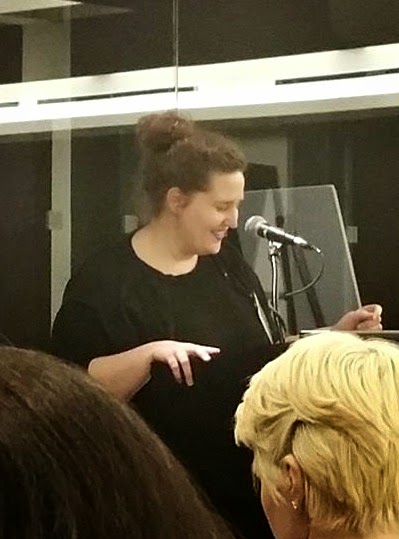
Arthur A. Levine and Patricia Ocampo - The Outlook for Children's Publishing in 2023

Moderated by the amazing Martha Brockenbrough!

Arthur A. Levine is the founder and editor-in-chief of Levine Querido, a small independent company devoted to publishing excellent books by people from communities that have traditionally been under-represented. He identifies as Jewish, Disabled, Queer, a Parent, a Writer, and someone who continues to be amazed by the power of a great read.

Arthur A. Levine

Patricia Ocampo is a senior editor at Kids Can Press. In her almost two decades in publishing, she has worked in editorial, sales, rights, and production. She also worked “the other side of the desk” as a children’s literary agent. Patricia is past president of the Canadian chapter of the International Board on Books for Young People.

Patricia Ocampo


Highlights from the panel's insights and wisdom:

3 words that define Arthur's taste: emotional, riveting, personal

Patricia tells the story of being 18 and watching a stranger give birth. It helped her realize that she didn't want to be an OB-GYN, and also felt amazing - it was "completely personal, intimate moment" that also had universal emotions of wonder and joy... and she feels that way about working in children's publishing!

Advice from Patricia: Don't just consider the size of the advance - also consider earning out, longevity, committment to sales and marketing (and how creative that marketing plan might be.)

Arthur speaks about sales and marketing, and how "Editors usually have very little control of what happens, other than editorially."

What sort of work stands out to them?

Patricia: "something different" - inbox overwhelming, there's so much coming in, with all respect to how hard authors work on their manuscript, it all starts to read the same. Any different approach gets her to pay attention.

Arthur: yes, and... we also mean not different for different's sake. (Don't put it on pink paper.) "To me, something that feels authentic. If you go into a room and everyone's dressed identically, and there's just one person dressed as themselves, you would notice them." And this also applies to illustration - how a lot of the current Disney/Pixar influenced work starts to seem seems similar - and you're looking for things that stand out.

Arthur speaks of the mission of his publishing company, searching for and giving platform for historically underrepresented voices, fighting against the single story.

Patricia discusses that in acquisitions, no matter how good a project is, there's a question - do I want to work on this for five years?

The conversation covers auctions (not a panel favorite), Barnes & Noble's health (with less returns), BookTok, and much more...

The Panel Begins! "The Outlook for Children's Publishing in 2023"


Moderated by Martha Brockenbrough (standing at left), the panelists are (left to right): Regina Brooks (Agent at Serendipity Literary Agency); Linda Camacho (Agent, Gallt and Zacker Literary Agency); Patricia Ocampo (Senior Editor, Kids Can Press); Kate Egan (Executive Editor, Pixel + Ink Books); and Arthur A. Levine (Founder and Publisher, Levine Querido).

Sunday, August 2, 2020

#SCBWISummerSpec Editors Panel: Arthur A. Levine

After a wonderful conversation with Sir Phillip Pullman on Friday afternoon to start off the Summer Spectacular in the best possible way, Arthur A. Levine is back to take part in the Editors’ Panel: Discovering New Talent and Publishing New Books: The Challenges, The Decisions, The Criteria. Arthur has well over 30 years of experience in children’s book publishing. He first worked his way up to Editor in Chief at Knopf Books for Young Readers, and then founded the imprint Arthur A. Levine Books at Scholastic, and after 23 years as its President and Publisher, he founded Levine Querido in April 2019, where he is determined to showcase a diverse range of voices, delivering “The Best of the World’s Literature for Young People” to readers.


Arthur is joined on the panel by Namrata Tripathi (VP & Publisher of Kokila, an imprint of Penguin Young Readers), Julie Straus-Gabel (President and Publisher of Dutton Books for Young Readers at Penguin Random House), Stacey Barney (Executive Editor at G.P. Putnam’s Books for Young Readers), Neal Porter (Founder Neal Porter Books, an imprint of Holiday House), and Jill Santopolo (Editorial Director of Philomel Books, a Penguin Young Readers).  


When thinking about the criteria he uses to find new talent, Arthur speaks of his company’s motto: “Beloved books, beautifully made, giving voice to a world of talent”


And “beloved” is a central consideration when thinking about the kind of books Levine Querido is interested in publishing. 

“We are looking for books that not only do we love reading now,” Arthur says, “but that you could imagine being a beloved book . . . One that stands out for a reader in that special shelf of books they treasure forever.” 

He spoke of the concept of books having an essential truth.
“A book having an essential truth—that there’s some essential truth in that book that you carry away with you and it stays with you maybe for the rest of your life.”

A few examples he gave of books his worked on over his career are:

 
Officer Buckle & Gloria by Peggy Rathmann
Essential truth—Always stick with your buddy
“If you carry that through in the rest of your life, you’ll have something good.”


Mirette on the High Wire by Emily Arnold McCully
Essential truth—Think only of the wire and of crossing to the end
“Truly it’s everything, the project you’re working on. A challenge that you’re facing. If you can break it down, if you can only think of the wire, the path that you’re on and of crossing to the end, you’ll be okay.”


Everything Sad Is Untrue (a true story) by Daniel Nayeri
Essential truth— Your truth, your deep truth is untouchable

Arthur says you need to grab the book August 25th to know the full meaning of its essential truth. J


Levine Querido is all about “beloved books, beautiful made,” which also speaks to the fact that their books will have an “exceptional quality” and lasting appeal.  

Friday, July 31, 2020

Sir Philip Pullman in conversation with Arthur A. Levine: Kicking off #SCBWISummerSpec

Sir Philip Pullman and Arthur A. Levine kicked off the opening events for this year's virtual SCBWI Summer Spectacular with entertaining insight and thoughts about writing. I drew along as I listened, and here were some of my favorite moments:

He said writing is made up of "persistence, talent, and luck" -- and that persistence is the only component we can really control.

He said he thinks about his characters as being in a play or a movie, and he is the director, which means he gets to decide where to put the camera in every scene.

Additionally, he finds fantasy a helpful tool to assist storytelling, and humbly said it's "easier to make things up" and that he's "very lazy"! (We all know that isn't true.)


I'm not very consistent about rules. Rules are for editors. –Sir Philip Pullman

When asked why he sometimes uses challenging vocabulary in his books, and doesn't try to adjust the language for a younger age, he said he hoped that readers would stick with it anyway. "We continue with things we don't understand because we learn from them." He also said:

"I trust readers to be at least as intelligent as I am, probably more."
"I'm writing for anyone who wants to read it."

The conversation turned toward the subject of morality and optimism, writing our values and sharing them with our readers. He said:


He shared charming anecdotes, such as being motivated by a threatening letter received from a young reader:
"Finish your book or the squirrel will die!" That's *one* way to motivate your favorite writer.

Some timeless and consistent advice for those aspiring to publish their books in the future:

"If you want to develop your craft as a writer, read."

There was so much more than I could possibly cover in this post: dinner with Tolkien, frozen margaritas and bolo ties, Paradise Lost (but for kids), present tense narration as the "scourge" of children's literature... 

Follow along with me @boygirlparty on Twitter / @boygirlparty on Instagram -- and follow the conference hashtag #SCBWISummerSpec -- for more conference highlights (and more of my live drawings!)
 See you again tomorrow morning bright and early for a live conversation with another legend, Judy Blume.

Saturday, August 4, 2018

Panel: Culture, Identity, and Writing: Where Do They Intersect? - The Panel Begins!

Moderated by Arthur A. Levine (far left), the panelists are (continuing left to right): Dashka Slater, Malinda Lo, Aida Salazar, and Ibi Zoboi.


Sunday, February 4, 2018

The LGBTQ + Allies Social

An intimate circle, the group included conference faculty guests Laurent Linn, Emma Dryden, Ellen Hopkins, Jane Yolen, Heidi Stemple, Jeffrey West, Arthur Levine, and Erika Turner.

We went around the circle, everyone introducing themselves and sharing what they're working on that has LGBTQ characters and themes, sparking lots of discussion.

Standout moments:

Ellen Hopkins on why she includes LGBTQ characters in her novels: "I write the teen landscape." And how the current political and cultural climate makes it "more important than ever" that we're here talking about LGBTQ characters and themes in books for young people.

Emma Dryden on how agents are telling her that they're looking for manuscripts in which gay is incidental...

Which lead to a broad discussion on how we need all kinds of books on the LGBTQ experience, books that star the LGBTQ character and books where they're part of the ensemble, books where it's about the LGBTQ experience, and books where it's about something else entirely and the characters' identity is incidental.

Laurent Lin spoke about visiting schools via the Lambda Literary Foundations Authors in Schools program,

The conversation covered controversy and backlash, the responsibility we have to our readers, and so much more!

Jane Yolen speaking with attendee David Daniel after the circle opened to more informal discussion 

Saturday, July 8, 2017

Arthur Levine: Celebrating Diversity, Tradition, and Change

We have a special keynote this year of the entire Arthur Levine imprint being in the house!

There was a time when Arthur WAS the diversity of his imprint/publishing house, now he's happy that he's just one part of it. Arthur explains it's a simple fact that while every kid has feelings, has a family, and lives in a neighborhood, each combination of these things is unique to each child. And the more combinations we get to see, the more we get to know the real world and help kids find their own unique life and way in the pages of a book.

That said, it's easy to believe that the core values or principles of Levine Books are: To find and publish diverse books, the best books of the world, the best books of their kind, a celebration of new voices, or a combination of all four. Below are a few examples of titles from Arthur. Look for the other blog posts related to this keynote to read Kait, Nick and Weslie's examples of these book types, too.

New Voices. The Levine team loves finding new voices at conference just like this or in their inbox.
You may have heard of a once new voice from England whose book made it onto Arthur's second list... He wasn't imagining world-changing sales when he first read JK Rowling's manuscript, he loved it because it made him laugh on one page and cry on the next. He felt like it would be a kid's treasured favorite that would stay with them as adults. (Arthur says his current staff literally grew up with HP as their treasured favorite book).

Best of Its Kind. THE GAME OF LOVE AND DEATH, by Martha Brockenbrough (whom he met at an SCBWI conference) he describes her as a genius you just have to follow. To Arthur this is a title that demonstrates that no idea is too big for a novel if it is grounded in the lives and emotions of its characters.

Best of the World. THE STORY OF A SEAGULL AND THE CAT WHO TAUGHT HER TO FLY. Originally a title from Chile by Luis Sepulveda (illustrated for Scholastic by Chris Sheban), takes a situation and characters that would normally be portrayed in a goofy, slapsticky way but instead they are portrayed in an incredibly moving way, and full of love and showcases the diverse nature of families.


Arthur A. Levine 2.0 - The Keynote Celebrating Diversity, Tradition, and Change


Left to right: Publisher Arthur A. Levine, Editor Nick Thomas, Associate Editor Kait Feldmann, and Assistant Editor Weslie Turner.

Saturday, February 11, 2017

The LGBTQ + Allies Q&A Social

With an expanding circle as more and more people arrived, and with special guests that included Ellen Hopkins, Heidi Stemple, Laurent Linn, Ellen Wittlinger, Matthew Winner, and Arthur Levine, the social opened with a conversation about the responsibilities and challenges of speaking up about diversity, equality, human rights, and politics as people who create content for children.

Then each person around the circle introduced themselves, sharing what they're working on.

And then, for another hour +, people mingled and chatted and exchanged cards with their new tribe-within-a-tribe friends.

Two moments that are still resonating for me:

On an Ally author's reluctance to make a fantasy character queer:
"I want to give you permission that you know as much about a two-headed dragon as anyone." - Arthur A. Levine.

"Don't let anyone shut you up. You have a story to tell. Tell it. ...Somewhere along the way, children will hear it and they will be saved." - Jane Yolen

The evening was brave and beautiful.

Saturday, February 7, 2015

The LGBTQ Q&A

With conference faculty guest agent Tina Wexler, agent Jennifer Laughran, Art Director and Author Laurent Linn, Best-Selling and Award-Winning Author Jane Yolen, editor Emma Dryden and editor and publisher Arthur A. Levine, our group of more than forty attendees gathered to share and talk about  writing and illustrating LGBTQ characters and themes in works for children and teens.

In moments ranging from hilarious to somber,  topics covered included picture book art notes (dos and don'ts), gender non-conformity, gender challenges in the English language, and the urgent need for more books with LGBTQ diversity.

At one point, an ally voiced a concern about writing from a queer perspective, and the consensus was to not hold back about writing from other points of view (outside your own.) To do your homework, to run it by people who are members of that community...

Arthur: "I urge you to not be self-conscious"

Jane: "In terms of getting it right. In terms of getting the feelings right."

It was a great conversation and the room was filled with a sense of warmth and community. We sat in a circle, each person sharing their name and what they're working on, with our conference faculty (and myself) chiming in with thoughts, advice and insights.

Once the session ended, many participants stayed to exchange contact information and mingle. The pictures are from that part of the evening:


I was honored to host - my thanks and appreciation to the panel and all the attendees!

Lee


Emily Clement: Seven Essentials You Need to Know about Writing Literary Fiction

Emily Clement is an associate editor at Arthur A. Levine Books, an imprint of Scholastic. She has worked on books by Shaun Tan, Jaclyn Moriarty, Alaya Dawn Johnson, and Erin Bow, among others.

She manages her imprint’s international literature program, and has edited books translated from German, Dutch, and Russian. Emily attended Stanford University, followed by the Columbia Publishing Course, and translates children’s books from Italian. She grew up in Tempe, Arizona, and now lives in Brooklyn.

She talked to us about what that tricky word "literary" means, and how we can achieve it in our writing. But first, she told us the backstory behind a Russian novel coming out on the Arthur A. Levine spring list.

Called "Playing A Part," it was published just after Russie passed anti-gay propaganda laws. While it wasn't illegal for the book to be published, it could not be shelved with children's books.

After she read about it in The Atlantic, she looked into acquiring it, not knowing whether it was well written or appropriate for their list. She discovered a "gorgeous, beautiful, moving, and sensitive novel." And now it's the first young adult novel to be translated from Russian into English.

"It's crazy that hasn't happened before," she said.

The word "literary" is a tricky one for her. She doesn't love talking about books as literary or commercial because the two things aren't mutually exclusive. And some people are put off by the concept of literary, so she always tries to pair the word "accessible with it."

Here are four items from her list of seven essential literary qualities:
  1. It's about something. The book tackles a big idea and one of the larger themes of life, challenging the reader to think from a new angle.
  2. It has voice. Voice is informed by the character and his or her world, and makes your work engaging and feel authentic. 
  3. It has plot. You can tell if your plot is lacking if you can't explain your book's premise in a few sentences (and the usual cause is that your voice is getting in the way).
  4. It has resonant details. "Every piece of clothing, every meal, every book your characters read" is intentional. 
Some books Emily recommends for their literary qualities:


Saturday, August 2, 2014

No Fighting, No Biting: Arthur A. Levine on Communicating without Pissing People off

Arthur Levine and
Deborah Underwood
started off with a song.
Arthur Levine is something of a legend in the children's publishing industry. He's published many beloved books, including Philip Pullman's His Dark Materials trilogy, J.K. Rowling's Harry Potter series, and the comic novels of Lisa Yee.

He founded his own imprint at Scholastic, Arthur A. Levine Books, in 1997. The imprint publishes everything from picture books through young adult novels. His authors and illustrators include Shaun Tan, Dan Santat, Markus Zusak, Francisco Stork, Erin Bow, Mike Jung, and Jaclyn Moriarty.

What's more, Arthur is the author of several picture books—A VERY BEARY TOOTH FAIRY, illustrated by Sarah Brannen, is the latest. So he knows about communicating from both sides of the email server.

He talked to us about things that can derail communication between editors and authors, using principles that work in critique groups (and in real life).

Here are three of the thoughtful, helpful tips he shared.

1. Don't leave anything out. The person you're writing to doesn't necessarily already agree with what you're trying to say. For example, if you describe something as a "circular story shape," does everyone know what you mean?

"The narrative was hurt by Jordan's snide remarks" might not be the best feedback, for example. The writer might not feel the remarks were snide. The writer might feel attacked.

A better way to say that might be to give a specific example, perhaps like this: When Jordan says his mother's kindergarten class is full of party poopers, he was less sympathetic. Did you intend for that to be the case?

The shorthand might feel insulting. The more specific reaction, built off positive reactions, is more clear and ultimately more helpful. 

2. Leave some things out. He shared an exchange from a cover discussion where an author tactfully expressed preference for an earlier sketch, where an agent chimed in with something that sounded harsh and critical.

Don't assume everyone agrees with you. Inflammatory political commentary on Facebook can be off-putting, for example.

3. Be respectful of people's boundaries. A fellow editor told him the story of someone showing up with a manuscript at her home office. (Yikes!)

If you sense someone getting defensive or upset, back off, or apologize, or find a different way of communicating. When someone gets upset, it's natural to want to respond with equal anger. But the anger is a someone setting a boundary. Instead of charging the boundary, try retreating and apologizing, he said.

He talked also a bit about email, which gets a bad rap as a communication medium, but isn't always bad. Calling people when you're angry is a bad idea. Taking the time to think and compose a thoughtful email can be very effective.

Follow Arthur A. Levine Books on Twitter.
Like the imprint on Facebook

Sunday, February 23, 2014

The Art of the Picture Book Panel begins!


Lin introduces the picture book panel, from Left to Right, Moderator Arthur A. Levin, Shadra Strickland, Oliver Jeffers, Marla Frazee, Raúl Colón and Peter Brown.

Saturday, August 3, 2013

The LGBTQ Q&A

Once again it was my honor to host the Lesbian, Gay, Bi, Transgender and Queer Question and Answer Event!

Our conference faculty attending as special guests were editor Arthur A. Levine, editor Emma Dryden, author Kristin Venuti, agent Tracey Adams and author Ellen Hopkins.

We had over fifty conference attendees attend, and the questions and conversation covered a range including:

Writing the "other"
Post-gay (post-trauma) stories
The need for editors, agents and authors to go outside our comfort zones

There was a lot of discussion about recognizing that when you write an LGBTQ character, that's not the sum total of them as a person.  It's part of who they are.  And you need to write the other parts, too.

As Emma Dryden said so eloquently,

"Stop thinking about them as queer and just think of them as people."

It was a wonderful gathering, and many attendees stayed around afterwards to mingle and socialize (Which was when I remembered to take these photos!)


Sunday, February 3, 2013

The Autograph Party

Almost the moment Mo Willems' keynote speech ended, people started lining up to get their books signed and we kid you not, the line ran the length of a football field (that's 100 yards, for those of you unfamiliar with the sport, or 91.44 meters if you're Canadian).

It's no wonder people are so excited to have their books inscribed, when you share the room with the likes of Julie Andrews, Mo Willems, Shaun Tan, Jane Yolen, Tomie dePaolo ...

We could and should go on, but we'll let the pictures speak for themselves. 

Mo Willems

Shaun Tan fans standing in a queue (do they say that in Australia?)

Shaun Tan

Mark Teague and Floyd Cooper

Meg Rosoff and David Ezra Stein

Lin Oliver and Theo Baker

Tomie DePaola and Jane Yolen

Margaret Peterson Haddix and Matthew Kirby

Arthur Levine is a full-service editor. Here, he's opening
the book to the right page for an inscription.


Friday, August 3, 2012

Arthur A. Levine's Keynote: Timeless: What Goes Into To Making Timeless Books

Arthur glowing on stage.


Arthur A. Levine is Vice President and Publisher of his own imprint Arthur A. Levine Books, which is celebrating its 15th Anniversary at Scholastic!

Think Harry Potter is "Timeless?"  Well so did Arthur, which was why he was the co-editor of the series by J.K. Rowling.

He's sharing an excerpt from "The Once And Future King" by T.H. White, talking about the impact of moments of intimacy on readers.

The importance of authenticity in that moment when the author, their characters, are speaking in a way that isn't canned, but you feel they're "telling you the truth in a way they wouldn't tell anyone else."

As a publisher, Arthur asks himself,

"If you were going to recommend this book, would it be the BEST book of its kind?" 

when he answers yes, he thinks it's Timeless.  And he publishes it.

He's sharing a number of the titles he's published that made that cut, and explaining why and what he feels makes them Timeless.

From the picture (and board) book "Good Night, Gorilla" by Peggy Rathmann 


to "The Golden Compass" by Philip Pullman to 

"Harry Potter and the Sorcerer's Stone" by J.K. Rowling to 


"How are you Peeling? Foods with Moods" by Saxton Freymann and Joost Elffers

to "The Arrival" by Shaun Tan 


It's a talk full of insight and inspiration, with moments that make us marvel at the 

"breathtakingly vivid connection between character and character, character and reader, and author and reader."

Now we all get to aim for our own work to be (say it with me), Timeless.

Thanks, Arthur.