Showing posts with label #NY14SCBWI. Show all posts

Sunday, February 23, 2014

What A Conference! Thank You and We'll See You In Los Angeles!

Though we're missing Suzanne Young (cheering you on Suzanne, for the release in the UK of your YA novel "Just Like Fate!"), all of us on Team Blog want to thank you for sharing in this digital expression of a weekend overflowing with craft, inspiration, business, opportunity and community!

Special shout outs of appreciation to our Conference Illustrator Journal participants Andy Musser, Arree Chung, Brooke Boynton Hughes, Dana Arnim, Elizabeth Dulemba, Mike Curato and Suzanne Kaufman. (Those links will take you to their conference illustrations!)


Clockwise from the top: Lee Wind, Jaime Temairik, Martha Brockenbrough and Jolie Stekly

Check out all the conference blog posts (and leave comments where you'd like to join in the conversation), explore the conference quotes on tumblr and get your feet wet (or better yet, jump into) the #ny14scbwi tweet-stream.

Did you attend and blog about your own conference experience? Add a comment (with a link!) here on this post.

We hope you'll join us at the SCBWI Summer Conference August 1-4, 2014 in Los Angeles, California. The faculty will include Aaron Becker, Stephen Chbosky, Tomie dePaola, Sharon Flake, Meagan McDonald, Meg Rosoff, Judith Schachner, Maggie Stiefvater, plus a bevy of agents, editors and art directors! (Information coming soon here.)

See you in Los Angeles - and before that, online!

Illustrate and Write On,

Martha Brockenbrough

Jolie Stekly

Jaime Temairik

Lee Wind


Nikki Grimes: Keynote on Patience, Perfectionism, and Poetry

The wonderful Nikki Grimes
Nikki Grimes is a poet and bestselling author for children and young adults. 

Her novel-in-verse WORDS WITH WINGS, about daydreaming, just won a Coretta Scott King honor award. It's her fourth such award.

She's also won the 2006 NCTE Award for Excellence in Poetry for Children. She also wrote the ALA Notable book WHAT IS GOODBYE, the Coretta Scott King Award winner BRONX MASQUERADE, and the novels JAZMIN'S NOTEBOOK, DARK SONS, and THE ROAD TO PARIS.

You can learn more about her at her website.

Lin introduced Nikki thus: "Her language soars. Her language takes children into ordinary worlds they might not know."

"I've been writing for 57 years," Nikki said. "That's an extremely long time to do anything. There's one thing I've been doing longer than that: daydreaming."

She read to us from WORDS WITH THINGS and PLANET MIDDLE SCHOOL, which she and her editor refer to as PMS.

She never had an intention to write a book about puberty, but she was asked to contribute something to an anthology about first kisses. She put together a partially true narrative called BREATHLESS. That poem circulated around her editor's office, and they loved it so much she was invited to turn it into a novel. She didn't know how she'd do that, which made her want to try.

When she writes, she can never wait to get to the last line of a poem and will rush and write headlong to get there. Her love of speed made her a fan of Wile E. Coyote. She's fast about everything, and one of the things that helps her write quickly is being impatience.

"Patience is not in my DNA. I don't even write poetry about patience."

When she has an idea that excites her, she can't wait to produce it so she can see how quickly the finished work matches her original vision. 

"Here's something else to know about me. I suffer from an ailment known as (pause) perfectionism."

Impatience and perfectionism means you spend "an inordinate amount of time in hell... Bring on the Excedrin and bring it now."

"What I've learned from a lifetime of being an impatient perfectionist is that both characteristics can be useful," she said. "Keep a rein on them, though."

"It's so important that we ask ourselves the hard questions, that we're honest with ourselves about our level of skill," she said.  In other words, you're sometimes not ready to tackle a great idea you have. "They're hard to come by and you don't want to give them short shrift," she said.

With BRONX MASQUERADE, she didn't feel she had the skill to execute on it then. So she waited. She put aside her notes and went back to writing poetry collections. During that long waiting period, other story ideas bubbled up. A wise editor guided her into writing a novel, a project that felt fraught at times. But her editor encouraged her to "just keep writing," reassuring her that she would figure it out later.

This book has eighteen points of view--a huge challenge. She wrote one at a time, but still didn't have the story thread that tied them all together. "Once again," she said, "I had to wait."

During that six- to seven-month period, she visited a local high school where students were studying the Harlem Renaissance. He wanted his students to meet a poet from Harlem, like Nikki, who had been influenced by those writers. Amazing things were happening at the school. Poetry was the talk of the hallways. She decided to read through her manuscript and see if something spoke to her.

"And all of a sudden I started thinking about that school visit and those students and that poetry movement and I realized, that's it. The poetry movement at that high school is the perfect skeleton on which to hang my poems and monologues."


Nikki had us all spellbound.
She worked and worked. But her editor still wasn't satisfied.

"What you need, she said, is a Greek chorus." So Nikki created a character, Tyrone Bennings, who could comment on the others (even as he grew himself). That worked, and then she had to rewrite the ending three times before her editor was satisfied.

She summed up her talk with words that will give us all wings:
"It had taken me years to come up with the idea and even more years to figure out how to execute it. Do you have a classic in you? Take a deep breath and dig in. Give yourself permission to take the time and write it well. Whatever you do, don't be in such a rush that you settle for good when your story has the capacity to be great. Great books are what young readers deserve. Great books are what we should strive to give them, and the key to doing that is patience."


Kate Messner: The Spectacular Power of Failure

Kate Messner is the award-winning author of  over 20 books for young readers.

Kate says there's great pressure when you decide to give a talk on failure. Especially when you create a folder and document called FAILURE. Given the giggles she is receiving from this crowd, I don't think she needs to worry.

In 2012, Kate was invited to give a TED and she learned several lessons from that experience.

Lesson #1
Be Brave!
But it's okay to be afraid.

If you're not nervous, it's not worth doing.

There is a kind of fear we feel when we push the limits past our own boundaries, the ones that feel safe.

"You can’t have brave without scared." ~HOUND DOG TRUE by Linda Urban 

When Kate is scared, she's given an opportunity to be brave.

Lesson #2
Never underestimate the power of failure.

As writers and illustrators we set all sorts of bars for ourselves with the statement: "If I could just…"

If we keep moving the bar, we can turn anything into a failure. We cheat ourselves of our many successes. 

What small successes have you had lately? Celebrate them!

"You have to fall if you want to fly."

Athletes know they fall when they train and eventually they will get it and move on to a new challenge. It would be good for us to adopt some of these philosophies as writers and illustrators. 


"It's in doing the work, in writing the words every day...that my best work emerges."

It's important to use feedback to help us grow and not let it stop us. 

The Spectacular Power of Failure:
~Failure tells us that we're going in the right direction.
~Failure teaches us to ask for help.
~Failure brings us together as a community of writers.
~Failure teaches us to celebrate the dance. 
~Failure lets us be role models.

"A ship in harbor is safe. But that is not what ships are built for." ~John A. Shedd

Raúl Colón: The Art Of The Picture Book Panel

Raúl Colón


Inspired by Kate's incredible keynote on The Spectacular Power of Failure, Arthur's first question for the panel is about failure. What mistakes have the illustrators made? And it yielded a ton of great advice and insights!

Raúl Colón shared how:

Sometimes he's asked to do the cover first, but he prefers to wait until the end of the process of illustrating the book before doing the cover, because "you learn as you're going, and you get better at it."

Biggest mistake he ever made?

Raúl tells the story of drawing a poster for broadway - he had a problem with one of the hands, and after it was approved and printed and out there in the world, he got a call that there was a problem - the hand he'd had trouble with had six fingers! Raúl laughed at it now, saying it was like the stamp with the upside-down planes. A collector's item! When he was moving the hand around, he forgot to erase one finger.

He says 'you'll make mistakes, but because you sketch, you sketch, you do color studies sometimes, you've done enough work, do at least one piece, you'll figure out how colors work in combination, then you'll be able to do the project start to finish. You'll get a lot of experience and know what you have to do - and that helps.'

About trends they are seeing, Raúl speaks about marketing and how it's impacting the stories submitted to him to consider. He shares he's done a lot of biographies, and he's looking to get into more open and fun, cartoony-style work.

Raúl also talks about being professional, choosing projects that you'll be interested in from beginning to end, adding a visual story to the textual story, his take in the great authors-including-illustration-notes-in-their-picture-book-manuscripts debate, how he visually develops characters, and more...

It's a great panel.

You can see inside some of the picture books Raúl has illustrated here. A few titles:


You can see more of Raúl's artwork here.

Raúl's bio:

New York City has been Raul's loyal patron, from illustrated New Yorker covers to an MTA mural at the 191st. St. subway station to work in the New York Times.
Along with all this 'grown up' work, Raul Colón is a most prolific and popular children's book illustrator, happy that his time is always committed to publishers for years hence. In recent years he is pleased that his work has been recognized with The David Usher Greenwich Workshop Award from The Society of Illustrators as well as SI Gold and Silver Medals; honors from Communication Arts and 3x3; two Pura Belpre Awards; twice included in the NY Public Library's 100 titles for Reading and Sharing; and twice recipient of The Tomas Rivera Mexican American Children's Award. Raul lives north of New York City with his beautiful wife, Edith, who can often be spotted as the model for his characters.

Oliver Jeffers: The Art of the Picture Book

Oliver Jeffers' many books are beloved around the world.

His titles, available in more than 30 languages, include  HEART & THE BOTTLE, LOST & FOUND, STUCK, THE HUEYS, THE INCREDIBLE BOOK EATING BOY, THE GREAT PAPER CAPER, and THE DAY THE CRAYONS QUIT. (Read about these and more on his website when you have a chance.)

Oliver started off the picture book panel by talking about his process and what he does when he gets stuck.

"Whenever I get to that point and don't know what the next move is, the answer is already really simple: do something else," he said. "Maybe it's working on another project. Whenever I'm not beating my head over what the answer is, that's normally when it presents itself."


(Note: We sort of wish he'd get in a tree and people throw things at him, as happens in STUCK. If you threw a Peter Brown at a tree, for example, would it make an Oliver Jeffers fall out?)


With his first book, he'd finished the project before he submitted it. It was published in similar form to what he'd submitted. But later projects have been different, and learning to work in a collaborative publishing environment did take some time, he said.

"It took me four to five years to learn how to listen to someone," he said, "and it took them that long to learn that I am always right."


When he's working on books, he wants them to have a timeless quality, and he also wants them to appeal all around the world, so he purposely makes the locations vague. This is working: He's gone to places as far as Mexico and Kuala Lumpur, and the kids there think the stories are set in their countries.

How do you bring out character?

"My characters tend to all look the same," he said. "It's what they do that is the most important thing."

The Hueys, for example, began as an experiment to convey emotion with as little detail as possible. Then, as the cliche goes, the characters took on lives of their own.


"It's just trusting your intuition," he said. 

The characters are simple, but the movements are based in reality. He sometimes has people do the poses for him. "Basing things in reality is really important."


Watch Oliver read STUCK

What will you fight about next? 

The Hueys Argument Predictor

Visit Oliver Jeffers World

The Art of the Picture Book Panel begins!


Lin introduces the picture book panel, from Left to Right, Moderator Arthur A. Levin, Shadra Strickland, Oliver Jeffers, Marla Frazee, Raúl Colón and Peter Brown.

Andy Musser: Conference Illustrator Journal #NY14SCBWI

Andy is in with these images…


Andy Musser is an illustrator/animator who loves to write stories and draw silly pictures. He received his B.F.A from Rocky Mountain College of Art + Design, having studied both illustration and animation. Andy lives near Seattle where he works with a variety of companies as a freelancer. To view his work, please visit his website: www.andymusser.com

Arree Chung: Conference Illustrator Journal #NY14SCBWI

Arree is in with these images:

Inspired by Kate Messner's inspiring keynote


Elizabeth Wein

Paul Aiken on the Future of Authorship Keynote panel


Arree loves storytelling and art. After working in management and consulting fields, Arree decided to pursue his love of art at Art Center College of Design.

Since graduating from Art Center, Arree has worked in the Entertainment Industry as a Concept Artist and Art Director. Arree's calling to make children's books began midway through his time at Art Center. In 2010, Arree won first place at the SCBWI Western Washington Portfolio show. Although this was a good start, it would be a few more years until Arree would get his opportunity to be published.

While attending the Illustrator Intensive at SCWBI 2012 Summer Conference, Arree received his big break. Arree's picture book dummy, Ninja! showed promise. Shortly thereafter, Arree began to work with literary agent Rubin Pfeffer. In November of 2012, Ninja! was acquired by Henry Holt as a part of a three picture book deal. Ninja! publishes June 3, 2014.

Arree continues to work on several picture book stories as well as writing a middle grade novel encompassing the Immigrant experience. Arree lives in the San Francisco Bay Area.

You can find out more about Arree at his website, http://arree.com/

Arree also shared these bonus illustrations from the Friday illustrator intensive, writing "The brilliant Tomie dePaola shares his knowledge of theatre and how it influences his illustration work.":


Mike Curato: Conference Illustrator Journal #NY14SCBWI

Mike is in with this image, also inspired by Jack Gantos' keynote - pulling out a visual pun!


Mike Curato is an illustrator/author/designer living and working in Brooklyn. His debut picture book Little Elliot, Big City premiers 9/2. This is his third SCBWI Winter Conference.

You can visit his website here.

Happy 75th Birthday to Jane Yolen!


Right before the announcement of the Jane Yolen Mid-List Author Grant, Lin shared that it was Jane's birthday, so the more than 1,000 of us sung Jane Yolen "Happy Birthday!"

And after the singing, Lin announced that to honor Jane's birthday, her incredible career, and her commitment and years devoted to SCBWI, the SCBWI will be making a generous donation to the Dickinson Memorial Library in Whately, Massachusetts, towards building a collection in Jane’s name.


Thanks to Gaby Triana for the photo.

Saturday, February 22, 2014

The LGBTQ Q&A

Once again, it was my honor to host the LGBTQ Chat - a discussion of including lesbian, gay, bisexual, transgender, queer and questioning characters and themes in works for children and teens.

Faculty members Jane Yolen, Emma Dryden and Ellen Hopkins spoke and answered attendee questions as we travelled around the circle and people shared what they were working on.

Emma shared some great market and story advice, and each of our faculty were encouraging - a true safe space. Some highlights and moments from our wonderful session:


Jane Yolen: "There's nothing off the table when you're writing a novel… if you do it well.  And then you set a new benchmark."


Ellen Hopkins: "Books don't create queers. The just offer empathy and understanding to that space."


And Ellen's call to action for us all to write the stories we need to write are still resonating:

"Be fearless!"

Suzanne Kaufman: Conference Illustrator Journal #NY14SCBWI

Suzanne is in with two images from Laurent Linn's "Implementing Self Promotion For Illustrators" breakout workshop,


And two images from Holly McGhee's breakout workshop, "Developing Your Illustration Style/Brand":


Suzanne Kaufman is a award winning animator/author/illustrator of I LOVE MONKEY and just released her first Kindle book PRINCESS AND THE PEA for Amazon Children’s Publishing. Over the years, she’s done everything from animating special effects for Universal and Discovery, to animating award-winning video games. Before moving into children’s book publishing she was the Animation Lead at Sucker Punch Productions for Sly Cooper trilogy of games that were awarded the Academy of Interactive Arts and Sciences “Innovation in Art Direction”, “Innovation in Animation” and “Children’s Title of the Year”. She lives in Seattle and teaches character animation and illustration at Digipen Institute of Technology.


Find out more at www.suzannekaufman.com and www.suzannekaufman.blogspot.com for her sketch of the days post.

Elizabeth O. Dulemba: Conference Illustrator Journal #NY14SCBWI

Elizabeth's in with

"my view"


and this great image of Jack Gantos, illustrating a moment from his keynote:


Thanks, Elizabeth!

Want to know more?

Elizabeth O. Dulemba is an award-winning children's book author/illustrator with two dozen titles to her credit. She gives back to the community that supports her as Illustrator Coordinator for the Society of Children's Book Writers and Illustrators (SCBWI) Southern Breeze region (Alabama, Georgia, Florida panhandle) and as a board member for the Georgia Center for the Book. She is a Visiting Associate Professor at Hollins University in the MFA in Children's Book Writing and Illustrating and Certificate in Children's Book Illustration programs. She also teaches writing and illustration at other venues and speaks regularly at schools, festivals, and events. Her latest picture book is LULA'S BREW (Xist Publishing) and her debut historical fiction mid-grade, A BIRD ON WATER STREET, will come out May 7 2014 (Little Pickle Press) and is available now via e-book formats here. Her "Coloring Page Tuesday" images (free to parents, teachers and librarians) garner around a million hits to her website annually with over 3,000 subscribers to her newsletter. Visit Elizabeth's website here.

Elizabeth also shared these sketches from Friday's illustrator intensive:

Paul O. Zelinsky

Tomie even signed this sketch Elizabeth did of him!

Ellen Hopkins: Banning Books - Where Do We Stand?

The extremely accomplished Ellen Hopkins
Ellen Hopkins is the bestselling author of eight novels for young adults.

She's also written more than 20 nonfiction books, as well as a couple of adult novels.

Ellen is no stranger to controversy when it comes to book content. In 2010, she was the most-challenged author in the United States.

Her books about tough contemporary issues such as drug use and prostitution have been frequently challenged. She fights back vigorously, knowing from personal experience how vital some of these topics are for young readers to encounter in books. Eighteen years ago, her daughter tried drugs, and has struggled ever since. Sadly, Ellen reported that her daughter returned to prison today, and Ellen has become the guardian to her three young grandchildren.

Ellen has made it her mission to show the consequences of these painful decisions in literature. She writes books to change lives in a positive way.

"I was damn well determined if I was going to turn one kid away from that path, I was going to do it," Ellen said. "We write for our readers. We know who we're writing for. We know where they're living."

"If it's offensive to some parent, I don't care," she said. Books can help kids who've experienced traumas like sexual assault understand that they're not alone. 

She urged all of us writers to tell the truth, no matter what type of story we write. "That's your job as an author, and we will stand behind you." 

Elizabeth Wein Keynote: Bearing Witness: Authorial Responsibility

Elizabeth Wein has been an SCBWI member since 1991. Her first five books for young adults are set in Arthurian Britain and sixth century Ethiopia, but she is best known for her recent World War II thrillers Code Name Verity and Rose Under Fire. Code Name Verity was showered with an array of accolades including the Edgar Award, Printz Award Honor Book, Boston Globe/Horn Book Award Honor Book, UK Literary Association Award, and SCBWI Golden Kite Honor Book. She and her family live in Scotland. You can find out more about Elizabeth at www.elizabethwein.com.


Elizabeth shares her story, from the last time she attended this conference being 12 years ago (when she had only one book out and a modest three book deal) to what she's learned since about the positive - and negative - aspects of success.

She speaks of tackling jealousy, self-consciousness about her own work, and the sense of wanting more recognition for years. Yet, when she looks back, she's "grateful it worked this way."

She now approaches her career with appreciation, and notes

"the tide comes and goes and comes back again."

She urges us to consider how important it is to maintain grace - in the face of adversity and success. (Things like not posting negative comments about anybody in any forum, not swearing in public, sending thank you notes etc…)

And then she speaks of how individual acts of professional courtesy have cumulative effects that are immeasurable. She lives this by shouting out to her writer friend Katherine Kirkpatrick, and even shares a poignant anecdote about Katherine's work - and challenges overcome - on her latest book, "Between Two Worlds."

Elizabeth continues to speak of responsibility being "something of a mantra" for her.

When asked about her message to young readers, she shares that running through everything she's written from The Winter Prince on the message is the same  - "Take responsibility for your own actions."

She reminds us that we, as writers, "are responsible for putting ideas into people's heads at the earliest of ages."

Elizabeth discusses research and the line between being a novelist and not a professional historian, the line between risk and responsibility, and our responsibility as writers and illustrators to our readers, the gatekeepers, in all our personal interactions, and even our responsibility to our imagined characters! This was particularly fascinating, as she talked about how it applies to our main characters, and even our villains, and how they have the task of taking responsibility for what they do as well.

She tells us a great story about researching 6th century coins in the British museum just to get a sense of the time frame she was planning to write about, and how a discovery she made looking at a coin in the museum became a major theme in her Lion Hunters series.

And another about how she could have hired a fact checker, but then she wouldn't have discovered, when she was trying to figure out what the Special Operations Executive called the plastic explosives they used in sabotage operations in Occupied Europe, the detail that plastic explosives smell like marzipan.

She leaves us pondering moral ambiguity and the responsibility we need to take for our actions - and stories.


Jane Yolen: Seven Essential Things You Need To Know About Writing In Verse

Jane Yolen is an icon. She's known as the Hans Christian Anderson of America… Or, as she put it when someone asked her about it in the session, The Hans Jewish Anderson!

Jane Yolen leading her workshop

Jane shared...
advice and poems
poems and wisdom
wisdom and insight
insight and advice
advice and poems
Jane shared... and we were inspired.

She encouraged us to try different forms and spoke about the distinction between writing poetry for little ones, for 1st through 3rd graders and up through Young Adult.

Some moments that shone so brightly they need to be shared here:
"You must always read a poem aloud."
"Words are never too big for children as long as they are the right words."
and

"We poets are code-masters"

Explaining if you want to go further into a poem, you need to encode it (with references, innuendos, deeper meaning, etc…)

She shares tips of where to submit poetry, ideas for collections she won't do (and that maybe attendees might consider) and reads us poems by many other master poets, her own published work, and even some as-yet-unpublished poems she's written that felt like gifts - because we heard them before the rest of the world.

We even got the perfect gift on our chairs:


A poem.

Jane's workshop was essential, honest and inspiring!

Sara Shandler: Developing and Selling a Series

Sara is the senior vice president of editorial at Alloy Entertainment, a creative think tank that develops and produces books, TV series, and movies.

She talked to us about how her company develops series, which she loves because she can stay with a great character for a long time.

Alloy has weekly brainstorming ideas where eight people pitch an idea or two. Every year, 10 to 15 ideas get developed. "There are no bad ideas, there are ideas that are just not right for right now," she says.

It even happens that ideas that have been pitched in the past are repitched and developed years later, because sometimes the timing just isn't right.

When they have a great idea, they partner with writers and develop them. Sara's job combines a bit of writing, agenting, and publishing. She shared a lot of tips with us about how to develop a series; here are three:

Have a clear concept for your series
You have to pitch an idea in a sentence. This is a good litmus test for whether your concept is clear. You have limited time to capture someone's attention, and there are a lot of ideas out there.
 
When Sara sends out queries, she sends out very short pitches, with a paragraph about the concept, a paragraph where we are in the story at its beginning, and a third that summarizes the essentials of the plot, with comparable titles, and information about the author.

She gets query letters that are just too long.

Don't try to think of a series. Think of a great idea.
Almost anything can be a series if you have a few things: amazing characters, ongoing narrative potential, a series obstacle.

Every book has an arc with its own contained story and has to feel satisfying.

"A series-long obstacle is super-important," she said. An ongoing love triangle like the one in Gossip Girls can work. So did the mystery of A's identity in Pretty Little Liars.

Love what you write. Write what you know. Write honestly because everything counts.
The best concept in the world will not be a successful book without amazing execution. It's hugely important.

It doesn't mean your book needs to be you. It's finding something of yourself that you identify with in your character. That will make the character go from generic to special. 

Anica Rissi: 7 Essentials You Need To Know About Writing Contemporary Realistic Fiction

Anica Rissi is Executive Editor at Katherine Tegen Books, an imprint of HarperCollins, where she specializes in YA and middle grade fiction. She was previously an executive editor at Simon Pulse and an editor at Scholastic. Anica is drawn to YA novels with edge and grit: flawed protagonists, boundary-pushing plotlines, intense (or doomed) romance, unexpected or dark humor, and heart-crushing honesty. She loves middle grade stories that change what the reader thinks is possible in the world. Anica’s debut chapter book series launches in 2015 with Anna, Banana, and the Friendship Split (S&S BFYR). She tweets about bookish things at @editrixanica.

Anica Rissi


Anica is brimming over with advice that's pithy and pretty darn insightful, sharing her thoughts in a self-admitted "tough love" kind of speech. Having said that, there's a warmth and clarity to her words, mixing both the "love, gentleness and care" we're supposed to treat ourselves with as we're drafting our stories with the "deep tissue massage" we need to engage in when revising those stories.

She encourages us to not be afraid of showing that life is ugly, hard and beautiful, saying:
Honest fiction lifts the stigma of what it means to be another human with scars. And that's every human being, isn't it?
and challenges us to consider:

Do your details really matter or are they lazy shorthand?

She explains:

If I can tell what kind of person your character is because she has a blue streak in her hair, or her tights are ripped or she listens to Kurt Cobain to show she's unique or depressed - you have to do the work elsewhere to show those things about the characters even without those external signifiers.

What's unique about how your character shows sadness? If it's just a blue streak in her hair and listening to Kurt Cobain, dig deeper.

Anica talks about relationships in our writing, as in this discussion of the Best friend -

Why? What is it about that person that the main character gets from interacting with them that they don't get from being with other people?

"If they're really a best friend, I need to feel that chemistry."
No sidekicks or having characters in the book for the sake of being in the book - they need to be real people, with layers and shades of gray.

Some advice is not just wise, but uproarious, like

"Don't have your characters listen to 90s music just because you grew up listening to it. It doesn't make your character seem cool and retro. It just makes you seem really old."

Anica talks about so much more, including about how edgy you can go, how important it is to step back from your manuscript, and takes lots of questions - it's an amazing presentation!

Jeannette Larson: Writing Picture Books

Jeannette Larson is senior executive editor of Houghton Mifflin Harcourt Boooks for Young Readers.


The packed room starts by giving a loving shout out to all those many picture books we all loved as kids.

Because kids love picture books (and favorites stay with kids always), we've got to get it right and do it well.

7 Essential Ingredients of a Great Picture Book:

  1. Originality
  2. Rhythm
  3. Economy (less is more)
  4. Conflict
  5. Wholeness
  6. Purpose
  7. Authenticity 
7 Essential Ingredients of a Writer En Route to a Great Picture Book
  1. Curiosity
  2. Love of Language
  3. Observance
  4. Flexibility 
  5. Patience
  6. Courage
  7. Honesty

Jeannette shares bits of several picture books…always fun to hear.


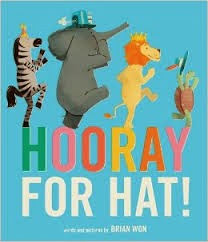
HOORAY FOR HAT will be out later this year.