

Your SCBWI 2026 Virtual Summer Conference "TEAM BLOG" is Jolie Stekly, Justin Campbell, and Jaime Temairik. Check in here and on socials at #scbwiSummer26 for updates, countdowns, and LIVE BLOGGING from the conference!
Showing posts with label #LA19SCBWI. Show all posts
Showing posts with label #LA19SCBWI. Show all posts
Monday, August 12, 2019


Sunday, August 11, 2019
Closing Keynote: Meg Medina
 |
| Meg Medina |
She shared what she's learned so far in her journey—and it wasn't too long ago when Meg was in the seats along with the rest of the conference attendees.
Here are some of the moments from her wonderful talk.
Meg grew up in Flushing, Queens among a family that had immigrated from Cuba. They'd been middle class and had become poor. Her family members used stories to build a bigger life for themselves. Her grandmother, especially, told these stories, of romance, of landscapes.
"And yet for all of this luscious detail, my family failed in what I consider an essential transmission," she said.
Cuba is known for music—her family isn't musical. Cuba is also known for dance. Her family doesn't like to—and Meg loves it. "This, my friends, is a tragedy."
She was growing up in Queens in the 1970s, the years when Latin music was making a splash. She fell in love with the music then, and from that day to this has been a devoted dancer.
Cuban music is joyful, even when the lyrics are really about sad things. She taught us the essential beat of Cuban music, and talked about how we all need a sacred rhythm inside of us that never changes.
She said, "I think of my writing as my beat and my clave (a percussion instrument)."
The writing process demands courage. "There is no way to be a children's writer without willing to be scared," she said. "Deep writing means that we have to go inside ourselves, which is possibly the scariest universe of all."
Meg's theme is not just childhood, she said. It's girls and their family and their culture and how that intersects with childhood. She's answering questions she did not dare ask when she was a child.
She mines her own memories for stories. "We remember for a reason, even if our muddled brains refuse to let us in on the secret of what that reason it, at least at first."
Meg does a 10-minute exercise every day called "I remember." She free-writes about a moment she remembers. She once wrote about her roller skates, which she refused to take off each time she climbed the steps to her apartment when she had to pee, and her mother would yell at her in Spanish.
"It's your job to follow the vine of memory down to the root and yank it up," she said. "It's your job to ask the tough questions that are sometimes easier left unasked."


Follow Meg Medina on Twitter.
Author Panel Creating Memorable Characters for Series - Bruce Hale

Bruce says a main character is memorable if they have a unique point of view and attitude, those elements combine to give you a great VOICE. He's made seven series, and the ones that stay in print have those strong attitudes and views from the very first page.
As an example, he shares the first lines of THE MALTED FALCON, his first book in the Chet Gecko series.
Focus on making the character first, that's usually the way, though sometimes it can be a situation that sparks an idea.

When he was asked to write CLARK THE SHARK, he had no idea it would turn into a nine-book series, and he credits its success with the deep development of the main character, Clark, and that readers wanted to keep having fun with him.
Bruce is working on a standalone novel right now, which he finds very scary, to only be able to give this character that one moment in life.
"Drawing pictures of the characters is part of my process for writing, I was a cartoonist before I was an author, and what a character looks like often shapes their personality in a way just writing about them does not."
Is there anything you do to get to know your characters better?
Paula Danziger recommended an exercise that Bruce likes, which is to describe what is in your character's closet and what it says about your character. Sometimes he'll do an interview with his characters.
Working on character isn't just working on the character, but the setting can also form and change a character's personality.
Author Panel: Creating Memorable Main Characters for a Book Series - Lisa Yee
 |
| Lisa Yee Photo Credit: Emi Fujii |
When asked what makes a memorable character, Lisa responded that even if a character is unfamiliar to the reader, there is something about them that is familiar. Lisa also responded affirmatively that she puts herself in her books. But she quickly added that she steals from others' lives around her. Her Bobby books center on her son. Dan Santat illustrated the series and came to her house to draw her son, so art is based on him too.
 Another question focused on whether the creators start with character or plot as they craft a series. Lisa starts with characters if she generates the series like Millicent Min, Girl Genius. Before she writes, Lisa spends time thinking about characters, what they like and don't like. It's a layered approach to their development. It's not until the end of the book do they come out fully formed.
But with the DC Super Hero Girls series, she focuses on plot because the super heroes' characters like Wonder Woman are well-known and understood. But at the same time, if I got her or any other character wrong, "people would want me dead" because they know and love these characters. But "after some mental gyrations, I realized that I'm just writing a story about these teens and their insecurities and I get started."
 |
| Author Panel L to R: Ben Clanton, Debbi Michiko Florence, Bruce Hale and Lisa Yee |
Cynthia Leitich Smith - Writing Across Identity Elements
 |
| Cyn invited the audience to examine their own identity elements as well as those of the characters they create. |
Cynthia welcomed everyone to the workshop and shared some truths about the workshop's topic right away. She offered that some would be uncomfortable with this topic, but stated that "some discomfort comes with the territory. This is an area for learning." She reminded the audience that all of us are required to stretch beyond what we know and continue growing.
Cynthia posited that "we're all specific, multifaceted individuals. So are our characters. So are the children we write for. We can do better. We must do better."
She then requested the audience to take a moment to ask themselves and record, "What are my identity elements?" She reminded them that identity elements "don't define who we are, but inform. They help us connect and understand each other."
After this, she continued with over a dozen questions for them to consider, including their knowledge base and what information/research they need to make their characters three-dimensional and authentic. Some of the questions she posed:
- Am I reading like a writer? Read 100 books from the identity element I want to write whether I share that identity element or not.
- How reliable is my education and research? Err heavily in case of primary sources.
- Is the situation or character more nuanced than my ability to represent it?
- How will represented children feel about my character/content?
- Do I need a professional reader? Remember to never use a professional readers' names without permission or as human body shields for errors or misrepresentations in your work.
For more information about the writer and book sources Cynthia mentioned, visit her website and follow her on Twitter.
Elana K. Arnold and Brandy Colbert: Survival Skills for Novelists
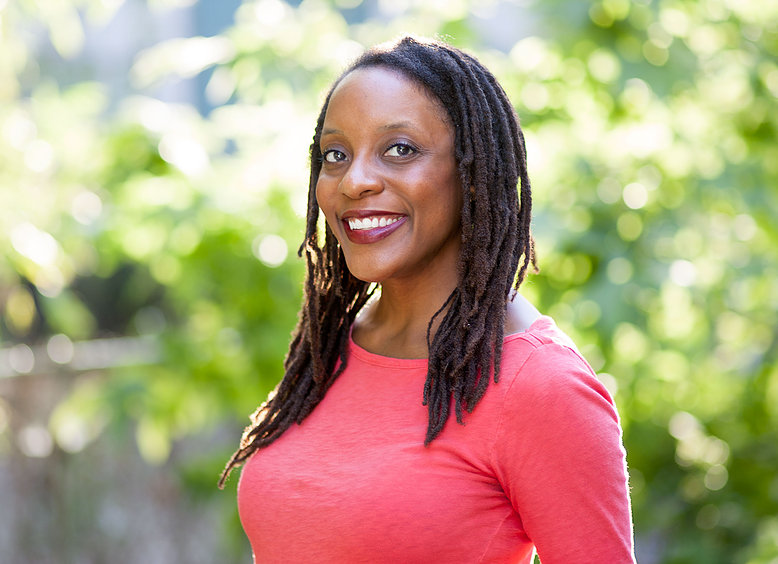 |
| Photo of Brandy Colbert by Jesse Weinberg |
Their session, intended to the published pros in the audience, contained a wealth of information about how to manage their time, creativity, and relationships at this stage of the publishing game.
Community becomes an important part of the process.
There are the bookstores where we do events—here, Brandy likes to send a thank you note every time.
And then there's social media and online communities. Here, a key thing to keep in mind, especially when you're committing stuff to print (even digitally): Remember that your work lives forever. So be careful in what you say, that you don't complain needlessly or without being aware of your audience.
Elana said social media isn't mandatory for writers. There are other ways you can connect with the world. "But if you like it, then great!"
 |
| Photo of Elana Arnold by Davis Arnold |
Remember why you write
Elana said it can be scary to write when you're thinking about what someone else thinks. Instead, remind yourself why you write. These are her reasons:
- To explore the things that thrill, terrify and discomfit me
- To remind myself that I am a human being
- To remind myself that I am not alone
Challenge yourself
Brandy likes to write books that scare her. Her first MG scared her. Writing from two POVs scared her. But now she knows she can do it!
- Don't be afraid to start or take on projects that scare you
- Try something you haven't done before, or retry something you've failed to accomplish
- Write a book that you don't know how to write
- Stretch during revision into a new shape
Remember that publishing is an unpredictable business
We don't have control over a lot of things:
- If agents or editors will move or quit
- If our book will win awards
- If our book will "sell well"
- If people will "like" or "read" our book
- Almost everything else
Some of Brandy's books
Little & Lion
The Revolution of Birdie Randolph
Pointe
Finding Yvonne
Some of Elana's books
Damsel
What Girls Are Made of
A Boy Called Bat
The Red Hood
What Riley Wore
Lunch with Mem Fox
 |
| Lin Oliver and Mem Fox |
 |
| Mem Fox |
In her introduction, Lin Oliver pointed out Mem's status as a living legend in our field.
"As far as I'm concerned, when it comes to creating picture books for young children, there is no one in the world who practices the art better than Mem Fox," Lin said.
The lunch-time legend talk started with a treat: Mem read 10 Little Fingers and Ten Little Toes to us.
Believe it or not, she thought she was done with writing. She even called her editor in the U.S., Allyn Johnston of Beach Lane Books, saying as much. But then she went to an event and saw babies from all around the world.
She was inspired, and on an airplane flight, she came up with the idea for the book and wrote it out in a tiny notebook in a fifteen-minute flurry.
Then, of course, she had to call Allyn back.
Mem got started writing picture books as an assignment meant to help her understand how difficult PBs are to write. She set out to write a love story to Australia, and she found an illustrator, Julie Vivas,—and after getting nine rejections in five years, that 10th editor said yes. Possum Magic, published in 1983, is Australia's bestselling book ever. It's sold 5 million copies to date.
She continued 14 years teaching drama and continued writing, but decided when she was 50 that she wanted to focus on writing because "it's a business."
Lin identified key qualities to Mem's work: brevity, rhythm, and rhyme.
What is your process of compacting the text you want to tell?
Mem learned after her first round of rejections that you have to set up a PB quickly—in the first couple of lines. A story for babies, like 10 Little Fingers..., it has to be very short. For older children, Mem permits longer stories, but she uses the Word Count feature to trim, and her success on this score gets her excited .
"I force myself to get rid of the rubbish," Mem said.
Sometimes she cuts too much, so she prints hard copies of every single change she makes. Sometimes she realizes an earlier draft was better.
Lin also asked about rhythm and wanted to know where Mem learned this skill.
She said it comes from the King James version of the Bible. She grew up listening to that and loved the musicality of that. Then she went to drama school and soaked up Shakespeare. She also grew up in a book-filled house in Africa, and she used to wander the garden clutching a poetry book to her chest, learning it by heart.
"It was in my veins," she said. "More importantly, it was in my heart."
She also listened to Sir John Gielgud reading British poetry on her record player.
About rhyme:
Children's book creators are often told never to write in rhyme. How does Mem make a decision about writing in rhyme? Usually the impulse is that she knows she's writing for very, very young children. The books she writes are a step up from nursery rhymes. Her rhyming books aren't stories with beginnings, middles, and ends. "It's too difficult not to force a rhyme when you're writing a story."
When she's writing a book with a story in it, she can break a reader's heart and then mend it before the book is finished. "I don't believe you can do that if you write in rhyme."
She thinks that rhyme can be cute. It can be funny. It can be entertaining. But can it get that broken heart? I think only prose can do that.

Denene Millner - Love Letters for Black Children: The Importance of Diverse Books
To open her session, Denene shared a montage of videos where Toni Morrison addresses the false construct of race, racism and whiteness centering itself at the expense of those around them. Denene said that Toni's Song of Solomon was the first book she read by a Black woman and she was in college.
 |
| Denene Millner |
Denene left the audience with several takeaways. Here are a few:
- Trust Black storytellers. She illustrated this point by sharing an upcoming title, Just Like A Mama, a picture book written by Alice Faye Duncan and illustrated by Charnelle Pinkney Barlow. The picture book centers fictive kinship, A common reality in the Black community where story focuses on a Black child cared for a Black woman who is not her blood relative and has not legally adopted her.
- Culturally Competent Editors Matter. Don't be afraid to reference Black culture. She shared the story of a white editor who wondered why an angel in Crown needed to be Black when "angels are angels." The audience nodded in agreement when she relayed this exchange and how she shared with the editor that most angels depicted in books and sold as statues are white not Black. But Black angels exist and need to represented.
- It's Bigger Than a Hashtag. Black lives matter every day. Books need to reflect that.
 |
| Crown: An Ode to the Fresh Cut won 2018 Newbery Honor, Caldecott Honor, and Coretta Scott King Honors |
Denene's imprint only publishes books created by Black authors and illustrators because fewer opportunities exist for Black creators to tell their stories for children. She has dedicated her work to improve that. She is open to submissions.
Find out more about Denene and the launch of her imprint, follow her on Twitter.
Anna Shinoda: Writing Through Stress and Trauma: Publish Your Stories That Heal
Anna Shinoda is the author of Learning Not to Drown, a story of a young girl who struggles to preserve her own identity amidst a chaotic, dysfunctional family unit. Anna married musician Mike Shinoda of Linkin Park and has led efforts with the band's nonprofit, Music for Relief. As a mental health advocate, she serves as a senior advisor to The Campaign to Change Direction.
 This session will focus on how writing helps us process stress and trauma.
Anna starts this session by offering an exercise: Write down 3 to 5 things causing you the most stress. (Pick one of those things to tackle today, and save the others for another.)
When we experience something traumatic, our memory is often not consistent. Writing can help put our brain at rest because it takes something that doesn't have logic or consistency and give it a complete story with a beginning, middle, and end.
There's power in taking something terrible and making something else out of it.
 One of the things Anna did when writing Learning Not to Drown, Anna made her main character stronger than she could ever be. And with writing of trauma, Anna finds that it removes her from the situation and allows her to have perspective.
You can write an alternate ending for your trauma. You can fictionalize it.
When writing and rewriting challenging scenes, Anna had to find ways to make it feel safer to work on it. She lights a candle, she limits the time she spend on it, she knows someone will be available to talk to if she's upset, and she does things that make her feel good.
Anna recommends bringing a focus to gratitude. It can create a mindset shift that's positive.
 What is favorite time of the day? And what are you grateful for?
Learning Not to Drown started as a journal to understand what happened in her childhood.
Once you write about your trauma, what do you want to do with it?
There are so many things you can do: you can make art, you can do a ceremony, you can tear it up and throw it away. If you want to publish it, then you have to ask yourself: How can I make this story marketable? Consider how you can write it into a plot. The plot doesn't have to be the trauma.
"Not all published writing is good and not all good writing is publishable."
You also have to ask yourself if you want to put the story out in the world. If the answer is yes, know what your boundaries will be around talking about it when it is in the world.
It's important to responsibly represent mental health.
 This session will focus on how writing helps us process stress and trauma.
Anna starts this session by offering an exercise: Write down 3 to 5 things causing you the most stress. (Pick one of those things to tackle today, and save the others for another.)
When we experience something traumatic, our memory is often not consistent. Writing can help put our brain at rest because it takes something that doesn't have logic or consistency and give it a complete story with a beginning, middle, and end.
There's power in taking something terrible and making something else out of it.
 One of the things Anna did when writing Learning Not to Drown, Anna made her main character stronger than she could ever be. And with writing of trauma, Anna finds that it removes her from the situation and allows her to have perspective.
You can write an alternate ending for your trauma. You can fictionalize it.
When writing and rewriting challenging scenes, Anna had to find ways to make it feel safer to work on it. She lights a candle, she limits the time she spend on it, she knows someone will be available to talk to if she's upset, and she does things that make her feel good.
Anna recommends bringing a focus to gratitude. It can create a mindset shift that's positive.
 What is favorite time of the day? And what are you grateful for?
 Learning Not to Drown started as a journal to understand what happened in her childhood.
Once you write about your trauma, what do you want to do with it?
There are so many things you can do: you can make art, you can do a ceremony, you can tear it up and throw it away. If you want to publish it, then you have to ask yourself: How can I make this story marketable? Consider how you can write it into a plot. The plot doesn't have to be the trauma.
"Not all published writing is good and not all good writing is publishable."
You also have to ask yourself if you want to put the story out in the world. If the answer is yes, know what your boundaries will be around talking about it when it is in the world.
It's important to responsibly represent mental health.
Adib Khorram: Dismantling Toxic Masculinity Through Young Adult Literature
 |
| Darius the Great is Not Okay |
His talk was about toxic masculinity: what it means, why it's harmful, and how literature can be used to examine, deconstruct, and dismantle the system.
Here's a definition of toxic masculinity by Harris O'Malley:

And here are three characteristics of toxic masculinity:
- Entitlement: you believe you are entitled to something because you are a man. (Incel culture is an example.)
- Domination over others. It often leads to violence.
- Rejecting vulnerability and emotions because they're associated with the feminine.
"If you don't account for systems of power in your writing, you are tacitly upholding them," Adib said.
Adib talked about books that unpack toxic masculinity:
- Seafire by Natalie C. Parker
- Ember in the Ashes by Sabaa Tahir
- Strange Grace by Tessa Gratton
- Black Wings Beating by Alex London
- We'll Fly Away by Bryan Bliss
- Tradition by Brendan Kiely
- When I was the Greatest by Jason Reynolds (offers a non-white version)
- Darius the Great Is Not Okay

Rape culture is also an insidious feature of toxic masculinity. Books that address it well:
Damsel by Elana K. Arnold
Shout by Laurie Halse Anderson

What does healthy masculinity like?
"I fuckin' love you, bro." Guys can admit affection as long as there's a swear word in front of it.
He showed us a Gillette ad on the subject, which he hopes as a sign that the tide is turning:
He's trying to keep up with his own reading, consider the stories of additional marginalized voices, including trans and non-binary voices, disabled voices.
Follow Adib on Twitter, and Instagram.
Sunday Awards Presentation
The Martha Weston Grant was established by the Hairston Family to remember author/illustrator Martha Weston. Martha published over fifty picture books, and also published her first middle grade novel shortly before her death. This grant encourages authors and illustrators to nurture their creativity in a different genre of children’s books.
The SCBWI Tribute Fund commemorates members of the children’s book community, their lives, and their work by funding all-expense scholarships to the SCBWI International Summer and Winter Conferences for the general membership. This year there are two scholarship recipients:
The Ann Whitford Paul-Writer’s Digest Manuscript Award is an annual award given to a Most Promising Picture Book manuscript. The winner receives a $1,000 grant to encourage the development of an excellent picture book manuscript. This year there are two honorable mentions and one winner:
The On-The-Verge Emerging Voices Award was established in 2012 with funding from Martin and Sue Schmitt of the 455 Foundation, with the purpose of fostering the emergence of diverse voices in children’s books. There are two award recipients for this year:
The IPOC Women's Scholarship awarded annually to two Indigenous or People of Color who identify as women. This is the award's inaugural year.
The Kweli/SCBWI Outstanding Manuscript Award is awarded annually to a PoC writer. This is the award's inaugural year, and the winner was first announced at the 2019 Kweli Color of Children's Literature Conference.
SCBWI is proud to launch the Kate Dopirak Craft and Community (KDCC) Award, which is offered in celebration of Kate Dopirak, a picture book author and beloved SCBWI member who lived her life lighting the way for others. The award will go to the author of a promising manuscript who is experiencing financial barriers to attending the annual summer conference. The inaugural award in 2020 will go to a picture book writer who will receive the following:
- Runner up: Lori Evert (Minnesota)
- Winner: Wendy Wahman (Western Washington)
The SCBWI Tribute Fund commemorates members of the children’s book community, their lives, and their work by funding all-expense scholarships to the SCBWI International Summer and Winter Conferences for the general membership. This year there are two scholarship recipients:
- Winner: Sally Spear (Rocky Mountain)
- Winner: Tricia Brown (Alaska)
The Ann Whitford Paul-Writer’s Digest Manuscript Award is an annual award given to a Most Promising Picture Book manuscript. The winner receives a $1,000 grant to encourage the development of an excellent picture book manuscript. This year there are two honorable mentions and one winner:
- Honorable Mention: Gayle Webre (Louisiana/Mississippi) for When I Was an Alligator
- Honorable Mention: Midge Ballou Smith (Utah/Southern Idaho) for Bert and Wert: We Do the Dirty Work
- Winner: Sherry Smith (California, San Francisco North & East Bay) for Rosa and Bessie
The On-The-Verge Emerging Voices Award was established in 2012 with funding from Martin and Sue Schmitt of the 455 Foundation, with the purpose of fostering the emergence of diverse voices in children’s books. There are two award recipients for this year:
- Winner: Amira Kunbargi (California, San Francisco North & East Bay)
- Winner: Medina (New York, Metropolitan)
The IPOC Women's Scholarship awarded annually to two Indigenous or People of Color who identify as women. This is the award's inaugural year.
- Winner: Kelly J. Baptist (Michigan)
- Winner: Rehannah Azeeyah Khan (Caribbean: South)
The Kweli/SCBWI Outstanding Manuscript Award is awarded annually to a PoC writer. This is the award's inaugural year, and the winner was first announced at the 2019 Kweli Color of Children's Literature Conference.
- Winner: Lisa Stringfellow (New England)
SCBWI is proud to launch the Kate Dopirak Craft and Community (KDCC) Award, which is offered in celebration of Kate Dopirak, a picture book author and beloved SCBWI member who lived her life lighting the way for others. The award will go to the author of a promising manuscript who is experiencing financial barriers to attending the annual summer conference. The inaugural award in 2020 will go to a picture book writer who will receive the following:
- Full tuition to the 49th Society of Children’s Book Writers and Illustrators (SCBWI) Annual Summer Conference, July 24-27, 2020 in Los Angeles, CA;
- A 20-minute phone consultation with literary agent Tracey Adams from Adams Literary; and
- A 20-minute phone consultation with children’s editor Andrea Welch from Beach Lane Books/Simon & Schuster.
Keynote: Yuyi Morales
 |
| Yuyi Morales |

Yuyi Morales was born in Xalapa, Mexico, where she currently resides.
A professional storyteller, dancer, choreographer, puppeteer, and artist, she has won the prestigious Pura Belpré Award for Illustration five times, for Just a Minute: A Trickster Tale and Counting Book (2003), Los Gatos Black on Halloween (2006), Just in Case: A Trickster Tale and Spanish Alphabet Book (2008), Niño Wrestles the World (2013), and Viva Frida (2014), also a Caldecott Honor Book.
Her latest book, Dreamers, won this year’s Pura Belpré Award and was also named a New York Times Best-Illustrated Book.
Newbery Medalist Meg Medina introduced Yuyi, saying, "What she has been, most of all, is vibrant and living proof that there is a way for us to dream."
Yuyi started with an important question: Why do we make children's books?
She believes "there is an inner purpose—it's something that sounds like love."
We can learn how to make children's books through the SCBWI. But how do we learn to love?
"We usually learn how to love when we get together. We learn how to love when we share what we know. No one knows everything, and no one knows nothing."
She offered her experience, hoping we can make a connection and learn from each other.
When Yuyi was a child, she loved to draw, and she learned how to copy. And she'd often go into her bedroom to draw because it felt like such an intimate thing. She learned how to draw herself by looking in the mirror so much that she can draw her eyes and nose without even looking.
She didn't have children's literature when she was a child. She was born in Mexico and grew up there. They didn't have children's books, but they did have comic books and graphic novels. She studied those and learned what she liked. When she was 12, she discovered Gabriel Garcia Marquez, and then she became a teenager and stopped drawing and didn't think about it again until she became an adult and had a son.
She started drawing her son, again and again. And when he was two months old, her family came to the United States. It wasn't something she'd planned to do, but her future husband was a U.S. citizen. Then, because of the complexities of immigration, she couldn't go back and she lost her support system.
Then her mother in law took her to a public library, and that changed her life forever. "In the public library, I fell in love with books. In picture books I finally found something I understood and something that understood me."
As she learned how to do art, her dining room table served as her schooIn 2000, she won the SCBWI's Don Freeman grant. That submission became a book called Just a Minute.
She told us the origin stories of more of her books, which are answers to questions and struggles and fears. "Once I started making stories about things I was scared of, maybe they become my friends."
She is drawn to the craziest ideas she can imagine—and that's how she decides. If it's crazy, then it's for her. Five years ago, Yuyi returned to Mexico. She eventually had a place she could create again.
After the 2016 presidential election, she struggled to create. But then decided maybe it was time for immigrants to tell their stories. "It is time for everybody to say who we are. Not who others think we are."
And that's how Dreamers came about. She wanted to tell her story, about a woman who came from Mexico to the United States. Her story was also her baby son's story. She wondered at first who would be interested in the story. Initially, when people asked her story, she said she came with nothing. But she started rethinking that. And she realized she didn't come with nothing: She came with her stories, her hopes, her talent, her passion, her hands.
"I decided for this book, I was going to tell that truth."
(Written by Martha Brockenbrough for Mike Jung)
AGENTS PANEL: Molly O'Neill and Beth Phelan
 Molly O'Neill is an agent with Root Literary. She loves the creative process and early-stage project development, is invigorated by business strategy and entrepreneurial thinking, and is fascinated by the intersections of creativity, commerce, and community. Her client list is comprised of authors, illustrators, and cartoonists.
What does a trend and an evergreen mean you?
Trend: Something that's capturing interest and imagination and has swelled up, and as a community we are all talking about. It's often something that's popular for a brief amount of time.
Evergreen: Books that have a sense of universality, transcend time, and connect generation to generation.

A book is a combination between the specific and the universal. If it's too specific, you end up having niche appeal...too universal, you end up with a book that's platitudes.
In publishing, agents/publishers are time travelers. They are ahead of what's on the bookshelf, which is why it's hard to catch up with a trend.
A lot more nonfiction is being published because the curriculum standards are calling on nonfiction in a particular way. The internet has also had an impact. Kids can google and get straight forward information right away, so now we're seeing a much more specific lens on the nonfiction being published. Books that cost money can't compete with information that's easy to get from the internet.
Molly recommends to her clients: "feed" yourself unique ingredients so you can create something unique.
Molly doesn't think of booksellers, teachers, or librarians as gatekeepers, but more as partners. If you are a book creator, start building those relationships now, don't wait until your book is out and you want them to sell it.
Molly loves a book that can be described as a love story of friendship. Molly says, "Take me anywhere. I want to travel through your book."
Molly doesn't think you can set out to write an evergreen. It's not what you decide, it's what the readers decide. Know where your book lives in the market. Who is the kind of reader for your book?
.
.
.
Beth Phelan has been an agent at Gallt & Zacker Literary since 2017. She represents authors of middle grade and young adult books and gravitates to stories and characters that inspire, and anything with a touch of humor and the bittersweet. Beth is also the creator of #DVpit, a Twitter pitch event for marginalized creators, which she launched in April 2016. Twitter: @beth_phelan, @DVpit_.

What does a trend and an evergreen mean you?
Although it's hard to catch a trend, Beth also sees publishers chasing them. A lot of publishers are coming up with graphic novel imprints because they're doing well. They're still selling. Intellectual Property acquisition is on the rise.
As the agents have a conversation about the own voice and diversity in the current market, Beth notes that the industry might not want to call it trend, but it treats it like one. This causes some worry for Beth, as marginalized authors feel this might be their opportunity to get their foot in the door, and because of that what kind of books do they need to create to get that foot in the door.
 Beth still hears from publishers, "we already have one of those."
Beth was a constant re-reader and she'd love to find a long middle grade that creates that same experience for readers. She'd also love to find darker middle grade.
"I used to say I don't do historical, but then one of my authors wrote one. So, never say never."
Beth says to write what you want...if a trend comes and you love it then you should get it out while you're passionate about it.
Agents Panel: Adriana Dominguez, Jennifer Rofé and Alexander Slater
 |
| Literary Agents L to R: Adriana Dominguez, Molly O'Neill, Beth Phelan, Jennifer Rofé and Alexander Slater |
Literary agents Adriana Dominguez, Jennifer Rofé, and Alex Slater started out discussing trends (what is popular in a given timeframe), evergreens (universal, timeless feel) and how to sell your book in today's market. Jen cited Merci Suarez Changes Gears as an evergreen book with its focus on a child claiming agency and changing family dynamics.
Concerning trends, Jen warned that "you have to be careful with trends because you'll never catch one. Those deals, those books were sold years and years before they come out on the market."
Alex shared that he recently sold a middle grade horror novel, but he knows that by the time he tries to do another one the trend will be elsewhere.
When asked about nonfiction, the panel offered a number of noteworthy responses.
Adriana says she is not a trend chaser and sees nonfiction is an evergreen. The subject, the way the story is told is more important. We're in a moment of reckoning in the country. Fresh perspectives get us looking at things in new ways. There's less resistance now to stories about people and events that have not been as well known compared to five or six years ago.
Alex responded to the question about diverse books and how they "unearth little known points of history" is a privileged view. He attended the SCBWI OK conference this spring and learned about Tulsa Race Massacre. There are many stories that people know and have been impacted by these events, so there needs to be a focus on these stories.
Jen shared that We Need Diverse Books is less a movement, but a correction. It's what should have always been happening.
Adriana said that some of us (agents) have always been focused on this and the numbers are increasing. But it's still so small compared to books being published with characters who are animals and inanimate objects. She does feel that editors are doing better at listening to diverse authors and illustrators as they bring their stories and art to books.
The agents also offered stories of how they help manage their clients' work and when it's best to submit. As business partners with creators, they are committed to helping the creators best position themselves in the market.
For more information about Adriana, visit her website and follow her on Twitter.
To find out more about Jen Rofé, head over to her agency website or Twitter.
Learn about Alex by visiting his website and Twitter.
Saturday, August 10, 2019
The Members Book Sale
Here are a few shots from the jam-packed, joy-filled member book sale, where people brought copies, spread the word about them, and sold them to eager readers.


Ben Clanton - InterPLAY: The FUNdamentals of Pairing Pictures and Words

Just going to share a tiny tiny bit from his presentation! Sorry!

Here are some questions to ask to see if your picture book will be wonderfully interactive:
Is it relatable?
Does it have some unique or interesting angle to it?
I remember meeting Ben a million years ago and he has ALWAYS loved and talked up Viviane Schwarz's There Are Cats in This Book. It remains an excellent example of interactivity in a standard paper book.

Strong central characters that come alive?
Ben says he can probably name more fictional characters than he can real people, and that he may have more fictional friends than real ones. Which he says may sound sad but trust him, he's happy with it that way!
Does it invite the reader to participate?
Does it have enough negative space/white space to let the reader's imagination have space to play?
Is there a subversive element?
Ben loves to use No, David! as a great example for this.

Raúl the Third Keynote
 Raúl the Third is the Pura Belpré Medal award-winning illustrator of the Lowriders graphic novel series as well as the new picture book Vamos! Let's Go to the Market.
Raúl credits his interest in art to comic books, and his interest in comic books to being a kid bored during the summers in his hot, hot hometown of El Paso. His father, trying to get him out of the house, asked him to go buy a paper at 7-11, which then turned into Raúl spending lots of time out of the house at 7-11, looking at Ralph Snart comics while drinking his custom fountain soda mix of Coca Cola, Sprite, Dr. Pepper, and a dash of Orange Crush.
Raúl's mother took him and his younger brothers to the library in El Paso, though none of the family spoke much English at that time, Raúl credits the librarians at this local library with finding books he could see himself in, turning him into a voracious reader.
Fast forward a bit, and Raúl tells us about how he followed his girlfriend (now wife, fellow faculty member Elaine Bay) to Boston. While she was busy in school, Raúl would hang out at the coffee shops near Candlewick or Houghton Mifflin Harcourt offices and take part in what he called
SPD
SPD = strategic public drawing
Though SPD never resulted in a book deal! It turned him into 'that guy who draws'. Local bands started asking Raúl to make gig posters, and one of the coffee shops he drew in regularly asked if he would like to have his work on display at one of the shops.
Raúl didn't think he had enough work, or big enough pieces, to fill up all those blank walls. He thought back to something he'd recently read:
"One of the keys to happiness is to start your own gang." -- Kurt Vonnegut
So Raúl put together an art collective of friends to help fill up those walls. The connections of that collective ultimately resulted in his Lowriders series and opened up the world of children's book illustration to Raúl.

Raúl's advice for kids who want to pursue art or are on their way to college:
When you are a young artist, don't be so quick to define what type of artist you are.
He's painted switch boxes, set designs, outdoor murals, a putt-putt golf course, books, fine art and zines, and he'd never have tried all of those different things if when he'd been asked to do so, he'd thought that wasn't his 'future career path'.
Raúl's also got some good advice for zinemakers:
"Make sure you make friends with someone who works at Kinko's."

And this is just the partial recap of his great keynote!
Please please go check out Raúl's work with museums and other institutions in the Boston area, it's truly inspiring and groundbreaking stuff, like the And Their Families exhibition.

Meg Medina: Storymatic—Modulating for Age Groups
 |
| Meg Medina |
Meg shared her way of writing books has changed over ten years. She invited the audience to take what works for them and leave the rest. With that foundation, Meg guided everyone through each of her books by publication date and explained the story of each - challenges and triumphs.
When she first started in the industry, she had been advised to find an age group and "write it to death." But she couldn't do it. She led the audience through a series of considerations she undertakes with each story she develops. Telling the truth and deliberating on where the reader is their development are paramount. She shared so many exercises and questions that must be answered just based on these two considerations alone. It's no surprise why her books garner acclaim and find their way into so many readers' hearts. She thinks so much about them before she ever starts writing.
 |
| Meg loves her bitmoji |
Tiff Liao:
 Tiff Liao is an editor at Henry Holt Books for Young Readers. She has had the pleasure of editing authors including New York Times bestselling author Tom Adeyemi, Jess Rothenberg, Margaret Owen, K.D. Halbrook, Henry Lien, Kristin O'Donnell Tubb, and Tochi Onyebuchi, among others.
First impressions matter.
Young readers are very exacting. They aren't going to slog through a book. Young readers need to be engaged right away.
Not only are young readers exacting, so are editors and agents.
Treat your opening lines very carefully.
What makes a good opening line?
- voice
- action (momentum)
- character
- mystery (questions)
Front-loading the opening of the story is a common mistake. Start with the character. There are many more pages for readers to get the rest. Start with a characteristic moment.
Characteristic moment should...
- introduce key details
- create instant empathy and/or interest
- create a memorable scene
- introduce the strength and the flaw
- kick-start the plot
A first line that has stood the test of time:
"It is a truth universally acknowledge, that a single man in possession of a good future, must be in want of a wife." -Pride and Prejudice by Jane Austen

Some other great beginnings:


Subscribe to:
Posts (Atom)