Showing posts with label young adult. Show all posts

Saturday, August 5, 2023

Debut Author Panel: Federico Erebia

Author Federico Erebia is a retired doctor and woodworker (who worked both of those careers simultaneously for 15 years!) and in continued multitasking fashion he’s also translating fellow panelist Levi De LaRosa’s answers for us today from Spanish to English. 

With the advent of the Pandemic Federico no longer felt safe working in stranger’s houses building cabinets and furniture, and so began to write down the many years of stories that had been rattling around in his mind. With everything that Federico does, he says, he’s approaching it after having already obsessed about ‘that thing’ a lot, calling it his neurodivergent approach to life and art.

His debut book, PEDRO & DANIEL, is also a memorial to his brother who passed away 30 years ago. Federico’s medical career was focused on providing care to HIV+ patients in the late 80s and 90s (Federico’s brother died of AIDS in 1993) and Federico describes that earlier era as a horrible time that people have forgotten about, the amount of ostracizing that happened for that HIV+ community cannot be downplayed. It’s important to not forget our history, he says, it’s always important to revisit it so that we aren’t destined to repeat it. Federico wanted his book to be a place to remember and celebrate the memories of the 40 million people that have died of AIDS.


Moderator Martha Brockenbrough talks about how we live in an era where people are trying to prevent young people from reading diverse stories and suppressing the truth and that stories like Federico’s are the ones that are trying to be banned. Federico talks about how the entire first part of his young adult novel is actually made up of his 17 picturebook manuscripts that he’d written that people had told him weren’t appropriate issues for children to be reading about. But Federico is aware that many young children are living these difficult, violent experiences.

“It’s such a powerful time the first time you SEE yourself in a book, or on a movie screen, or on a TV show.” 

Martha reminds us pushback like the kind Federico experienced is often not about keeping children safe, it’s about adults being too uncomfortable to hear the truth.

Federico is on the SCBWI Impact & Legacy Fund Steering Committee, among others, and one of the reasons that he does so much volunteer work for SCBWI is because joining SCBWI was the most important thing he feels he did to become an author, “There are so many opportunities to volunteer, it’s a wonderful organization all over the world.”

When remembering his path to publication, Federico says, “It’s hard to explain to people that haven’t read it, I did take a lot of risks, and I’m so glad that my Levine Querido editor, Nick Thomas, kept letting me take those risks.”

Bonus detail for artists: Julie Kwon, whose illustrations appear in PEDRO & DANIEL was found on Instagram by Thomas.

Saturday, February 12, 2022

Paula Yoo: Keynote

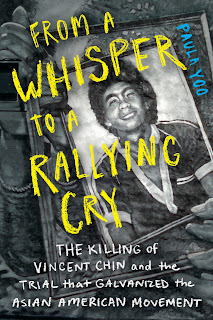
Paula Yoo is a book author, screenwriter, and musician. From a Whisper to a Rallying Cry: The Killing of Vincent Chin and the Trial that Galvanized the Asian American Movement (Norton Young Readers) was nominated for the 2021 National Book Award Longlist: Young People’s Literature. Her book won the 2021 Boston Globe-Horn Book Award for Nonfiction and was selected as a 2021 Junior Library Guild Gold Standard and the 2021 Amazon Editors’ Pick for Best YA. It has received 5 starred reviews and national coverage in The New York Times, TIME, NPR, The Today Show, NBC News, and Good Morning America. From a Whisper to a Rallying Cry is also the National Education Association (NEA) “Read Across America” YA book selection for May 2022. Her other books include Good Enough (HarperCollins), Sixteen Years in Sixteen Seconds: The Sammy Lee Story, Shining Star: The Anna May Wong Story, and Twenty-two Cents: Muhammad Yunus and the Village Bank (Lee & Low Books). Her TV credits range from NBC’s The West Wing to The CW’s Supergirl, and she has sold TV pilots and feature scripts. She is also a former journalist (The Seattle Times, The Detroit News, and PEOPLE). When she’s not writing, Paula is a professional freelance violinist. Website: https://paulayoo.com

Paula Yoo, presenting at #scbwiWinter22


Paula tells us she never saw Asian American representation in school or books as a child. No AAPI history was taught, and that erasure had an impact: "I felt cheated. I had lost a valuable part of not just my childhood, but my identity."

The Asian stereotypes of martial arts, being whiz kids at math and science are harmful, diminishing individual achievements and de-humanizing people. And Paula explored those ideas in her debut YA novel, "Good Enough."

cover of "Good Enough" YA novel by Paula Yoo


Researching NF for children and teens. "Go beyond Google," and newspaper articles. For From a Whisper to a Rallying Cry: The Killing of Vincent Chin and the Trial that Galvanized the Asian American Movement, Paula visited libraries, poured through court records, newspaper articles, letters, flyers for protests, and most importantly, conducted interviews. 

cover of "From a Whisper to a Rallying Cry: The Killing of Vincent Chin and the Trial that Galvanized the Asian American Movement"


Through those interviews, she met Jared, the son of Vincent's fiancée (who had married someone else after Vincent was killed). Jared's discovering his family's secret became, as Paula put it, "the emotional spine" of her book.

The book has two threads - one the historical retelling of Vincent's murder, the Civil Rights trials, and the start of the Asian American rights movement, and the other Jared's perspective of discovering and uncovering his family's secret history - his Mom's connection to Vincent Chin.

Paula advises that it's really important to try to interview subjects, or people who knew them. When you interview in person, on zoom, or on the phone... you pick up tone, the light in their eyes, their emotions -- and it will infuse your work. For her book Sixteen Years in Sixteen Seconds: The Sammy Lee Story, interviewing Dr. Lee showed her his positive spirit which helped him cope with humor rather than anger.

Cover image of "Sixteen years in Sixteen Seconds: The Sammy Lee Story"


And for her book Twenty-two Cents: Muhammad Yunus and the Village Bank, meeting Professor Yunus in person led to him opening up about his childhood, how his mother would share their food with homeless people, and how that inspired him to come up with his economic theory to fight poverty.

Setting becomes a character. Paula discusses how visiting the sites of her books gives her a visceral sensation to include in the writing.

Paula asks us to consider: What happens when we are erased? In the middle of this pandemic, research is showing that 1 out of 4 AAPI youth say they have experienced racist bullying. 

Today's pandemic has seen a parallel pandemic of anti-Asian stereotypes and violence, and Paula tells us of her own experience with racism today and how it motivates her. 

"Like history repeats itself, so does hope."

Just like coalitions formed back in the protests of Vincent Chin's killing and the injustice of the killers walking free, Paula cites the AAPI community joining with the Black Lives Matters movement. And today, New Jersey and Michigan are the first two states to mandate teaching Asian American history in K-12 schools.

#StopAsianHate

Finally, Paula puts out a call to our action in writing nonfiction books for kids and teens:

It is more important than ever that we make sure they know the whole truth. What happens in our past, influences our present, and what we do today influences the future - and who better to shape our future than our young readers?


Kelly Yang Keynote

Kelly Yang is the best selling author of the FRONT DESK series, and young adult novels PARACHUTES and PRIVATE LABEL. Watch for her upcoming middle grade, NEW FROM HERE, which will be out March 1, 2022. 

 Kelly Yang Virtual Book Launch & Talk - L.A. ParentAmazon.com: Parachutes: 9780062941084: Yang, Kelly: BooksNew from Here | Book by Kelly Yang | Official Publisher Page | Simon &  Schuster


During the pandemic, Kelly was living in Hong Kong with her husband and kids. She found herself flying back to America with her three kids, while her husband had to remain in Hong Kong for work. She found herself facing life as a single parent during a pandemic, so she had to reinvent the way she wrote. She had to write in her laundry room and  in her car, hiding from her kids. She had to write in all sorts of chaotic situations. 

And so Kelly shared some tips on writing through distractions:

  • Set a small goal.
  • Focus on the things you can control.
  • Do not edit as your go. Just write.
  • Use the Notes app on your phone to jot down ideas, lines, etc. 
  • Plan, plan, plan. 
  • Fight for your time to write. 

Kelly also spoke about how to make a great middle grade protagonist:  

Kelly thinks a lot about creating a great protagonist for middle grade. For her, a great middle grade protagonist is someone you can relate to, someone you can follow who isn't annoying, someone who is admirable but isn't perfect. 

As writers we should all ask the question: Why does this character get to be the main character? 

And a great character takes action, and a great character grows. 

And to leave you with a wonderful note that Kelly shared: "We have the power to connect strangers, simply through the words on the page." 

Keynote: Stephanie Garber

Stephanie Garber is the #1 New York Times and Sunday Times bestselling author of THE CARAVAL SERIES, which has been translated in over 25 languages. Her newest book, ONCE UPON A BROKEN HEART, came out late last year and is the start of a brand new series.

Before being agented or published (and at the time also unemployed) Stephanie tells us the story about being on a date and getting asked what she wanted to do with her life. When she replied that she hoped to be on the NYT best seller list one day... The date went sideways. She felt so ashamed, embarrassed, and rejected that she stopped sharing her dream out loud. And when Stephanie learned about SCBWI, these same feelings kept her reluctant to join and fearing the worst until she attended her first conference which Stephanie described as life changing.

Some of those life-changing keynotes from SCBWI conferences were given by Lin Oliver, Richard Peck, and Mac Barnett. And from those inspiring keynotes Stephanie started to gain confidence again in having her big, NYT list dream. Though Stephanie had a full-time job at a college, the writing she was doing in her spare time as her passion project turned out to be a much better match than that original jerky date and she found herself falling in love with writing stories. For her, pursuing publication was the only way she could see being able to afford to write full time.

Stephanie is a big fan of big goals and dreams and says, "Goals and dreams don't need to be explained or justified, but they should be big and out of reach. Big, impossible dreams make for big goals and big writing... Have a dream so big that it makes other people laugh, those are the dreams that bring stories to life."

Stephanie found that burying her big NYT dream made her writing suffer and made her feel like she wasn't herself. When she tried to make her dreams "more practical" she found she stopped having fun and was writing from a place of fear. Great, big-goal writing needs three things. Here are the first two:

1."You have to banish fear," says Stephanie, "Fear shrinks your brain and makes you less creative, even if we don't know the science behind that we know we can feel that. Look for the fears you may not know you have but that may be holding you back, discover your fears so you can banish them." 

2. Write with your superpower, but do you know what that power is and are you currently using it? Stephanie was compared to Anne Shirley a lot as a kid, she was very dramatic—crying wasn't just crying, it was wailing in the depths of despair. But there's more to Anne than emoting, it's how she sees the whole world through a lens of romance and drama. Stephanie loves that lens, too, and writes romance, drama and settings that feel beautifully alive. Your superpower might not be something you love about yourself, at first, but try fully embracing it and see how that changes your writing.

Stephanie says 50% of writing and publishing is simply failing, so accept that and then ask yourself: 

If you knew whatever you wrote would succeed, what would you write? What kind of story would you want to tell?


Thursday, January 28, 2021

The SCBWI 2021 Winter Conference Manuscript Gallery Offers Writers An Opportunity To Be Discovered!


Illustrators have the Portfolio Showcase, putting their illustrations in front of the top publishing professionals working today. And the winners of that portfolio showcase have gone on to have significant careers as illustrators!

Now, on a scale the SCBWI hasn't done before, there's a parallel opportunity for writers:

Registered Winter 2021 conference attendees who are SCBWI members can post up to 500 words of ONE children’s book manuscript, PB text, PB dummy or manuscript synopsis to our online manuscript gallery. Over a hundred editors and agents will be invited to peruse the gallery starting on February 19, 2021. These agents and editors will then reach out to authors whose work is a good fit for their lists. This is a fantastic opportunity to get your work in front of industry professionals!

The deadline to submit your manuscript is February 12, 2021. Find out all the details here.

The full conference information is here - it's going to amazing!

Illustrate and Write On,
Lee

Thursday, May 14, 2020

#SCBWIdigital Workshop: Linda Sue Park presents "Using Scene To Build Story"

This is the 7th #SCBWIdigital workshop, free to SCBWI members in this time of global health crisis.

Linda Sue Park is a master writer and teacher of writing. She is the author of many books for young readers, including the 2002 Newbery Medal winner A Single Shard and the New York Times bestseller A Long Walk to Water. Her most recent title is Prairie Lotus, a historical fiction middle-grade novel.

Today, for the SCBWI community, Linda Sue is sharing "Using Scene To Build Story." She cautions us that this is how she writes fiction, and that it's not the only way to do it. "Writing is so personal," meaning that everyone's process is different. She hopes we might gain a tip or two, add our own spin, and eventually we'll develop our own process for writing a story - different from Linda Sue's process, and different from everyone else's process, too.

Linda Sue shares her definition of story, in a graphic:

Linda Sue Park (bottom right), the slide showing her definition of story, and ASL interpreter Jennye Kamin (top right)


"Before I start, I need to know" what the character WANTS (external quest), what the character NEEDS (internal quest), and the setting.

"Most of the time, the character doesn't know what they need" at the beginning of the story.

Linda Sue shows us how she applied this story definition to her latest book, Prairie Lotus, also in a graphic:


Hannah WANTS to graduate from high school and work as a dressmaker in her father's shop. Hannah NEEDS to learn to stand up for herself against bias, racism, and sexism. The setting is 1880 Oceti Sakowin homeland (what is now South Dakota).

Linda Sue speaks of how she thinks in scenes, not chapters. In fact, she explains that it's a few drafts in before she figures out the chapter breaks.

She suggests we do this exercise:

What’s your character’s external plot (what they WANT), their internal plot (what they NEED), and the setting?

There's a great demonstration of how, when you compare a book to a movie, a half-page of text is about 15 seconds of film... Linda Sue illustrates this (simply and dramatically) and has us consider, if we've spent half a page to describe something, or to have our character's internal dialog, that's like 15 seconds of a movie not moving forward! Seriously, count out 15 seconds... that's a long time for a reader to get distracted.

Using her novel, A Single Shard, she demonstrates how a single sentence should be able to encapsulate what a scene is about.

Linda Sue advises us,

With every scene, your character is going to make progress or face impediment to one of their quests (external or internal).

She keeps this in mind as she writes, looking at her character's internal and external quests, and asking herself "is this scene progress or impediment?"

There's so much more, with discussions and examples from Linda Sue's Project Mulberry, and Keeping Score, her distinction between middle grade and YA, and her technique for developing depth in a story - in every scene - along with an exercise to get more depth in our own writing.

And an explanation of how the story's ending should have "unexpected inevitability."

Linda Sue Park (at bottom, in pink) - ASL interpreter Jennye Kamin (at top)


It really is a master class, with so much to learn and apply!

Thank you, Linda Sue.

Stay safe, all.
Lee


Saturday, August 10, 2019

Meg Medina: Storymatic—Modulating for Age Groups

Meg Medina
Winner of the 2019 Newbery Award, NY Times bestselling author Meg Medina centers her stories on girls, family and Latinx culture.

Meg shared her way of writing books has changed over ten years. She invited the audience to take what works for them and leave the rest. With that foundation, Meg guided everyone through each of her books by publication date and explained the story of each - challenges and triumphs.

When she first started in the industry, she had been advised to find an age group and "write it to death." But she couldn't do it. She led the audience through a series of considerations she undertakes with each story she develops. Telling the truth and deliberating on where the reader is their development are paramount. She shared so many exercises and questions that must be answered just based on these two considerations alone. It's no surprise why her books garner acclaim and find their way into so many readers' hearts. She thinks so much about them before she ever starts writing.

Meg loves her bitmoji
To know more about Meg and her work, visit her website or follow her on Twitter.

Friday, August 9, 2019

Author Panel: Lilliam Rivera

Lilliam Rivera
photo by Vanessa Acosta
Lilliam Rivera writes young adult novels that are books she wanted to read as a teenager. During high school, she loved The Outsiders, but wondered what that world would look like if Latinas had been leading it. Lilliam thinks about that each time she writes.

Lilliam shared a touching story about travelling to a book festival in a border town on the Rio Grande. An abuela had driven two hours to be there and brought her granddaughter so she could introduce her granddaughter to Lilliam and thank her for her work. Especially with all that's happened these last two weeks in our country, Lilliam said she has been thinking that abuela and the importance of showing up for them in the places they live.

A recent book that moved Lilliam is Randy Ribay's Patron Saint of Nothing which focuses on a Filipino American teen visiting his cousin in the Phillipines. The book doesn't flinch in having the main character examine his own American privilege.

Lilliam's advice for the audience is write the story that you have to write. Let it out. Give yourself love for showing up and dedicating yourself to your art by being here.

Follow Lilliam on Twitter and Instagram or find out more about her books on her website.

Saturday, February 11, 2017

Kat Brzozowski: Writing YA Romance


Kat Brzozowski is an editor at Swoon Reads/Feiwel & Friends. She acquires YA for Feiwel & Friends and edits crowdsourced YA manuscripts for Swoon Reads. Previously, she was an editor at Thomas Dunne Books, a division of St. Martin’s Press. She has worked on a wide range of young adult fiction, including Anna-Marie McLemore's When the Moon was Ours, which was longlisted for a National Book Award, and the new Fear Street books in R.L. Stine’s best-selling series, which has sold over eighty million copies worldwide. 

Kat starts her talk by sharing some romance writing basics:


You need tension between your characters, things can't just be easy, and you can't throw in an easy obstacle. Odds are if a character sees somebody cute on the first page, they are going to fall for each other, and we do love that familiar beginning, but you still need to insert real obstacles.

Examples of good obstacles include: Families at odds; different social or economic classes; past heart breaks that are impeding current relationships; different priorities and goals or values (college bound or not for example). What hangs in the balance if they do or don't get together? The whole world ending or just their relationship?
You can't just have romantic longing in a story, Kat says, there needs to be actions that unfold in the book that the romance is tied up in. What sacrifices or changes are they going to make to stay or begin that relationship?

The emotional states of the characters will also need to change from beginning to end, and you'll need to be able to describe physical attraction appropriate to your audience's age.

Kat has us read some meet cute scenes from two books, Kim Karalius's LOVE CHARMS AND OTHER DISASTERS and Cindy Ansley's LOVE, LIES, AND SPIES.
The group discusses the similarities and differences between the two scenes, and then Kat invites everyone to take a setting and a meet cute prompt which she's provided and do some hands on writing.