Showing posts with label nonfction. Show all posts

Friday, November 6, 2020

The Editors Panel!

top row: moderator Lin Oliver, sign language interpreter Brian Truitt, and Carol Hinz
middle row: Emily Feinberg, Kandace Coston, and Melissa Manlove
lower row: Sydnee Monday and Farrin Jacobs


Moderated by Lin Oliver, the panelists discuss what they're publishing and why, and then answer some audience questions.

Highlights include:

Kandace Coston, Assistant Editor, Lee & Low Books:

Kandace is looking for "strong female protagonists...unapologetic women who have been overlooked by history" but "whose contributions to society cannot be ignored."

Kandace speaks of POC and native creators and other underrepresented communities, and how Lee & Low's New Voices contest has for the last 20 years worked to create a path to publication for those creators and stories. (One of her responsibilities now is to read the hundreds of submissions that come in for the contest.)


She discusses the demand for greater diversity, and how "writing nonfiction can become a form of activism."

She recalls watching Hidden Figures in the movie theater, and the impact the true story of a brilliant group of Black women mathematicians might have had on her if she'd seen it as a young person.

Nonfiction is "an opportunity to break stereotypes... and the story of how our country is more multifaceted than we know."

Emily Feinberg, Editor, Roaring Brook Press

Emily shares about some of the books she's published, starting with picture books, and considers the through-line of many of the books she's worked on.


If Sharks Disappeared is a series that started as an infographic that Emily saw online, and then contacted the illustrator.

She cautions that she doesn't do a lot of picture book biographies as they can seem "wikipedia-ish," but then speaks of "Secret Engineer: How Emily Roebling Built the Brooklyn Bridge" as an example of how to do it right.

For older readers, she encourages playing with how a story is told, like the transcripts of sourced quotes in “Bringing Down a President: The Watergate Scandal.” 

Emily says her goal with nonfiction is 

"To give young readers the tools they need to be part of the conversation... To impart knowledge in way that sticks."


Carol Hinz, Editorial Director, Millbrook Press & CarolRhoda Books at Lerner

Carol is looking for “books that spark my curiosity, and that I think will spark the curiosity of parents, educators, and most of all, young people.” 


Carol shares categories and titles she publishes, including picture books that address science concepts in fresh ways, topics that may be be unexpected or "difficult," and middle grade nonfiction picture books on environmental themes (especially highlighting scientists of color and underrepresented backgrounds.)

She mentions science literacy, saying "the pandemic has made it clear what a poor job we've done with this in the US." She would love to see some novel approaches to help young people become more scientifically literate.

Overall, Carol says that about nonfiction, she loves "just how much is possible, in terms of topics and approaches," with Point of View and voice.


Farrin Jacobs, Editorial Director, Little Brown Books for Young Readers


Farrin discusses how Malala's story lent itself to spinning off to other formats, taking an anecdote from Malala's autobiography and making a picture book, and now even a chapter book. 

She speaks about how if its not a "big person with a big platform" then they're "looking for a story that will be picked up" for things like all-school reads and state lists and "have that long tail."

It's "all about stories and characters," and she talks about big idea books, and telling underserved stories.

Farrin says, "we're reaching readers when they're still developing" so she wants stories that help develop empathy, with "characters who feel and think."


Melissa Manlove, Senior Editor, Chronicle Books

With nonfiction, Melissa tells us that "you can do so many things."

And Melissa challenges us to ask ourselves, "What can I do that is new? What can I do that is surprising, and inspiring to kids?"

Sydnee Monday, Assistant Editor, Kokila/Penguin Random House

Sydnee explains that she's "Focused on publishing subversive, entertaining narratives" and especially the stories of Black, Indigenous and Queer people.


One example Sydnee mentions is the upcoming "Not Everyone Is Going To Like You" by Rinny Perkins

She speaks of self-sufficient marginalized communities, and using her list to celebrate underrepresented subjects and audiences. She's looking, in particular, for YA nonfiction.

Thanks to all the editors!

Sunday, August 5, 2018

Candace Fleming: Six Quick Fixes for Your Nonfiction Picture Books

Candace Fleming
Candace Fleming is the author of many wonderful nonfiction books for young readers about a wide range of subjects, from the family Romanov to giant squids.

She talked to us about six things she does when she's approaching her own revisio
ns.

There are six steps she takes:

1) What's the vital idea? If you cannot express what the vital idea of your picture book is, then you need to rethink it. She has an idea before she writes, one that comes from the research. But if she can't express it after the first draft, she knows she has more thinking to do.

Does everything in the manuscript speak to the vital idea? If it does not, it has to go. She's amazed by what can go from a first draft of a manuscript when viewed through this lens. Some questions to ask yourself:

  • What is your story really about? What's your concept? What's the idea? What is the "something more"? For example: giant squid are fascinating. But what does she really want to say to kids about them? She wants readers to know they're mysterious and elusive. Scientists estimate there are 100,000 giant squid--school-bus-size creatures. And we rarely ever see them. Good facts can be bad storytelling. 
2) Have you remembered your fence? PB writers have a fence. We have a form that we have to stick to. Here's a reminder: My fence is 32 pages. But it really means we have 26 pages. The story really starts on page 5, on the right-hand side. How will your first page look in that little space? Does it promise the ending on the first paragraph? Then, ta-da! You have a page turn. It's the single most important thing in a PB. Some stories need a bit of setup—that's the first few pages (6-7, 8-9). She knows that if her story doesn't start by page 10, she needs to rethink it. Page 32 is the last page of her PB. That is the Ahhh page, where she gets a little extra something, a moment of satisfaction. (She calls it the haunt. It makes you want to come back. It makes you want to think. It makes you want to know more.

3) Look at every single word. She circles all the verbs and adjectives to see if there is a better one. There almost always is. Every word choice must speak to the vital idea. She makes lists of words, trying to find ones that are authentic to her story and her voice.  

4) Attempt to get all 5 senses into your book. ("Taste is a bitch.") Actively searching for it forces you to think about your nonfiction in different ways. Remember, we are not fact-tellers. We are storytellers. We have to tell true stories.

5) Count the number of words in your sentences. This helps her vary her sentence structure and use fragments. This makes her more aware of what she's doing—and that's really what revision is about. 

6) End when it ends. When your story is done, exit quickly. Don't say goodbye. Don't wave. Don't blow a kiss. Get out of there!


Saturday, February 11, 2017

Emily Easton: Writing Nonfiction for Children and Young People


Emily Easton is the VP and Publisher of Crown Books For Young Readers. She was formerly Publishing Director of the Walker imprint of Bloomsbury USA Children’s Group.

Emily opens her session with a vision of what she hopes nonfiction will do: teach young people to think for themselves, encourage them to be curious about our world, and to have a reverence for the facts because people need to know what's true and what's not true.

Emily has her finger on the pulse of children's nonfiction, and she share its stats and vital signs. She runs down the nuances of Random House's seven children's imprints, and tells us what distinguishes Crown, including how being social active and looking for diversity is part of their mandate.

She tells us the story behind Lost And Found Cat: The True Story of Kunkush's Incredible Journey,  about a refugee family who lost and then were reunited with their cat. It's a book they published as a way to make the refugee crisis accessible to children.


Emily breaks down the four different markets for nonfiction (Trade, School & Library, Mass Market, and Gift/Special Markets) and then shares about the different publishers in each category.

She runs down lots of great places to find ideas, including:

exploring common core state standards,
next generation science standards, and
national curriculum standards for social studies
What's scholastic book club offering?
what's junior library guild choosing?
What's B&N promoting?
What's face out in the nonfiction sections of Indie bookstores (talk to their staff!)

It's a session packed with much more -- tips, insights, and advice.

One takeaway that's still resonating:

"Your passion is what's going to set your book apart."

Friday, August 5, 2011

Jamie Weiss Chilton: the Current Marketplace for Nonfiction

Jamie Weiss Chilton, an agent with Andrea Brown Literary, says there are two types of nonfiction.
 
NARRTIAVE NONFICTION should be engaging like fiction—that fact that it happens to be based on real events is like icing on the cake. It’s often illustrated rather than using photographs. Aurhors may use back matter to offer additional information.
 
INFORMATIONAL NONFICTION offers the facts with no narravtive elements. It uses information sidebars, indexes, italicized words, glossaries, and other elements to teach the information to readers. It’s more text-heavy.
 
She says when you think about the nonfiction you’re writing, consider the two categories. Research the market to see if there are other books on your chosen topic, and be sure yours has a unique slant.

 
There are nonfiction books for various age levels each with its own considerations.
 
Board books: You need a strong platform and credentials. Doing your homework is important. Often board book creators create the content and they may also create novelty formats. (ROCK AND ROLL COLORS is an example.)
 
 
Picture books: Today’s nonfiction picture books are different than they were in the' 80s and '90s. Nonfiction picture book text is now shorter and snappier, more witty, clever and funny. The language is accessible and age-appropriate. A strong story arc is important and there must be dramatic tension. Choose a figure, person or event with a dramatic arc. (DAVE THE POTTER is an example.)


Middle grade: Jamie says research is the key—you’re getting into a tremendous amount of research writing a nonfiction book of this length. It’s important for an author to have a strong platform. Also be aware that the cost of photo permissions is taken out of an author’s advance. Some authors use their own photos. (THE GOOD THE BAD AND THE BARBIE is an example.)


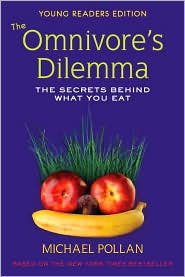
Young adult: Memoirs have been doing well and selling well and, again, must read like fiction. Also young readers adaptations (adult books, like THE OMNIVORE’S DILEMMA FOR KIDS) done over for younger readers. They are relatable and can be aspirational and light and fun or, on the flip side, depressing.


Fact-based or fact-inspired fiction: Perfect for when an author is inspired by a real story, but can offers facts in the format of a fictional story and thus avoid permissions for using names and places. (WHEN ANJU LOVED BEING AN ELEPHANT is an example.)
 
 
Here are some reasons for rejection from real rejection letter for nonfiction project Jamie has shopped to editors:
  • Unknown historical figure
  • Won’t appeal to a broad enough audience
  • Lacks cirriculum connection or other specialized tie-in
  • Similar titles are not selling well for the publisher or other publishers