Saturday, August 2, 2014

Aaron Becker's Wordless Keynote

Caldecott Honor winner Aaron Becker's keynote was entirely wordless!

Here are a few choice images from his talk and how we interpreted them:

Writing and illustrating a wordless picture book means you spend a lot of time sitting. So much drawing and painting!


Ugh, revising a painting can be tough! But the book comes first, so you do it.


When I got the call from the Caldecott Committee I was thrilled!


I have met so many other wordless picture book makers in the past year that we've formed a gang.

Steve Malk and Linda Pratt: Agent's Panel

Steve Malk of my favorite agency, Writers House! (with Lisa Yee's Peep)

Linda Pratt of my second favorite agency, Wernick and Pratt!


Lin asks the panel what hooks them:

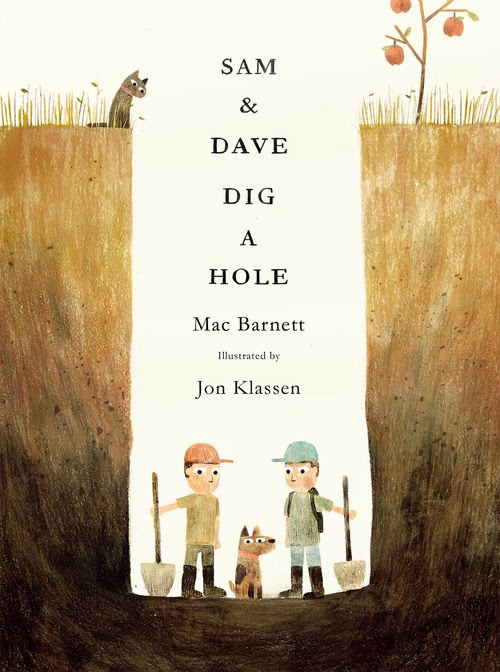
A hole is to dig, and Mac and Jon are digging a hole—
I think that title font is even an homage to the
Krauss/Sendak book, so nice.
Steve: "I love finding something that references a classic but layers their own point of view on top. With Jon Klassen I thought I could see immediately all of his influences but... he put a fresh point of view on top of that... took it in a completely new direction."

Linda: "I'm looking to meet somebody on a page that intrigues me from the very beginning. Something that I haven't seen before that makes me wonder why I haven't seen it before because it's so obviously interesting."

"And cover letter first, I want to meet that character on the page, but I also want to get a sense of the person I'm going to be working with. I want to know you're going to go out in the world as a professional."

Lin wants to know more about Linda's wishes for a cover letter:

Linda: "I want to know you've done your research, a brief summary of what your work is about, why you're submitting to me, and any credentials you have." (Like that you are an SCBWI member, not that you read your book to a bunch of third graders and they say they liked it and/or didn't fling boogers at you.)

Steve: Cover letters are really important, it's your opportunity to establish yourself as a professional. This is your career, so you should be taking it very seriously. If the letter has misspellings, reads like you just dashed it off, you're kind of selling yourself short.

A good cover letter will predispose us to want to like your work because we know you are serious about your career.

Did you know Marla's BOSS BABY is going to be a movie soon?????
Lin asks, "When you're taking on a new client, do you need to see a brand or be able to see the potential of one?"

Steve: The word brand can be tricky, it can scare certain authors, what if you don't have a narrow focus or niche? Your brand is who you are as a writer, it may be that your brand is that you write cross genres. Don't feel boxed in by the word "brand." For illustrators you don't need to feel like you can only work in one style or one character. Let your brand be that you do amazing work, like Marla Frazee. Everything she does is amazing, but her work is not confined to one character.

Linda: Sure, Hunger Games, Twilight, and Mo Willems are a brand of one type, but LeUyen Pham is an amazing talent and has a range of styles, she adapts her style to the book or project.

Did you know LeUyen is illustrating something for SHANNON HALE?!?


Agent's Panel: Alexandra Penfold

Alexandra Penfold is an agent at Upstart Crow Literary and has been working in publishing for over a decade. She is also an author of picture books and cookbooks. She represent everything from young picture books to young adults.

WHAT HOOKS ME

Alexandra likes books that show her something about the world or about life, books that take her to a place away from where she lives. She's drawn to books that recognize that kids are smart.

On cover letters: There's nothing more disappointing than a cover letter that gets you so excited to read the manuscript only to open it up and be disappointed. Be sure your work is delivering on the promise you make in your cover letter.

As an agent (and an editor) you want a writer's second book to be even more successful than their first. As an agent Alexandra wants to help her clients hone their focus moving forward into a career.

If you think about brand as your reputaiton it makes you think about what you do, including on social media.

Lin flips the panel topic around to: What doesn't hook you?

Alexandra gets a lot of picture book submissions. Awful rhyme makes Alexandra cringe. She loves poetry when it's joyful and done well. But it doesn't work when the story bends to fit the rhyme. Books can also be lyrical without rhyming.

Lin: How do you see the children's publishing landscape today?

It's been a fantastic year for picture books. There's been a resurgence. "Yay, picture books."


Rubin Pfeffer and Laura Rennert: The Agents Panel

Rubin Pfeffer was a publisher of Children's books (at both Harcourt Brace Jovanovich and Simon and Schuster) and then became an agent. He launched his own agency in January of 2014, Rubin Pfeffer Content, LLC.

Rubin Pfeffer


Laura Rennert has a PHD in English literature, is an author of both a picture book (Buying, Training and Caring for your Dinosaur, and the chapter book Royal Princess Academy: Dragon Dreams.) She has been a senior agent with Andrea Brown Literary Agency since 1998.

Laura Rennert


The panel's focus is "What Hooks Me" and it covered topics including cover and query letters, how each agents sees their role (editorial or not?) and clients building a brand.

Here are some highlights of what Rubin and Laura shared:

Rubin: 

I love to open a package or click on a file and feel the potential…

Looking for an author and/or illustrator who is able to "tell a story and bring me into their world."

"I don't get attracted to a one book relationship… I want a relationship to grow." It's very satisfying to watch something start small and see it go big.

It starts with one book… and that's the foundation upon which more will grow.


Laura:

She referred to herself as a "literary omnivore."

Looking for works that "explore universals in incredibly idiosyncratic ways."

Think about the voice of your cover letter.

"When you are ready to go out with your project [to submit to an agent], you should feel like you've done everything you can" to get it as far as you can.

The client should be the CEO of their own business. She considers her role more that of COO.

She asks herself: "What makes this author stand out in this crowded category?"

What Hooks Me: Sarah Davies & Erin Murphy

Sarah Davies
Sarah Davies is the founding agent at The Greenhouse Literary Agency, which has bases in the USA and the UK. She worked as a publisher for many years before founding Greenhouse. Meg Cabot, Karen Cushman, and Judy Blume are among the authors she published. Her agency clients include Lindsey Leavitt, Kat Yeh, and Sarwat Chadda.


The agency represents the range from picture books through YA, and Sarah has a special focus on MG and YA. Her agency philosophy is summed up in the name: It's a place where writers grow.
Erin Murphy


Erin Murphy is the founder of the Erin Murphy Literary Agency, which is based in Arizona but also has offices in Seattle. After working at Northland Publishing/Rising Moon Books for Young Readers, Erin founded her agency in 1999. The bestseller Robin LaFevers is among her clients.

The agency covers everything from PBs through YA, and tends to prefer lasting classics over trendier works. EMLA is legendary in the business for the close relationships clients enjoy, with an annual retreat that generates potentially dangerous levels of fun.

What do you look for? 

Erin Murphy: I look for authenticity, both in the author and the work. She likes characters that feel true. "You can't feel the hand of the author pushing them around on the page."

Sarah Davies:  She's hooked by ambitious writers. "And I'm not talking her about money and deals, much as we love them." She wants writers to crave mastering the craft, who have a big idea even if it might not pay off. She likes experimentation with structure. She's also an editorial agent who works with writers to get their work ready.

"I just love people who work hard," she said.

 What would you like to see or not see in a cover letter? 
 
Erin Murphy: She wants to see where you are in your career. She wants to get the sense that you've been at this for awhile, and how you're evolving.

Sarah Davies: The sole purpose of the query letter is to point the way to the writing. Keep it below a page, and keep your pitch below three paragraphs. Two is better. Make it intriguing, and make the reader want to go on and read the story. "But it's all about the writing that follows."

How do you see your role when you take on a client? 

Erin Murphy: Revision is as important a skill as writing. She often asks people to revise before she'll take them on as a client. If she doesn't know they can revise, she can't talk them up to editors.

Sarah Davies: She does a lot of work with her clients on their manuscripts. "If the bar can be raised, then I will do whatever I can do help that author get there."

Is it better to work with one publisher? 

Erin Murphy: If you're doing a book every few years, it makes sense to stick with one house and build that relationship. If you're a picture book author, you might publish with more houses, especially if you are prolific (which many picture book authors are).

Sarah Davies: Publishing contracts sometimes have limitations that determine this. Publishers want to make sure authors aren't overexposed, and they want to make sure authors aren't selling similar books to different houses. She likes knowing what clients are working on to make sure they're not hamstrung by contracts.

What doesn't hook you? What makes you cringe? 

Erin Murphy: If you're in prison, don't submit to her. Also, if a project is presented with outsize ambitions and celebrity dreams, that's a flag. "Your ambition should be about you growing as a writer or an illustrator."

Sarah Davies: She doesn't like cut and paste queries. She also sees the same beginnings again and again. Particularly prologues—prologues with car crashes. Then Chapter 1 is different in tone, and it starts with the character getting out of bed. In any given day, a third of her submissions start that way. She likes to be surprised. She likes fresh language and different ways to get into stories.

What's the children's publishing landscape look like today? 

Erin Murphy: Children's books are a bit insulated from some of the changes in publishing, because it's still about getting books into kids' hands. Everyone in the business cares most about story.

Sarah Davies: Her agency is having great year. The last two or three years, she's been a lot about YA. This year, she's done really well with middle grade. The international marketplace is improving slightly as some countries come out of recession.

The Agents Panel Begins!

From the seats...


And close up!

Left to Right: Sarah Davies and Steve Malk

Left to Right: Erin Murphy and Aleandra Penfold

Left to Right: Rubin Pfeffer, Linda Pratt and Laura Rennert

Justin Chanda: The State of the State of the Industry

Justin Chanda is vice president, publisher of three flagship children's imprints at Simon & Schuster: S&S Books for Young Readers, McElderry Books and Atheneum. He oversees the publication of two hundred and fifty titles per year ranging from the youngest picture book to the edgiest YA.

Justin feels he needs to begin by telling us: the e-book has not engulfed our universe; printed things on paper have not been eradicated; self publishing has not taken over; drones are not delivering our books--yet.

The good news is: children still need books.

Get ready! Justin tells us there's a new trend! It's going to change the face of publishing forever. It's contemporary YA. This has been the reaction lately, as if contemporary YA hasn't been done. Tell that to Judy Blume and Laurie Halse Anderson.

This business in cyclical.

Trends are undeniable and influenced by many factors. They are not predictable. You can't write to a trend. If you do, that trend will already be over by the time you're done writing  your book. You have to write the book that you are meant to write. "Your voice is the biggest capital you have in this business."

While there are still what is considered girl books and boy books, there's a great rise in gender-neutral books in middle grade. This is great.

Picture books continue their rise back to life. Yes! Successful picture books now tend to have an identifiable character, humor, adult and child appeal, and they are leaning younger (targeting about 5 too 6 year old).

Justin is a huge fan of e-books. They have done a lot help and sustain the reading growth.

There was a belief that ebooks would kill the picture book, but that is not true. The wonderful printed books that you read with a child in your lap are selling more and more.

The adoption of the Common Core standards across the country is now a key focus. People have said it will kill fiction in the classroom. Common Core is far from perfect and we don't even know if it will be around in a few years. Consider that Locomotion by Brian Floca has found great success and is being used in classrooms as part of the Common Core, but it was written well before Common Core was in place.


Our job as writers is to create good books, not to write toward a trend or the Common Core. Just like trends there will be different educational waves that will come and go.

On diversity: It's the responsibly of publishers and publishing houses to publish books that are as diverse as the world we live in. However, the responsibility is not solely in the hands of the publishers, it's also in the hands of those of us writing the books, the agents representing them, the store selling books. We are all in it together.

Our main focus as writers and illustrators should be story. Write books. Illustrate books.


Neta Rabin: Elements of Cover Art

Neta has only been at her new job for one week and three days! So welcome her to Klutz, where she is now the Vice President of Product Development. If you were never a child, then you missed out on all of the great Klutz cooking, drawing, gardening, joke, activity, craft and magic books.

Two of the four things Neta says you want a cover to do:

"Ha, made you look!": If you see it on a shelf with lots of other face out covers, does your eye stray to your cover first?

Clarity of content: Who is the buyer? Can you tell from the cover if the book is for three-year-olds or eight-year-olds? Boys and girls, or just girls? Just lawyers?


Neta walks us through the evolution of the cover of HOW DO YOU FEED A HUNGRY GIANT?


The first sketches were very similar to what you see above, but with a tighter crop in, with no sign, just the legs of the giant... which meant the only actual blank space for the title was between the giant's legs... Neta went back and forth with the artist over how to incorporate the title into the cover image (adding a little more of the giant's body, putting the title on a sign that the giant could hold, which nicely echoes action happening in the book).

ILLUSTRATOR TIP! Neta says being able to do hand lettering is a great thing for an illustrator to have in their back pocket.  Neta roughed in the sizes of the words for the title, and Shaw used that as a guide to handletter the title to its final style.

Remember when Neta told us that the cover should make it clear from the get-go what sort of a book it is, what sort of buyer will know this is the book for them? WELL, How Do you Feed a Hungry Giant? is a POP-UP BOOK! Yeah, I know! And the brilliant thing is that the cover has a pop-up element, look at this cool piece that you can pull out of the top of the cover:

HOW COOL IS THIS?!?!?!?


Neta shared more cover tips, some examples of favorite covers and what they have in common, and took time for Q&A, good stuff, guys!


LGBTQ Q&A, a.k.a. "Find the LGBTQ in SCBWI"

It was my honor to host this great discussion with

Author and Legend Bruce Coville,

2014 Golden Kite for Fiction Award-Winning Author (for "Better Nate Than Ever") Tim Federle,

"Freakboy" Author Kristin Clark,

Agent Adriana Dominguez,

Agent Danielle Smith,

Art Director Laurent Linn,

Editor Emma Dryden

and our conference attendees.

Over 40 of us sat in a large circle. It was warm and friendly, and first we quickly shared our names, if we wrote and or illustrated, and the genre/age category we were working on.

Then, we got to the substance - attendee questions for our faculty guests. So many topics were covered, from what to do if you're invited to do a school visit and then, when they find out about the LGBTQ content in your book, you get dis-invited, to the awesomeness of librarians, to how few submissions Adriana and Danielle get that include any LGBTQ characters or themes.

Some highlights:

Bruce Coville

Bruce: "Write what you believe in. Anything else is going to be false to you and false to the world as well."


Tim Federle

Tim: "You will get pushback and you will be celebrated."

Kristin Elizabeth Clark

Kristin: "We need the straight white kids to read these books!"

Adriana Dominguez

Adriana: "For me, speaking about diversity is half passion and half strategy."

Danielle Smith

Danielle: "Don't be afraid to write the characters you want to write. Kids need them."

Laurent Linn

Laurent: Sometimes it's the little things. Like Marla Frazee including two dad and two mom families among many other diverse families in Everywhere Babies. And the impact of that can be huge.

Emma Dryden

Emma: The best way to get kids back to empathy is through books. Keep writing.


And one of the best moments was when an attendee shared that two years ago they had come to this LGBTQ Q&A because they'd started working on a teen novel with an intersex character, and they weren't sure if they should continue working on it. Attending that session convinced them they should write the story they wanted to write. Now, their book is done, and they shared a sense of gratitude at the session helping them get past that fear.

And that's what it's about!

PAL Book Sale & Wine and Cheese Party


On Friday evening, conference attendees gathered to nosh and peruse and purchase books from others attending the conference. The line to buy books went out the door--a beautiful thing. 


Friday, August 1, 2014

Diversity Panel: Lamar Giles

Author Suzanne Morgan Williams is moderating the panel on diversity in books. Lamar Giles, author of Fake I.D., is asked what books he was reading as a kid, and for him there were rarely kid's books with African American main characters:

"Sometimes I'd hide my books from my friends because if they saw them they'd say I was acting white because the covers were showing white characters. And I know now, and they know now, that that's not what they meant, that it was more about not feeling included in the world of books."

When you have more diverse books, you make it safe for kids who aren't represented by the majority to see that they have a place in the world of literature, whether as readers or creators.

When asked if it's okay for writers to write about cultures that they are not from:
"Ask why are you doing it. It's like any other subject you don't know intimately, if it was technical writing or historical writing and you made a mistake, someone that knows the subject as an expert will call you out on it." Be open to feedback.

Dumbest stereotype: "All black guys can dance and play basketball."

What responsibilities do publishers have to balance their business needs against the needs of diverse kids?

"It shouldn't be about needing to balance, publishers should see this as a business opportunity, providing quality product to an underserved audience."

The #weneeddiversebooks social media campaign, primarily on Twitter, has exploded, and it's been an amazing opportunity to advocate for marginalized authors and children. "We talk a lot about race up here, but we also support different sexual representations, disabilities, and more."

With the explosive success of the campaign they're going to start a diversity festival, a number of other things will be happening, too. Lamar closes with, "We want to push this, we don't want this campaign to go away until the problem is solved."


Diversity Panel: Sharon Flake & Adriana Dominguez

Sharon Flake is the multi-award-winning author including The Skin I'm In, Money Hungry, Begging for Change, and many others.

Sharon went to the library and read a lot as a kid, but she says, "My first books were my parents. My parents told me stories about family and situations and they showed me that I was okay."

Disliked stereotype: That black fathers are absent.

Sharon believes that hopefully with all this discussion about diversity, people will start to come up with different models and ways of doing things.

Sharon has been telling diverse students that they have a seat at the table (in writing, marketing, publishing). She hopes we all help to make sure that comes true.


Adriana Dominguez is an agent with Full Circle Literary agency with a commitment to getting diverse books published.

Adriana hears from readers (at conferences) that they have not read a book with someone like them in it until college. This is the reason Adriana does what she does and is so passionate about it.

There's been a profound change in submissions, though there still are those that approach culture as food, etc. Now, Adriana sees books that approach the culture at a much greater depth in ways they haven't in the past.

Disliked stereotype: That all Latinas move the same.

Adriana likes to tell editors and agents to advertise their interest in diversity in books. She gets a lot of diverse submissions because she advertises her interest in getting them.

Lee & Low Books sponsors the New Voices Award which is given to an author of color with a promising manuscript which has launched many careers and books which have gone on to win awards.

Diversity Panel: Linda Sue Park

Linda Sue Park
Linda Sue Park is the Newbery Award-winning author of
A SINGLE SHARD. A recent title, A LONG WALK TO WATER, is a New York Times bestseller, and her picture book XANDA'S PANDA PARTY received three starred reviews. She's a master of both forms.

In 2003, Linda Sue was asked by School Library Journal to list three children's books that had meant a lot to her when she was a child. One of the books had an African hero, one had an African American boy as a hero, and the third was set in India. It had been 40 years since she'd read them, but the came back to her immediately.

"What these books showed me was that you didn't have to be white to be a hero." 

Linda Sue thinks anybody can and should be able to write about anybody or anything. But not all viewpoints are created equal. "If you are a member of the minority group, you are intimate with the dominant culture," she said. "You live in it. The reverse isn't necessarily true."

To write about something, you need a "passionate, personal stake" in it. Study a culture deeply. Learn a language (one writer she knows has learned 14 languages in the course of his research). There might be months or years of research into the culture, where you immerse yourself in it. Good intentions don't go deep enough. Not researching enough demonstrates a lack of respect. "That is what you are doing if you are not putting the time and the work and the passion into the story you want to tell."

When we write incorrectly about cultures, people feel disrespected, and readers get wrong information in their heads—and sometimes this wrong information never comes out. 

Also, when it comes to the sales potential of books with non-white characters, Linda Sue doesn't buy the notion that non-white people aren't a viable market. If they're not reading, then they are a huge, untapped market.

"Go hire whoever marketed 'Dora the Explorer,'" she said.

She had a plea for people who've read a diverse book they like: Even if you can't buy it, tell a librarian you loved it. That librarian will buy it and tell others, and that will really help a book succeed.


Learn more about Linda Sue Park
Follow her on Twitter

Meg Medina: The Diversity Panel

Meg Medina is an award-winning author of picture books, middle grade and YA fiction. Her work examines how cultures intersect through the eyes of young people. Her latest is the Pura Belpre Award and the 2014 CYBILS Award for fiction, "Yaqui Delgado Wants to Kick Your Ass."


Meg speaks of how, growing up, she was embarrassed by her mother's accent. What helped turn that around for her, and helped her believe she could be an author?

She was 20 when she read Sandra Cisneros' "The House on Mango Street" and it came as a shock - to see people who looked like her aunt and mother, people eating what her family ate. Realizing that they were worthy of a story "gave me permission to tell the stories I could take from my own life… and re-work into fiction."

She also shares that if you're outside a culture and writing about that culture, it's important to have people of the culture read your work to make sure you have "real people in your novel who we care about, not plastic."

There's lots more discussed, from the over-sexualized stereotype of Latina women to Publishers' approaches to finding new voices and diverse stories.

An excellent and important discussion!

The Diversity Panel Begins!

The Diversity Panel, from Right to Left: Moderator Suzanne Morgan Williams, Linda Sue Park,  Meg Medina, Lamar Giles, Sharon Flake and Adriana Dominguez

Ilene Cooper: How A Book Gets Reviewed - And Why It Doesn't

The author of over 30 books for young people, Ilene Cooper is a senior editor at Booklist, the review journal of the American Library Association. And she just received a starred review by Kirkus for her most recent book, A Woman in the House (and Senate).


She starts by saying that

"Being a reviewer who is also a writer makes me a better reviewer."

The audience is full of mostly published authors, listening and taking copious notes.

Booklist is a recommended-only journal of reviews, where every book reviewed is something they recommend for librarians to buy.

Booklist gets 8,000 children's and teen books every year (they don't discriminate between trade and self-published books - what matters to them is if it looks professional.) They have a staff of four editors, an editorial assistant and 30 outside reviewers. All together, their team does 2,500 reviews a year. That means 5,500 books don't get reviewed.

The challenge: They have to figure out which books they're going to send out to possibly get one of those review.

We're here to understand the why behind that decision process.

As they unpack the books, they decide what goes out right away. (When they look at books, they can tell how it fits into the world of the genre. They're seeing everything.)

First, they pick out the books that are high demand. Like the new John Green book. Because there is a lot of buzz around those books, and they want to be the first, if possible, to review them.

Second, they start setting up book trucks. Every two weeks they're going to send out whatever's on that truck to their reviewers. What gets on the truck? The next level - authors they've heard of, popular series, a lot of nonfiction, and if there are certain genres they don't get a lot of (like MG mysteries.)

And Third, the books they think will be hot (or the publisher thinks will be hot.) Some galleys have a marketing plan on the back - which shows them the publisher is investing in generating buzz. Or a personal letter from the publisher - that's pretty unique and they really pay attention to it.

What makes her want to put a book on the truck?

Ilene walks us through what she considers for each category that makes her want to put a book on the truck. For Picture Books, Nonfiction, and Novels - MG and YA. She even explains how stars work!

The session ends with questions and answers...

It's invaluable information.

Jill Santopolo: 20 Master Plots - Go on a Story Brainstorming Binge

Jill Santopolo
Jill Santopolo is an executive editor at Philomel Books, and is the author of book series for YA and MG readers, including the Alec Flint series, Sparkle Spa, and Follow Your Heart.

As an editor, she works with Jane Yolen, Andrea Cremer, T.A. Barron, and more wonderful authors. Her list includes picture books, middle grade, and young adult novels.

Jill was worried that no one would show up, but she ran out of handouts and several people were sitting on Dan Santat's lap.
She talked to us about strategies for developing plots, which she considers to be the backbone of stories. Her goal was for us to leave the room with five potential stories we can tackle in the future.

In addition to sharing several plot types with us, she walked us through questions designed to help us build the scaffolding of our stories.

Among the plot types she described:
  • The quest: Rick Riordan's THE LIGHTNING THIEF is a great example of this. Percy is at home, lacking an understanding of his life and relationship with his father. A force makes him act in a new way. A motivating incident occurs. And he meets buddies (there are always buddies). The middle makes things interesting; the end provides the answer to the lack.
  • The pursuit: Marie Lu's LEGEND. She establishes the good guy and the bad guy, the stakes of the pursuit, and the incident that sets it in motion. Twists, turns, and reversals follow. In the end, she sets someone free (though catching him could also be the resolution).  
  • The underdog plot: The story starts in a conflict-ripe world. A catalyst pits rivals against each other. There is a power struggle. The antagonists gain upper hand. In the middle: two sides are equal in power. Then come more power shifts. Then the underdog is empowered. In the end, there's a confrontation and the underdog wins.
It was an incredibly useful session, with lots of great insight about how we can frame the shape of the stories we're working on using a simple series of questions.

Jill's website.

Maggie Stiefvater: Building Characters with Heart

Thank you to Marquita Hockaday for the photo. 

Maggie Stiefvater
is the #1 New York Times best-selling author of the novels Shiver, Linger, and Forever. Her novel The Scorpio Races was named a Michael L. Printz Honor book. She has also written the Raven Cycle series among many books for young adults.

For Maggie her primary concern, above everything else, is character.

“For me what really pulls a book through are the humans.”

She notes that what is true for her might not be true for you.

She sees herself not a good writer but a better thief. She can’t create anything from scratch, not characters that actually breath and walk on their own.

She starts with people who have a real human heart and sees it more as creating portraits of people.

You need to know the rules of character building. You can't go around breaking rules without knowing the rules you're breaking. If you know the rules, and break them anyways, then it’s experimenting.

Some rules: 

·      The narrator should be a character who shifts the plot the most. (This rule is very central to commercial fiction.)

·      The narrator should be the character who changes the most. An intriguing character is one who is both internally and externally active.

·      Characters should be sympathetic and relatable ( a rule Maggie disagrees with). You should understand why a character does what they do, but it doesn’t have to be choices you would make.

·      It’s bad writing to write yourself into a character (Maggie also disagrees with this). She believes accidentally writing yourself in is bad writing, but doing it on purpose is creating a portrait of yourself. 

Maggie creates characters subtractively: when she's stealing from real life it’s often a matter of subtraction. From The Scorpio Races she stole from her brothers. One of the characters is very liked by readers, the other is not. So she has one happy brother, one not so much. But if she wrote them exactly as they are they’d be all over the place, so she focuses on the first idea she gets of them, developing the character from there.


Stephen Chbosky's Keynote: How to Write Your Timeless Classic (Or Die Trying)

Stephen Chbosky wrote and directed the feature film adaptation of his novel, The Perks of Being A Wallflower. He's written novels, screenplays and edited a collection of short stories, Pieces.

Stephen Chbosky giving his keynote to over 1,200 rapt attendees

Stephen starts his talk by saying

"The next generation of classics are literally in this room."

He's sharing the rejections he got for "The Perks of Being A Walllflower, " and then tells us that:

"If you're going to write your timeless classic, it starts with you."

Step one: find the great idea - your great idea

It sounds facile, but Stephen actually shares an exercise to help us - help you -  find that idea. It's something he's done twelve times.

It's about finding out the thing about you that's most beautiful and sharing it with the world. But we're not always the best judge of our own beauty…

Here it is: Write down every story idea you have. (He suggests to register them.) Then you take that list and you share it with the people closest to you, the ones who genuinely want you to succeed. Or ask kids you're trying to reach.

Everyone who reads it will gravitate towards one or two ideas.

Taste and talent are completely different things, and often we, as authors, don't always recognize what's unique and which is the great idea we already have inside us, and this is a way to find it!


Next, Stephen walks us through the other steps - the room is riveted!

Two more amazing quotes from the keynote:

"Books change lives. Books save lives." 

and that
"If you're really doing it for you, you're doing it for the world."