Friday, August 1, 2014

Judy Schachner: Thinking in Pictures: My Storytelling Process

Judy Schachner is the #1 New York Times best-selling author/illustrator of over twenty-three books for children including Bits & Pieces, the modern classic Skippyjon Jones series, Yo Vikings, The Grannyman and Willy and May. She has won many awards including the first E.B. White Read Aloud Award.

"When I create a character, I commit to that character."

The charming and funny, Judy Schachner, has the room cracking up, especially since she's being a bit of a rule breaker and doing everything Lin Oliver asked her not to. And we're loving it!

Judy will talk about thinking in pictures.

Judy got her start in illustration. Her first book was by Donna Jo Napoli and she illustrated a story about frogs. It was followed by What Shall I Dream? written by Laura McGee Kvasnosky. Then her publisher asked, "Judy, do you write?" After saying yes, she worried she'd be exposed as a liar.

Willy May was the first book she wrote and illustrated. After receiving some starred reviews, she started to believe she could write too.

If you asked her Judy what her favorite book was, she would say, Yo Vikings. It brought back childhood. One of the Judy's daughters wanted a viking ship, and believe it or not, her family ended up buying one.

Judy creates character bibles, getting to know her characters through images, ones she both finds and draws. Collaging and collecting, she has these books going all the time. It's all done intuitively, with no rhyme or reason. Judy shares with us a slide show of many of the pages that come from her character bibles. So very cool.


Character and dialogue comes first for Judy. Plot is more challenging. But doing the bibles helps her to solve all the problems with plot and place.

It's really amazing to see how Judy allows images and ideas to come to her, how she so freely allows herself to put them all together in interesting way. She gets them down on paper (in her character bible), and doesn't sensor herself, then let's it all go to work for her. It helps to inform her stories and clearly creates strong characters that feel original and charming.

Her process is fascinating and is even one writers could take to inform their stories and characters. Judy even suggests this process for those writing novels. "It can work for everybody."

What a treat to see pages from the character bible of her latest story about an OCD raccoon. Just wonderful.

The pages she creates become placeholders. If they don't end up in the book she's working on now, they might end up in another book.

"Become a collector of not just things but of experiences too."

Jay Asher & Stephen Chbosky: Mystery and Grit: Writing Realistic Page Turners


Jay Asher's debut teen novel, THIRTEEN REASONS WHY, spent over two and a half years on the New York Times bestseller list (and began as a SCBWI Work-In-Progress Grant Winner!). His second book, THE FUTURE OF US, was coauthored with Carolyn Mackler.

Stephen Chbosky wrote and directed the feature film adaptation of his novel, THE PERKS OF BEING A WALLFLOWER.

The mutual respect and admiration each has for the other already makes this session a great one.

When Jay thought up the idea for THIRTEEN REASONS WHY, he was afraid. It was not the type of book he thought he would want to read. That's when he decided to focus on making it a page turner.

Stephen has learned more about the page turn by watching Buffy the Vampire Slayer because it's all about what happened or what happens next.

Jay notes that his books are more plot driven suspense and Stephen's more character driven suspense.

Jay was thinking about the reader the whole time he wrote THIRTEEN REASONS WHY, thinking about what he wanted to say and what he wanted the reader to be thinking about. He wanted the reader to always be guessing what's going to happen next. If they're right, they'll be happy that they were, or if they weren't, hopefully they will be surprised by what happened in a good way.

Jay needs an ending in mind to shoot for, not that it means the ending might not change. He still needs to leave some room for the story to surprise even him as he writes it. He loves those moments. Let your characters sometimes surprise you.

Stephen echoes the same thoughts: If I know everything in the beginning then there's no room to make it better.

Jay wanted THIRTEEN REASONS WHY to read clean so that it would read quickly, building suspense and not allowing the reader to come out of the story.

Stephen on confusion: It's confusion if the reader is lost and doesn't know what's going on but
it's great suspense if the reader is guessing what the confusion is.

Jay Asher: Your book has one main thing that has to be solved that the reader knows will be solved at the end, so along the way the reader is going to need some micro-mysteries along the way to keep them reading forward to the end.


Justin Chanda: The World's Biggest Rod Stewart Fan and How He Edits Picture Books

One of the best, if not the best, picturebook dummy critiques I ever received was from editor Justin Chanda. And BECAUSE it was so fantastic, I felt compelled to attend this session and blog about it for all of you who are not able to be here. Here in this cold, dark Hyatt basement instead of working on my tan/having a Blue Hawaiian poolside.

So here is How Chanda Revises.

A picture book is an Experience. Long before e-books, picture books were the first interactive book, a well done spread of image and text physically compels you to turn the page. "The page turn is key."

Though a picture book IS marriage of word and picture, at the end of the day, it's a picture book, the pictures are very, very important, the best picture books are the ones where the words are making the pictures better and vice versa.

He looks for:

Short, young, funny text. The market trends for picture books are for five- to six-year-olds.

Economy of text. "If you think you can cut a word, you can cut two. If you think you can cut a sentence, you can cut two. If you think you can cut a paragraph—trick question! You should not have paragraphs in a picturebook manuscript."

A good sign after reading a manuscript is saying, wow, that was satisfying to read. Now I want to reread it. If you want to reread it 100,000 times, that's the stuff classic picture books are made of.

"Rhyming. Your picture book can rhyme. Good. But for every one book that uses rhyme successfully, I can show you fifteen that don't."

The MOST important thing you can do while working on your picture book is to READ IT OUT LOUD.

The first thing Justin does when working on an acquired picturebook manuscript is paginate it. Pagination shows you unequal distribution of text, lets you set up awesome punchlines, and helps you start envisioning things as picture book spreads (which is how you should be looking at it.)

These are not the spreads he's talking about.

But this is.

And by paginating, you can see if there's way too much action on a page making it impossible to illustrate (too much action is different than too much text but often correlates).

WRITERS, make sure you leave something for your illustrators to illustrate. We don't need you to write in the color of the sky.

ILLUSTRATORS, make sure you are not simply illustrating what the author wrote.

What to do with art notes? It's great you are thinking visually! Obviously include them if they're setting up a joke that's the opposite of what the text is saying, but don't be sad when your editor doesn't send them on to the artist.

And now I will let the rest of Justin's tips stay with the conference-goers, but I will tell you he's showing the editorial process behind ROBOT ZOT!

and CREEPY CARROTS!

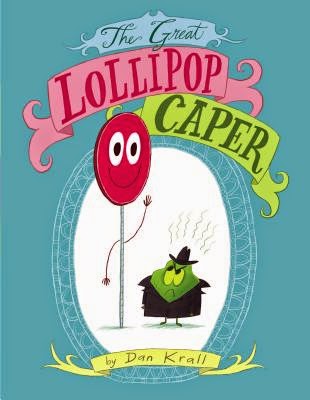
and THE GREAT LOLLIPOP CAPER

and more!!!!


Erin Murphy: Navigating Your Publishing Debut

Erin Murphy is the founder of Erin Murphy Literary Agency. She's a cracker-jack agent, whose award-winning and best-selling author clients include Joanne Rocklin, Cynthia Levinson, Chris Barton, Liz Garton Scanlon, Deborah Underwood and Robin LaFevers. …And how did Robin LaFevers become one of Erin's clients in the first place? Well, back in 2001, Erin critiqued Robin's manuscript at this very conference!

Erin Murphy in her session

She's represented, over the past 15 years, 272 books that have been published. She's had so many debut authors, some of them started blogging at EMU's Debuts.

The whole process, from making the deal to being published and having the book out in the world, with all the steps in-between, can take anywhere from a whirlwind year to three years, or in the case of some picture books, maybe as long as six years!

Highlights of Erin's wisdom:

"For every success in publishing, there is a waiting period that feels like a failure." 

She shares that it's very easy for us (after all, we make up stories for a living) to make up reasons for the silence - bad reasons - but really it's usually that everyone in publishing is just so overworked.


She suggests to not focus on what you can't control (things like reviews and how many copies a bookstore orders of your book, or your Amazon ranking) and instead focus on what you CAN control:

Like how much you know about how the publishing industry works. (Communicate and get your questions answered.)

Find your community (Like EMU's Debuts and The Class of 2K14 - for learning, marketing and support!)

You control your own marking plan. Your first book, think locally - not just geographically, but the communities you're part of and comfortable in already. (Consider introducing yourself to the local children's librarians in your area…)

And the most important thing you control… write the NEXT book!

It's a remarkable session, with lots more suggestions and advice. Like how success comes in lots of different forms, what to say when friends ask if they can get a free copy of your book, and how to respond when people tell you that they didn't see your book at the bookstore.

She also shares resources from blogs and around the web, and answers attendees' questions. It's great information!

Final thought...

You only publish your first book once, so when it happens, enjoy the hell out of it. But remember the big picture - no one's goal is to only publish one book.


Sarah Davies: Writing and Selling for a Global Marketplace

Sarah Davies is a literary agent at The Greenhouse Literary Agency.

She has deep experience in this business, both as an editor and an agent. For more than 25 years, she was a publisher in London, working with the likes of Judy Blume, Meg Cabot, and Karen Cushman. Her agency, launched in 2008, is based in both the U.S. and London. She considers both the U.S. and U.K. her domestic market, and represents writers in both places, although most clients live in the United States.

Greenhouse's affiliate Rights People is the top seller of international rights in the business. Being international is part of the agency's DNA.  

She gave us a detailed talk about the international aspects of publishing, which she finds "quite exciting." She also walked us through the anatomy of a complicated deal simultaneously struck on both sides of the Atlantic.

Some excerpts from her remarks: 

Why care about foreign sales? 

These sales mean more income for writers. The biggest contenders are Brazil, France, and Germany. Your advance can equal or exceed a U.S. advance. They can also lend prestige and profile.

"Success breeds more success," she said.

Territory is where all negotiations begin, she said. Publishers want as much exclusive territory as they can get for as little money as possible. Her agenda as an agent is different, but there are three types of territorial contracts she can make:
  • One for North American rights (usually U.S. and Canada)  - the publisher can publish in English in those two places, their dependents, and the Philippines.
  • World English language - the publisher can sell your book anywhere in the world in the English language.
  • World rights in all languages. Subsidiary rights are potentially very valuable. There are good reasons for your agent to sell them to your publisher, e.g. if your publisher has a good track record of selling your rights. These count to erode your American advance, which is good for the writer. There are also good reasons to retain those rights, and Greenhouse tries to do just this.
When a sale happens, percentages are divided. If Greenhouse sells for you, as opposed to your publisher, you will end up with a bigger percentage.
 
In terms of book publishing, all sales play into making your brand and your book bigger, she said. Buzz goes on internationally and nationally. And the book business is a small, interconnected world. 

A book called HALF BAD by Sally Green holds the record for foreign sales: 40 countries before it was even published.

On how books get buzz (a few of her observations):

She told us about some "shadowy figures" known as book scouts who live in NYC and London network with agents to find the hottest upcoming properties. They usually represent foreign publishers and film clients. "They are desperate for early information and hot tips," she said.

Book fairs also spread buzz—Bologna and Frankfurt (which is all books, not just children's books).

Publishers Weekly lists deals. There's a free newsletter you can subscribe. Publishers Marketplace also has a subscription service.
  
Follow Sarah on Twitter.

Learn more about The Greenhouse Literary Agency

Alessandra Balzer and Allyn Johnston: Editor's Panel

Alessandra Balzer is Vice-President, co-publisher of Balzer + Bray, an imprint of HarperCollins Children's Books. She edits everything from picture books to novels for teens.

Alessandra Balzer


Allyn Johnston is Vice-President and Publisher of Beach Lane Books, a San Diego-Based imprint of Simon & Schuster. She publishes books "for all ages and across all genres" with a "primary focus on lyrical, emotionally engaging, highly visual picture books for young children."

Allyn Johnston


The theme of the panel is for each editor to share their three must-sees and their three really-don't-want-to-see elements of a manuscript. Here are highlights of Alessandra and Allyn's comments:

Alessandra shares "I'm a sucker for voice." She needs to see voice, it conveys age, point of view, gender… it all comes through voice, and she must see that.

Allyn Johnson shares that she's looking for the unexpected. "If it has the ability to give me goosebumps" that's a really good thing. She also says that she's not a fan of long cover letters (she'd rather be surprised by the manuscript,)

As far as the what not to dos,

Alessandra cautions that the effort to not be boring can backfire if you overload the start of your manuscript with so much action and sex and drama that it's overwhelming… "introduce us to your characters."

And Allyn says, "Don't be weird." Don't submit your manuscript inside a plastic toy fish - which she s now holding up to prove that actually happened to her! [translation: your manuscript shouldn't need the gimmick to grab their attention.]

There's so much information and insights being shared!

Two last points, one for each:

Allyn Johnston - she asks herself of a picture book manuscript: Is it irresistible to read aloud? It must be, for her to acquire it.

Alessandra Balzer - in talking about having a hook, says, "what hook really means is the ability for the book to stand out." There's so much out there, what's going to make someone say, oh, you have to read this book - and that's yours?


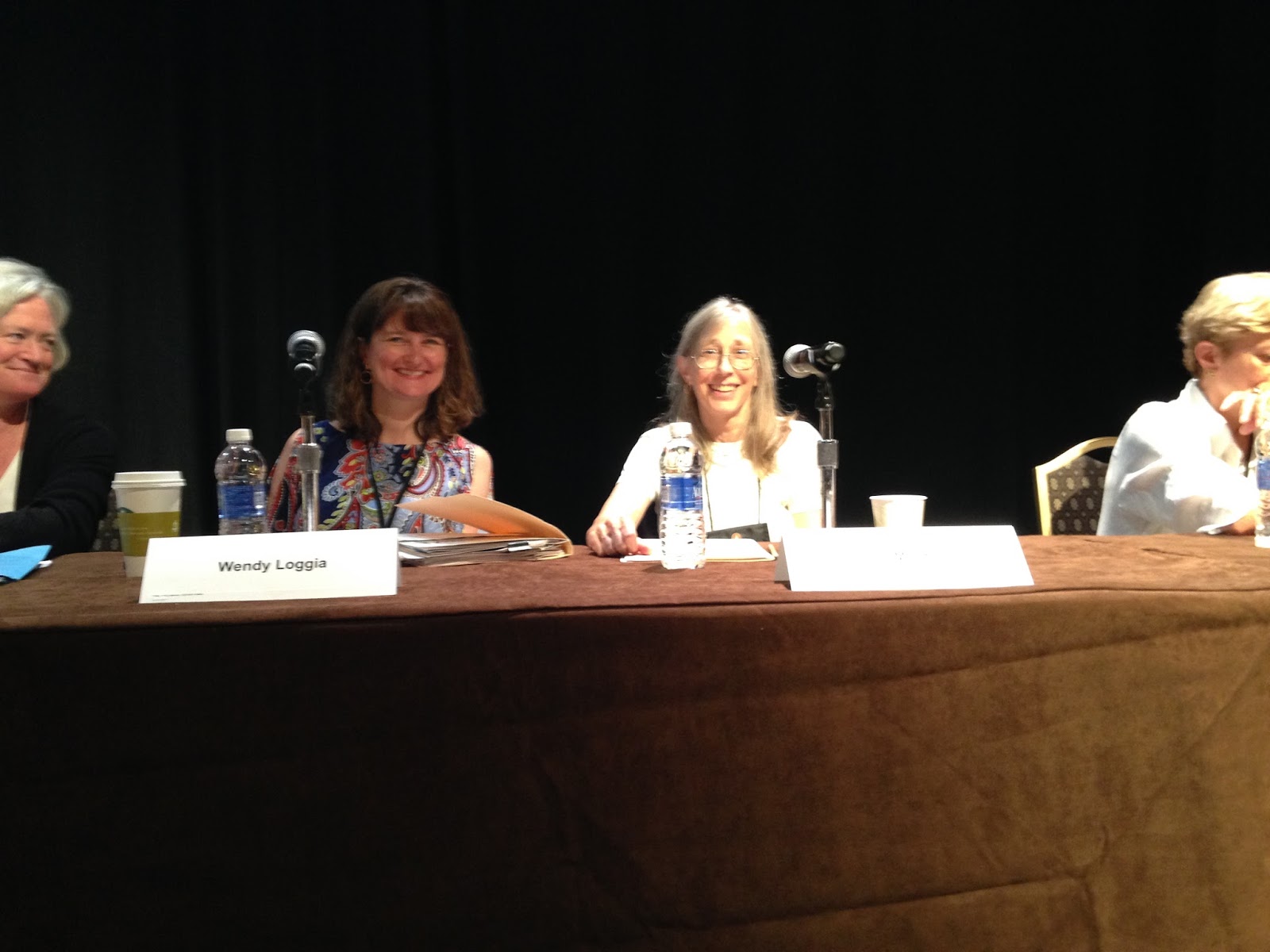
Editors' Panel: Wendy Loggia

Wendy Loggia is executive editor at Delacorte Press/Random House Children's Books.

The theme for this panel is: 3 + 3: Three things your book should include and three things to avoid.

The importance of voice is top on the list for all of the editors on the panel.

For Wendy, when looking back on particular books she's worked on, a one or two sentence description might not sound all that exciting, but it's the voice of the book that draws in the reader and makes it interesting.

What should writers avoid?

Wendy shares a simple tip: make sure you have page numbers on your manuscript. If you'd like her preference, put page numbers in the bottom, right corner.

Avoid telling an editor that your kids or grandkids love your manuscript. They hear this often.

"It's wonderful when I'm partnering with someone who has a clear imagining of how they want their book to look and feel."

Lucia Monfried, Dinah Stevenson: Editors' Panel

Lucia Monfried is a senior editor at Dial BFYR working on picture books, chapter books, and young novels. The picture below was stolen from the Lloyd Alexander film blog, which means BESIDES EDITING JUDY SCHACHNER, LUCIA WAS ONE OF LLOYD ALEXANDER'S EDITORS!


According to a long ago talk by Linda Sue Park, Dinah Stevenson enjoys watching murder mysteries on TV and making dinner, in an alternate universe we are probably soul mates. She's ALSO the vice president and publisher of Clarion Books. The picture below was stolen from Karen Cushman's blog which means BESIDES EDITING LINDA SUE PARK AND DAVID 'THE WEEZ' WIESNER, DINAH ALSO EDITS KAREN CUSHMAN!


Lin has asked the editors on the panel to tell us three good and bad things they see in submissions. Team Blog is going to share one of each category for each editor.

Lucia's Good: The first thing I look for is originality. It is a rare quality and something I think all editors look for.

Dinah's Good: It's very important for a manuscript to have a beginning, not only an invitation into the story, but something that contains the seeds of the ending so it sets up a satisfying journey.

Lucia's Bad: Don't rely on description, show me.

Dinah's Bad: This applies not to picture books, but to fiction and non-fiction, I don't want to see 100,000 words.

Editors' Panel: Mary Lee Donovan & Julie Strauss-Gabel

Mary Lee Donovan
Mary Lee Donovan is editorial director at Candlewick Press, where she's worked for 23 wonderful years, following a 7-year stint at Houghton Mifflin as well as time as a bookseller at The Children's Bookshop when she was getting her MA in Children's Literature from Simmons College in Boston.

Julie Strauss-Gabel
Her titles include the Newbery Award-winning GOOD MASTERS, SWEET LADIES by Laura Amy Schlitz, Megan McDonald's Judy Moody and Stink series, and the Caldecott honor book JOURNEY by Aaron Becker. They publish everything from picture books up, and have a relationship with Walker Books in the UK.

Julie Strauss-Gabel is the vice president and publisher of Dutton Children's Books, an imprint of Penguin Young Readers Group. She publishes about 9 or 10 middle grade and young adult titles each year. She just acquired her fourth memoir and is looking for those, as well. Before coming to Dutton in 2002, she worked at Hyperon Books for Children and Clarion Books. Her authors include Ally Condie, Adam Gitdwitz, John Green, Stephanie Perkins, Lauren Myracle, John Grisham, Andrew Smith, and more.

The topic of the editors' panel was titled "3+3: Three Things Your Book Should Include and Three Things to Avoid." Lin Oliver moderated, and questions in bold are hers.

What's on good thing to see in a manuscript?

Mary Lee Donovan:
"I remember hearing voice. What do they mean by that? Voice is something you bring to your manuscript automatically. You want to make sure you are writing as you. Don't try to imitate, or echo another writer or style. If you are writing authentically, you are writing in your voice."

When you get something fresh or exciting, it's like meeting a new person who enchants or astonishes you, she said.  

She recommends writers take their time when it comes to deciding which editors to send a book to. The Internet has a lot of information on editors and their lists that are very useful.

Julie Strauss-Gabel: "Voice is the No. 1 thing I have written down. That you have heard that across the whole table is an extraordinarily significant piece of information. I'm also very attentive to fit, for my imprint and for myself as an editor. I can look at a manuscript and very quickly know if it's good and if it's a good fit for me."

She is looking for something that she can fall in love with and champion for many, many years. She recommends writers read editors' lists, not looking at just the surface things. It's important to remember that you can't please all the people all the time, which is why you shouldn't write to a general audience.

What grieves you when a manuscript comes in?


Julie Strauss-Gabel: "If I don't get engaged, if I don't see the voice, if it's very pedestrian, I'm out."

Mary Lee Donovan: "Don't impart wisdom." 


The Editors' Panel!

It's starting!

Lin moderating the editors' panel!

And some close-ups!

Left to Right: Alessandra Balzer, Mary Lee Donovan, and Allyn Johnson


Left to Right: Allyn Johnson, Wendy Loggia, Lucia Monfried, and just a bit of Dinah Stevenson


Left to Right: Dinah Stevenson and Julie Strauss-Gabel


The SCBWI Staff

To applause, Lin introduces the SCBWI staff that makes all this possible…

From Right to Left: Lin Oliver, Sara Rutenberg, Kayla Heinen, Sarah Baker, Kim Turrisi, Chelsea Confalone, Gee Cee Addison Bahador, Brandon Clarke, Joshua Smith and Sally Crock (crossing in front to take a better photo is Lin's husband and SCBWI's conference photographer par excellence, Allen Baker.)

Meg Rosoff: Warning: Peter Rabbit May Be Harmful to Your Health

Sure, sure, sure, Meg Rosoff is well known as an award-winning, kickass teen author. 


But I knew her first for her gassy, terrible, ornery wild boars.
Illustrated by the world's greatest Sophie Blackall!

But are these wild boars more harmful than Peter Rabbit? Let us find out, since this is the topic of Meg's conference opening keynote.

She starts us off with an annotated, revisionist version of Goldilocks and the Three Bears favored by an increasing crop of psychology professors and scientists (including Richard Dawkins). These killjoys believe that "most fairy tales do not stand up to scientific scrutiny" and that "fairy tales are dangerous." They believe it's pernicious to encourage children to believe in fantasy and the supernatural.


Meg is occasionally tempted to agree with them, and provides a personal anecdote involving her husband, her toddler and eight sets of reindeer prints that happened to appear regularly in her house at Christmas time. "It drove me insane, for one thing, I'm Jewish." She talks about having discussions with her daughter about the existence of God vs. the existence of Santa and then the Tooth Fairy. BUT truly, Meg would never ever give up reading fairy tales to children.

When Meg's daughter got older and was visiting colleges, looking at physics departments, she lamented that she'd never be as smart as the young physics phenoms they saw walking around the campus in their rarely washed Star Trek tees.

"You may not ever be a genius," Meg told her daughter, "But you read books. You know about plot, character, stories. You know about letting your unconscious mind follow things to new conclusions. Reading books strengthens imagination and lateral thinking. A good scientist needs imagination. Reading books may even make you a great scientist."

"Imagination and the ability to tell a story will make anyone better at anything, with the possible exception of politicians and accountants."

"We are 7 billion improbably designed creatures living on a ball made of iron, rock, and silicate floating in an expanse of unimaginable nothingness..." No story we make up can be stranger than the truth of that, Meg says.

Meg talks about reading A Wrinkle in Time, and how parts of it still resonate in her life today, like treasuring your faults.

"The hard core, the engine, the rocket fuel of your life, it's your faults. Remember this when you sit down to write. Try looking at all the don'ts in your life, all the stubborn, angry, unruly parts. Write something that you think no one will buy."

"Do not be afraid to be afraid... We all know writing is bloody difficult, sometimes I hate being a writer. When I get stuck half way through a book, and I always do... when I'm convinced that my career is over... I want to hit my book over the head with a shovel... and bury it in the garden in the dead of night... And marry rich."
Graphic novel version with Hope Larson art!

But when it's going well, Meg admits, it is great. "Writers learn more about the world with every page we write, your job is to write the strongest, fiercest, most subversive tale you can tell. I don't care about the rules. Yes, the imagination can be very dangerous, it can change the world, and that's why we write."

Thank you, Meg!!!


Welcome!

Lin Oliver, SCBWI's Executive Director, and Stephen Mooser, SCBWI's President, start us off with laughs, warm hearts and some great statistics.

1,235 people are here!

From 19 countries, including the USA.

Lin mentions how, looking at the faculty of this 43rd Annual Summer Conference, it struck her that many of the people who will be on her side of the podium this time around were once in our chairs - they were attendees.

The conference faculty do their annual parade, entering to Pharrel William's Happy … and share their one-word-for-us-to-savour-and-contemplate.

Lin grooving on down as the conference faculty enter past her, to the crowd clapping along

From Meg Medina's "Bienvenidos" to Cecilia Young's "Transform" it's a mix of a word poem and a round of speed-dating,

Linda Sue Park: "Fierce"

Tim Federle: "Optimism"

Lamar Giles: "Persevere"

Meg Rosoff: "Rebel"

And Randy Morrison's "Lacuna - the missing portion in a book or manuscript."

And so many more.

It's thought provoking… inspiring… and a wonderful start to our conference!

The 2014 SCBWI Summer Conference is About To Start!

The registration lines are buzzing, people are struggling to pull themselves away from the conference bookstore, chairs are being filled…


We're moments from the start of #LA14SCBCWI, and before we "GO!" you should know two things:

1. You're in good hands…

Your SCBWI Team Blog: Left to Right: Lee Wind, Jolie Stekly, Jaime Temairik and Martha Brockenbrough

and,

2. We're so glad you're here. (Even if you're just joining us virtually…)

Tuesday, July 29, 2014

A Preview of the #LA14SCBWI Diversity Panel

I connected with panel moderator Suzanne Morgan Williams to get the scoop:


Whether or not you're able to attend the sold-out SCBWI Summer Conference that starts this Friday, you can be part of the online river of information and inspiration by visiting The Official SCBWI Conference Blog and following our conference hashtag, #la14scbwi, on twitter. Oh, and by watching videos like the one above!

Other diversity highlights of the conference include:

The Friday night LGBTQ Q&A

Featuring conference faculty, including Golden Kite Award-Winner for Fiction Tim Federle and Agent Danielle Smith, I have the honor of hosting this informal gathering to discuss LGBTQ publishing, the submission process, and answer your questions about this vital corner of the market for young readers.

The Saturday lunchtime by the pool DIVERSITY CHAT

Hosted by by Lamar Giles and Meg Medina!

Saturday's Afternoon Breakout session led by Agent Adriana Dominguez: DO's And DON'TS OF WRITING DIVERSE CHARACTERS

And, of course, keynotes, main-room panels and breakout sessions featuring our conference faculty - a diverse group of authors, illustrators and children's literature industry professionals!

Illustrate and Write On,
Lee

Wednesday, July 23, 2014

Advice From Judy Blume? Martha Brockenbrough Gets That For Us, In This Pre-Conference Interview...

Here's the interview, where you can read Judy's advice on getting past the moments when she wanted to quit writing, and hear the best writing advice she ever got!


Thanks Judy, and thanks Martha!

While the 2014 SCBWI Summer Conference is sold out, make sure to check out this conference blog and our conference twitter feed (at #LA14SCBWI) for highlights and a tapas-like taste of all the inspiration, craft, business, opportunity and community!

Illustrate and Write On,
Lee

Tuesday, July 15, 2014

#LA14SCBWI - The 2014 SCBWI Summer Conference - Is Sold Out!


Make sure to follow the action on twitter with the #LA14SCBWI hashtag (it also works as #la14scbwi) and to stay tuned to this conference blog...

Here's to an amazing conference ahead!


Saturday, July 12, 2014

Last Chance To Register for #LA14SCBWI - The 2014 SCBWI Summer Conference in Los Angeles, August 1-4

Craft... Business... Inspiration... Opportunity... Community!

The 2014 SCBWI Summer Conference is jam-packed with Keynotes,


Workshops (in the tracks: General, Pro, Illustration and Nonfiction), Socials and Peer Critique opportunities.

There's the Golden Kite Luncheon, The Tomie dePaola 80th Birthday Bash - A Night In Old Italy, and the Portfolio Showcase.

There's a diversity panel, a marketing and sales panel, an agents panel, and a palpable buzz of excitement as the stars of our world of children's literature gather with us for four remarkable days August 1-4, 2014 (the fourth day being the incredible intensives!)

The conference is on the verge of selling out - only a few spaces remain.

Want to know more? Check out the Pre-conference interviews with these faculty members:

Executive Editor Jill Santopolo

Newbery Award-Winning and Best-Selling Author Linda Sue Park

Editor Sara Sargent

Associate Publisher and Editor Bonnie Bader

National Book Award Winner and Newbery Medalist Cynthia Kadohata

Editor and Author of "Writing Young Adult Fiction For Dummies" Deborah Halverson


and the interviews with this year's Golden Kite and Sid Fleischman Award Winners (who will all be teaching workshops and accepting their awards at the Golden Kite Luncheon)...

David Meissner, nonfiction winner for "Call of the Klondike"

Tim Federle, fiction winner for "Better NATE Than Ever"

Peter Brown, illustration winner for "Mr. Tiger Goes Wild"

Pat Zietlow Miller, picture book text winner for "Sophie's Squash"

and

Bill Konigsberg, Sid Fleischman Humor Award Winner for "Openly Straight"


It's going to be an awesome conference - but if you want to join us, you'll need to act fast.

You can find conference details and registration here.

Illustrate and Write On,
Lee

Wednesday, July 9, 2014

Jill Santopolo: The Pre-#LA14SCBWI Interview by Jolie Stekly

Check out this plot-centered discussion Team Blog's Jolie Stekly had with Executive Editor (and author) Jill Santopolo!


Jill goes into detail on what you can expect from attending her 3 hour plot intensive, and she'll also be teaching two general sessions during the main summer conference,  "20 master plots: go on a story brainstorming binge" on Friday afternoon and "In the hot seat: embodying your character with tricks from the theater"on Sunday morning.

If you want to be there to learn from Jill yourself, you'll need to join us at the SCBWI Summer Conference, August 1-4, 2014 in Los Angeles. The conference is nearly sold-out, so go here to find out all the details and register!

Illustrate and Write On,
Lee

Tuesday, July 8, 2014

Linda Sue Park: The Pre-#LA14SCBWI Interview by Martha Brockenbrough

Check out Newbery Award-Winning and Best-Selling Author Linda Sue Park's interview with Team Blog's Martha Brockenbrough.


Linda Sue shares how research revs up her engine and tells us about the best piece of writing advice she's ever gotten - and how that's the secret to her process!

The SCBWI Summer Conference is almost sold-out, but you can still register and be there for all the inspiration, opportunity, business, craft and community it offers! You can find out all the details here.

Illustrate and Write On,
Lee


Tuesday, May 27, 2014

Sara Sargent: The Pre-#LA14SCBWI Interview by Lee Wind

"I like to tell authors that even if they’re not writing mysteries, they are writing mysteries. No matter what the genre, every book should have a component of mystery and suspense that makes readers want to keep going."
-Sara Sargent


Simon Pulse Editor Sara Sargent and I spoke about the value of attending the SCBWI Summer Conference, the importance of tension, her breakout workshops and Monday conference intensive and much more.

It was a great discussion, and if you'd like to meet and learn from Sara in person, join us at the SCBWI Summer Conference, August 1-4, 2014. Registration and information here.

Illustrate and Write On,
Lee

Friday, May 23, 2014

Bonnie Bader: The Pre-#LA14SCBWI Interview by Lee Wind

Associate Publisher and Editor Bonnie Bader and I had a great discussion about the value to writers and illustrators of attending the upcoming SCBWI Summer conference, in Los Angeles August 1-4, 2014.


We also spoke about how she approaches acquisitions, her planned conference workshops on both narrative nonfiction and levelled readers & transitional chapter books, and her all-day intensive on Monday Aug. 4, "START: How to hook readers from the beginning of your book so they'll never let go."

Bonnie's offering some incredible opportunities to learn and break-through in your writing career -- and you'll have to attend the conference to experience it!

We hope you'll join us. Information and registration are here.

Illustrate and Write On,
Lee

Wednesday, May 21, 2014

Cynthia Kadohata: The Pre-#LA14SCBWI Interview by Martha Brockenbrough

Check out this great discussion between Team Blog's Martha Brockenbrough and National Book Award winner and Newbery Medalist Cynthia Kadohata, where they talk diversity in Children's literature, capturing emotion, great writing advice, and… tacos.


Thanks Cynthia and Martha!

If you'd like to hear and learn from -- and be inspired by -- Cynthia in person, join us at the 2014 SCBWI Summer Conference in Los Angeles, August 1-4. Click here for more information and to register.

Illustrate and Write On,
Lee

Monday, May 12, 2014

Deborah Halverson: The Pre-#LA14SCBWI Interview by Lee Wind

The first SCBWI Team Blog pre-conference interview is in!

Editor, Author of picture books, novels and the craft books "Writing Young Adult Fiction For Dummies" and the July 2014 release "Writing New Adult Fiction," Deborah will be on faculty doing quite a bit of cool stuff at the upcoming 2014 SCBWI Summer Conference, including a keynote, breakout session and Monday intensive!


Deborah and I spoke about whether "New Adult" is really just YA with more sex, how to craft a youthful narrative voice, what's behind the "Market Report" that Deborah puts together for conference attendees, and the often untapped power of setting.

Click here to read the post - it was a great discussion!


If you want to see Deborah and learn from her in person, you'll have to join us at the 2014 SCBWI Summer Conference in Los Angeles, August 1-4. Click here for more information and to register.

Illustrate and Write On,
Lee