Your SCBWI 2026 Virtual Summer Conference "TEAM BLOG" is Jolie Stekly, Justin Campbell, and Jaime Temairik. Check in here and on socials at #scbwiSummer26 for updates, countdowns, and LIVE BLOGGING from the conference!
People. Gary Schmidt is a made of strong stuff. The man had back surgery three days ago. He flew cross-country to the conference--without pain meds--because he didn't want to seem loopy behind the lectern. Despite his discomfort, he hoisted a chair, acted the role of angry adult, and delivered mysterious manila envelopes to us, along with a stern warning NOT to open them.
I've never seen Jack Nicholson in "About Schmidt." But I'm pretty sure it's the Gary Schmidt biopic. And I'm even more certain that there's no one better than the Newbery Award-winning honor to show us a thing or two about developing character.
Some Gary Schmidt facts: It takes him about three years to write a book. A year for the draft, and two for the revision. As he works, he speaks with no one about it. Not even his wife. "This sometimes stresses us," he jokes.
"We need a slow accumulation of detail. We need that time," he says. "We live in a Mcdonald’s culture where everything should come to us in 45 seconds or less. Despite what American culture tells us, speed is never the friend of the writer."
Once we were finally allowed to open the envelopes, we found old photographs inside. He walked us through the process of creating a character based on the person in the photo. We generated a name. A way of walking. A way of sitting. A greeting and a farewell. How a character does these things reveals a great deal, he says.
He also talked about "idiolect," language that's specific to each character, as well as setting, which isn't a backdrop but something that reveals character and responds to what's happening. And he talked about what a character wants, an object that can sometimes be invested with metaphoric significance.
The hour flew by, highlighted by a Thanksgiving story featuring closed eyes, a prayer, and a dog's tongue.
If you have a chance to hear him speak, don't miss it. He's just as wonderful as his books (a few favorites below).
Ruta Sepetys is the author of the New York Times bestseller “Between Shades of Gray.”
Her debut novel is published in over 30 countries and 26 languages, is a Carnegie Medal nominee, a William C. Morris finalist, a New York Times Notable Book, a Wall Street Journal Best Children’s Book, iTunes Best Teen Novel, a SCBWI Crystal Kite Members Choice Award Winner, and the 2012 winner of the Golden Kite Award for Fiction. (She'll be awarded that statuette on Sunday at the Golden Kite Luncheon!)
In 2007 Ruta won SCBWI’s Work-In-Progress grant for Between Shades of Gray, and she credits SCBWI for her path to publication.
Ruta has become a master at Media, and has lots to share with us from doing press and media (radio, TV, print) in 20 different countries.
You need a one sentence description of your book, that covers character, setting, and time. Hers for Between Shades of Gray is:
"My book is about the journey of a 15 year old Lithuanian artist who is deported to Siberia during World War Two."
Some of her advice:
90% of time, the host hasn't read your book, MAYBE they read the press release, but you need to drive the discussion.
Have at least three message points, which you can formulate by answering these questions:
What is the point that you want to make about your book? What is unique about your book? What do you want the world to know about your book?
One of her message points is:
This is an untold story and the world knows very little of Stalin's purge of the Baltic region.
She also explained how message points need their corresponding sound bytes,
the match for the above message point is:
"history holds secrets"
Ruta works with attendees on OUR message points and sound bytes, then goes into the dos and don't, nuts and bolts of being interviewed on radio, TV and in print.
She explains about Bridges and Pivots (Techniques to communicate your point without waiting for the perfect question and how to get to one of your message points.)
Ruta gives us her advice on how to be memorable, stay in control, what to realize when you're being translated, how to avoid being quoted for something you didn't intend, and even how to respond to aggressive questions from audiences.
The session is masterful - we're laughing at all the mishaps that happened to Ruta and the horror stories she's sharing, but at the same time we're learning that we're the beneficiaries of her experience... as she said at the session's start, this is the workshop she wishes she could have taken before she sold her book...
After seven years of continuous rejection in the adult writing world, Matthew thought about how many of his joys involved children. That's when it seemed clear that he should be writing for kids. He began to google and look for an organization that could help him do just that, which is how he discovered SCBWI. His publishing connections started with his regional chapter in Utah, where he connected with his agent.
One of Matthew's biggest mistakes is that he almost gave up when he met his agent. Meeting him gave Matthew the burst he needed to keep going.
A great piece of advice Matthew received was to give himself permission to treat writing like a career.
JENNIFER BOSWORTH
Jennifer says the theme of her journey has been, "Fake it 'til you make it." Jennifer took what she learned from writing screenplays, and the idea of high concept, and used it as she wrote her debut novel, STRUCK.
Jennifer had an interesting strategy to her pitch: she listened to a song to get her psyched beforehand. She had ten minutes to pitch. She only took about one minute to talk about the book and she used the rest of the time to have a conversation, and ask questions.
Since, her involvement with SCBWI has started. "This organization is so great because it gives you a community of people who understand."
PAMELA WELLS
Pamela's story starts in college with a guy. A guy who broke up with her. She wanted to tell her story. So she began to write it, pouring the story out on the page. In writing her story, Pamela didn't realize many of the rules, but she met with an editor at an SCBWI conference who was interested, and it snowballed from there.
Pamela is the bestselling author of the HEARTBREAKERS and CRUSHES. The movie adaptation of Heartbreakers is scheduled for release in 2013, starring Selena Gomez.
Pamela suggests writing the book you would write for free and you can't lose.
EUGENE YELCHIN
In 2006, Eugene received a Tomie de Paola award at the SCBWI winter conference. Since he's had great success include receiving a 2012 Newbery Honor for BREAKING STALIN'S NOSE.
Eugene says he started with beginners luck. "If you write to please other people you won't get published." Eugene believes publication can't be the goal. You need to write for yourself. You will get an agent, you will get an editor if you write something that will resonate with readers.
Christina Gonzalez is a SCBWI success story, and she is the author of
the award-winning novel THE RED UMBRELLA, and the upcoming A THUNDEROUS
WHISPER. Christina shared that THE RED UMBRELLA was originally a picture book, then turned novel with
Random House.
From the get go, Christina had the audience engaged. How is
multi-cultural different? Secret-it’s not
different. You have to write a good story with strong characters. The nuisances
are what make it special.
Readers should be able to see themselves, but that doesn’t
mean it has to be a reflection. Write what calls to you. Make it YOU as you
write it.
Christina talked about how 90% of books have white protagonists, while 50% of
kids today are not. It’s our job to show the different stories. Not just in ethnicity, but also in sexual orientation or religious beliefs.
Ethnicity can be found anywhere-a "white" woman in Iowa could
have an amazing family history of a grandmother who immigrated from Germany,
marrying a Jewish man. There is ethnicity in her life—different cultures.
Christina then had the audience work on a writing exercise where
they had to think beyond their life—imagine a character of a different
ethnicity, and think about some of the challenges or triumphs. But here’s the difference of how to write
outside of your comfort zone—look at the emotions the character
experienced, and relate it to an emotion you felt that was similar.
It was an inspiring session that I highly recommend to all writers.
Lin Oliver tells us we are all in for a the treat of a lifetime, and I'm certain we are.
Patricia Maclachlan is the celebrated and beloved author of many books for kids, including SARAH, PLAIN AND TALL which won the Newbery Medal.
Patricia starts with, "I'm sorry I have no scandals or murders. It's just really boring in my books."
Okay, Lin was right, we are in for a treat. Patricia already has the crowd is in stitches.
Patricia reads us a picture book called THE WRITER and the crowd busts up.
She now enjoys spying on her young grandchildren and listening to their conversations, and she's written a great conversation down to share with the audience. Her personal stories are lovely and hilarious, and truly can only be relayed through the lips of Patricia Maclachlan.
This, my friends, is just one of those times when I have to say, "I'm sorry you're not here to listen to this."
And now Patricia is singing to us. Aww!
A boy once asked her, "Is there anything about your writing that surprises you?
Patricia has made connections with the words and actions of her kids, and her grandchildren. She's had many of the same experiences and emotions. She answered the boys question:
"I write and revise my books all the way from childhood."
And he responded with, "I know that."
The great educator, Maria Montessori, once said, "The child endures all."
Sara Shepard is the author behind the wildly successful PRETTY LITTLE LIARS--a fourteen book series--and THE LYING GAME. Her keynote focuses on the tips and rules she follows to keep her series fresh.
A few of her rules:
-Always know who the murderer is from the start
-Always incorporate the red herring
-You have to be willing to change
Sara spoke about how some of her ideas came about, how she got in the business, and where she plans to go with the series. Back when first starting out, Sara was a ghost writer--learning the craft from working on tight deadlines and being professionally edited.
Sara writes very detailed outlines to to keep on track. PRETTY LITTLE LIARS publishes about every six months, so she feels the outlines help with the tension, among other things. But then some of her ideas show up while she's writing. Sara tells the audience some of the things that she finds interesting about her characters, and how to create that interest in your own series.
It was fun to hear her thoughts on her books being adapted into the popular TV series. And then we were all treated to a few spoilers for PRETTY LITTLE LIARS!!
Lissa Price is author of the debut novel STARTERS, an international bestseller. She is hard at work on the sequel, ENDERS.
Lissa switched from writing screenplays to writing novels because there are advantages: You’re able to get inside a readers head; The industry is kinder; You can write a book from anywhere in the world.
Lissa believes her writing process, with a screenwriting background, made her debut experience much easier. Some of that ease came from the having a high concept book.
Lissa asks: What does your logline look like?
A logline is one or two sentences that encapsulates your book in a wonderful way.
Movie example: A lawyer cannot tell a lie for 24 hours. (Liar Liar)
A treat for the crowd: Lissa is taking loglines from the audience and helping to focus and strengthen them.
Some tips on building the pitch:
·Identify the genre.
·Who’s the main character?
·What makes her unique?
·What’s the inciting incident?
·What is the main character’s goal?
·Identify the major conflict your character will face.
Neal gives us three case studies (Team Blog will just share one):
Ready, Stead, Go!
Remember the amazing Rukhsana Khan from last year's Golden Kite lunch? Here she is with Erin and Philip! From Rukhsana's website http://www.rukhsanakhan.com/
To start off, how Neal met Philip. Books of Wonder is a
hotbed of creative energy, says Neal, many of the current and past booksellers
there, like Nick Bruel, George O’Connor, Jason Chin, are now well-published
book makers, Neal calls them the Books of Wonder Mafia. It was one of these
mafiosos that introduced Neal to the work of Philip and Erin Stead.
Neal shares some before and after text of Amos,
Philip’s original, with Neal’s edit requests, which brought Amos’s character to
a deeper and sweeter level.
Neal shares a photo of Erin’s bust of Amos, as well as the
evolution of Erin’s sketches of the zoo animals, her woodblock process. I love Neal's parting words on the (surprise to them) success of Amos:
“It makes me a little teary that a quiet book, that doesn’t
have sparkles on its cover or scream can still find success in this complicated market and
world.”
I don’t want to over share Neal’s session, but I have to
mention Brian Floca’s superb artwork for this picture book, and how Neal
refound Brian via Brian’s friend's website (another NP-er, the
illustrious Johanna Wright!). And it was just a teensy thumbnail of a drawing
of a fashion show in Brian’s online portfolio (very different from art Neal
knew from Brian's books like the more technical Moonshot) that led to Neal picking Brian for this book.
Illustrators, never underestimate the power of virtual
friendships and sharing a range of your best styles in your online portfolio!
E.B. Lewis presents to a room full of illustrators
E.B. Lewis has illustrated 57 books for children in the last 17 years!
His works include Nikki Grimes' Talkin' About Bessie: The Story of Aviator Elizabeth Coleman, the 2003 Coretta Scott King Illustrator Award Winner; Alice Schertle's Down the Road, an ALA Notable Book; Tolowa M. Mollel's My Rows and Piles of Coins, an ALA Notable Book and a Coretta Scott King Honor Book; Bat Boy and His Violin by Garvin Curtis a Coretta Scott King Honor Book, and Jacqueline Woodson's The Other Side, a 2002 Notable Book for the Language Arts.
Part of the Workshops for Illustrators series (twelve illustrator workshops across six time slots over the three conference days), E.B. is excited to take us on his journey of Mastering Story.
Toni DeTerlizzi's keynote was so resonate, E.B. started out speaking about the importance of imagination for illustrators, quoting Picasso,
All children are artists, the trick is to maintain that.
He talks about how illustrators have to develop a voice, and references the 10,000 hours to master something (a powerful idea from Malcolm Gladwell's Outliers.)
Like learning a spoken language, where you need to learn the parts of speech so you can articulate the finer details, the same is true for illustrators. You're presented a manuscript and you have to visually tell the story, re-tell the story.
He talks about the importance of doing your research, that
"we have to dig so deep to the point where we actually smell it."
For his upcoming Trouper the Three-Legged Dog (written by Meg Kearney), E.B. had to illustrate a three-legged dog. So he had to go find a three-legged dog, and when he did, he saw how it walked. How the tail reached out to one side to compensate. He wouldn't have known that unless he'd done his research.
He loves Texture. Light. Direction. Nuance. Putting his own emotions into it. In fact, he defines his voice as an illustrator as "Emotion."
When E.B. sits to do a book, he figures out his beginning, middle and end images. That way the story is being told sequentially, it flows. He's illustrating that with the book he illustrated, The Negro Speaks Of Rivers.
And also with the classic picture book, Where the Wild Things Are by Maurice Sendak. E.B. is explaining how the illustrations, page turn after page turn, tell the story, even without the words. It's remarkable.
He shares a short film clip about passion and creativity, perception and inspiration...
And E.B.'s words resonate for us,
"Writers write. Painters paint. Dancers dance. Don't do it to get published. Do it because you love it."
And then,
"As long as you are true and honest in your work, they will come and find you."
Putnam editor Ari Lewin took a different approach to her
Writing Fantasy workshop—following the advice often given to writers: Show, don’t
tell.
Ari had members from the packed audience read the openings
from books like THE GOLDEN COMPASS and ARTEMIS FOWL. Using the examples, she
pointed out why they worked so well. It was an informative list of dos and don’ts.
So what are some of Ari’s dos?
Number one, characterization. You have to make the reader
care so that they’re willing to go on this journey. She gave the audience tips
on how to achieve this, and pens were furiously scribbling down her
suggestions.
One of her major don’ts is over explanation in the beginning
of the book. Show us the world. Don’t tell us. We learn so much about characters
from how they interact, what they say. Find the right way to work in the world building,
otherwise the reader won’t be invested.
She ended with a great Q&A session, leaving the audience
with inspiration to use on their own fantasy novels. For me, her best advice
was to be genuine—your fantasy should be transparent and honest. And she also introduced me to instagram which
I will start using non-stop.
Matthew Kirby is the award-winning author of THE CLOCKWORK THREE, ICE FALL, and the fifth book in the forthcoming INFINITY RING series. You can learn more about him at his website.
The former school psychologist talked to a packed and exuberant room about ways to "tap the universal" in storytelling.
He started by saying that Lin asked him to do a presentation on “plot.”
"Plot has a negative connotation in some circles," he said. "So I kind of was switching from thinking of plot to thinking of form. “That somehow feels a little more respectable when you’re talking about literary qualities in fiction.” What is form in story?
He showed us a photo of a winding road, and the structure holding up a house. In the images, you see what’s in place, but you’re aware of what’s missing.
“When I think of form, structure, plot, this is what I think of it," he said. "It’s the armature, the structure to give your story a shape and a direction. It communicates to the reader what kind of space they’re going to inhabit, but it’s not a story until you’ve put somebody in that structure, on that road.”
What gives a story meaning to Matthew?
It has to resonate with me. I can read something about it and I identify with it. I find something familiar in it.
It illuminates, challenges, and expands our understanding of the world around us.
It helps us to ask questions, and maybe arrive at the answers to our questions.
He reminded us what Richard Peck has said: The story should be the QUESTION, not the ANSWER.
To understand story structure is to have talent.
Matthew quoted the science fiction writer Samuel R. Delaney: Talent for writing is the ability to:
Perceive
Internalize
And submit to models.
What he means by that: Whatever it is you’re trying to write, there are models of that thing. Talent begins when we perceive these models. That means we have to read a lot and then perceive the core of that. You have to internalize it to such a degree that you no longer think of it in specifics. You might run into trouble if you violate the terms of the contract (veer from the model too much).
A few great quotes:
"Create a character people love, and then make life as hard for them as you possibly can."
“There are only so many [plot models] but there's no limit to the..stories that can be told within those models.”
“Story is an act of meaning-making in all of its forms. It's an attempt to contain some aspect of life."
"Trust the characters and events you've set in motion."
"It all comes back to characters. Without them, you have an empty building, an empty road."
The Wond[la]rousTony DiTerlizzi may first have caught your eye with his Caldecott Honor winning illustrations for The Spider and the Fly in 2002 (soon to be available the 10th anniversary edition!), but then he went on to amaze you with his and Holly Black's fantastical Spiderwickian collaboration, which has inspired moviemakers and other goblins since 2003.
Tony starts his talk by wowing the conference with some of his new book ideas*, like Fifty Shades of Fancy Nancy.
Guys, you are really missing out, it only gets better and more hilarious from here. Especially Tony's retellings* of Alice's Adventure in Wonderland, The Wizard of Oz, and Peter Pan.
All of Tony's books have one common thread, and it's a thread that will be in all of his books to come: Imagination. It's something he thinks must be instilled at a very early age, and that imagination has changed in the last few decades. He compares the video games and TV shows of his youth to today's hyper realized and rendered games and movies—how much imagining do we really have to do now?
He takes us back to his childhood trauma of oral book reports—a smart teacher turned that trauma into a delight by asking Tony to do an illustration from his book report book, which changed how Tony approached reading. He wasn't reading for a report anymore, he was reading instructions on what to draw next.
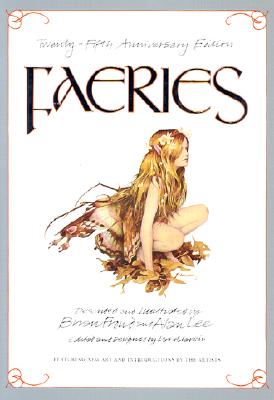
Tony also credits Florida's overwhelming swamp heat and boringness for his wild imagination. He spent a lot of time alone in his room with a copy of Faeries by Brian Froud and Alan Lee.
Fast forward to 2002-ish, and the success of The Spider and the Fly. His editor told Tony he could do any book he wanted to next, and Tony had a big decision to make. We're so thankful he asked himself this question (and what a fantastic question for all of us!)
"What would ten-year-old Tony want
that adult Tony can make?"
He keeps a number of childhood toys around his studio to remind him of who he was as a kid—to remember the good times, as well as the times things really sucked as a kid.
Tony shares with the conference some of his book inspirations*, as well as a bit of his process* for his Wondla and Spiderwick series. Serieses.
*These are worth the conference registration fee alone!
Arthur A. Levine is Vice President and Publisher of his own imprint Arthur A. Levine Books, which is celebrating its 15th Anniversary at Scholastic! Think Harry Potter is "Timeless?" Well so did Arthur, which was why he was the co-editor of the series by J.K. Rowling. He's sharing an excerpt from "The Once And Future King" by T.H. White, talking about the impact of moments of intimacy on readers. The importance of authenticity in that moment when the author, their characters, are speaking in a way that isn't canned, but you feel they're "telling you the truth in a way they wouldn't tell anyone else."
As a publisher, Arthur asks himself,
"If you were going to recommend this book, would it be the BEST book of its kind?"
when he answers yes, he thinks it's Timeless. And he publishes it. He's sharing a number of the titles he's published that made that cut, and explaining why and what he feels makes them Timeless. From the picture (and board) book "Good Night, Gorilla" by Peggy Rathmann
to "The Golden Compass" by Philip Pullman to
"Harry Potter and the Sorcerer's Stone" by J.K. Rowling to
"How are you Peeling? Foods with Moods" by Saxton Freymann and Joost Elffers
to "The Arrival" by Shaun Tan
It's a talk full of insight and inspiration, with moments that make us marvel at the
"breathtakingly vivid connection between character and character, character and reader, and author and reader."
Now we all get to aim for our own work to be (say it with me), Timeless. Thanks, Arthur.
SCBWI co-founder Lin Oliver delivers opening remarks.
As Lin Oliver welcomed us to this 41st annual conference, she shared some great statistics:
There are 1,234 attendees from around the world.
People have come from as far as Egypt and Ukraine.
But no one from either of the Dakotas made it.
As is our tradition, the faculty introduced themselves with a single word. Sonya Sones, who writes YA novels in verse, was really naughty. Her word was penis [redacted]. She did make a quick getaway in her fantastic Converse sneakers.
You can feel the excitement in the room--and here we go with Arthur Levine!
Jolie Stekly, a former regional advisor and SCBWI member of the year, kicked things off for the hundreds of people attending this event for the first time.
She started with a quick survey of the room. Some tidbits: there are more writers than illustrators attending for the first time (but quite a few who do both!). There are more women than men (not a shock). And quite a few people have come from outside the United States--and many came without knowing a single soul.
But that's one of the great things about these conferences. You can come alone and leave with many friends. Here's hoping you find many new fellow travelers to make this publishing adventure even more of a trip.
But more than just SURVIVING the 2012 SCBWI Summer Conference, you need to know how to THRIVE and get the most out of it. To that end, some tips:
1. When you get it, take the time to read your packet. There's a lot of material there, but if you wait until you get home to check it all out, you may miss some important things - be informed, and read your packet.
2. First time at the conference? Attend Jolie Stekly's Friday Morning New Attendees Orientation. It's in room Olympic 1 at 7:45am. Get up early and go to it! Jolie's a member of Team Blog, a former Regional Advisor, and SCBWI's 2009 Member of the Year... She's a treasure, and you'll be in good hands!
3. Stretch. Challenge yourself to attend one session that's outside your current focus (a plot talk if you're an illustrator, or a session on picture books if you write YA.)
4. In the words of Fred Ebb (lyricist for "Cabaret")
"What good is sitting alone in your room? Come hear the music play..."
Don't just attend keynotes and workshops and then retreat to your room. Hang out in the lobby bar and by the outside tables - even if you don't drink. Talk to your fellow writers and illustrators... Lots of magical connections and moments happen this way. Leave yourself open to that magic!
5. Keep your nametag on. Even at dinner, or drinks afterwards (see tip #4.) Your conference name tag helps others know you're part of the tribe, and helps them remember your name, too. You can even stash some of your own business cards in the back so they're handy.
6. Speaking of business cards, when you get one, or that evening, jot a quick note to yourself about who the person was and what you discussed. It's not so much for your biographers, but there will be over 1,000 other attendees... and in a couple of months (or years), it will be remarkably useful to have something brief to jog your memory.
7. Maximize the experience:
Friday night there are a bunch of Optional activities, including: Yoga, an Illustrator Social, a Nonfiction Social, an International Social, an LGBTQ Q&A (with publisher and editor Arthur A. Levine, assistant agent Natalie Lakosil, and award-winning author Sonya Sones) and Moderated Peer Group Critiques.
Saturday night there's the Hippie Hop Gala (and Dance Party!) Will YOU be wearing Tie Dye or Fringe or ...?
Sunday night, after the Autograph Party, Los Angeles Kid Lit Drink Night will fill the lobby bar, and lots more networking and schmoozing and fun will be had with whoever's still around from the conference, plus we'll add in a group of Los Angeles' kid lit hooligans. The joint will be jumping! (On the other hand, if you need to get your shavasana on, there's also another Yoga session that night.)
The world of SCBWI's Summer Conference is your oyster, from sun-up to sun-down and around again to sun-up. Partake.
8. Take care of yourself and your creative fire. If you're feeling overwhelmed, it's okay to take a break (despite tip #7.) Chat with a fellow conference-goer by the pool. Sketch. Outline that new picture-book idea. Visit the conference attendee hospitality rooms - Bel-Air and Malibu (on the California Level) - to recharge and have a snack in a quiet place. Remember that this is YOUR conference, your time, and you get to make it your own.
9. If you're on twitter, tweet conference moments/quotes/shoutouts with the hashtag:
10. When tweeting or blogging the conference, remember our Team Blog guidelines... A taste but not a transcript. It is not respectful to the presenters to share their material in its entirety, so let's all be respectful.
11. Keep in mind that you want to be fun and have fun, but you also need to be professional. After all, this kind of thing is not going to make a good impression:
(My thanks to Arthur A. Levine and Paula Yoo for illustrating that point so beautifully.)
12. Do your homework. Particularly excited to meet a certain faculty member? Read a couple of their books first (that they wrote, or illustrated, or agented, or edited), and you'll have something to talk about, and maybe questions to ask to make it a great discussion.


 Some Gary Schmidt facts: It takes him about three years to write a book. A year for the draft, and two for the revision. As he works, he speaks with no one about it. Not even his wife. "This sometimes stresses us," he jokes.


.JPG)