Thursday, April 30, 2020

#SCBWIdigital workshop: Kait Feldmann presents “Page By Page: Breaking Down Picture Book Pagination”

Kait Feldmann, photo credit: Tess Thomas © 2018


Kait Feldmann is an Editor at Orchard Books, an imprint of Scholastic, where she is building a list of picture books and graphic novels. Kait is also the VP/Director of Special Projects for People of Color in Publishing, the founder and chair of the Scholastic Diversity Committee, and a member of the Diverse BookFinder Advisory Council.

A screenshot of editor Kait Feldmann (above) and SCBWI Executive Director Lin Oliver.

Kait opens with a poll, getting a sense of how many of the SCBWI members attending are authors, illustrators, or both. (We are 70% writers, 4% illustrators, 26% both!)

She explains that she'll be starting discussing the mechanics and production elements of picture books, and how that impacts her decision process as an editor.

She covers hardcover picture book terminology - including
verso is a left page
recto is a right page

Kait's tip to remember which is which: Recto and Right both start with "R".

Why most picture books have a 32 page count, which goes up in sets (signatures) of 8
40
48

That's because of how they're printed. Kait gets crafty, showing us how one large sheet gets printed, folded, cut, and stitched.

Every 16 pages are all printed on one giant piece of paper

until it gets folded (and then cut and stitched.)


Then she shows us (with printed materials and even a chocolate bar wrapper) how endpapers work, and the case cover, and the difference between "separate ends" and "self ends". 'Self Ends' means that page 1 (and the final page 32) can no longer be seen- they are glued to the case cover!

Kait explains that she's sharing this because it informs how much space we have, as authors and illustrators, to tell our stories. For a 32 page picture book, it's the difference between 11 spreads to tell your story, versus 15 spreads plus two pages to tell your story!

She gives advice to illustrators (such as not putting anything vital under the jacket flap, as it gets fastened to the clear paper cover by libraries and can't be lifted up by those readers.)

Kait shares so much wisdom,

"In picture books, every spread has the power of a chapter in a novel."

And shows us examples of her process for figuring out the pagination. But she doesn't send that pagination to the illustrator - she tells them the page count, and lets them figure it out themselves.

Kait's advice: Read picture books we love, and study how many spreads have narrative content on them. Break down the pacing. "Don't stress too much about it," Kait tells us, saying that the more consciously we absorb it, the more it will subliminally influence our own writing.

She advises writers to paginate our own picture book stories, calling it "the best exercise I can recommend for pacing." (But remove the page numbers before you submit - tip: you can leave the line breaks!)

There's lots more covering pacing, examples of picture book first pages, and time for Q&A (with two bonus questions from Lin!)

It's an in-depth look into how an editor works on a picture book.

Thanks, Kait!

Stay safe, all.
Lee

p.s. - Did you miss it? The video is available for 30 days to SCBWI members here.

Thursday, April 23, 2020

#SCBWIdigital workshop: Jennifer Vassel presents “Book Marketing 101: How To Be Your Own Publicist”

A screen shot of Jennifer presenting her #SCBWIdigital workshop

Jennifer Vassel is an author and an entrepreneur. In 2016, she self-published the first book in her “I Am Unique” picture book series. Her book has found readers in Africa, Australia, and Europe. What started as a single story has grown into a franchise with more books in the series, toys, merchandise, parent guides, teacher guides, and a potential animated TV series. Jennifer’s publishing path has been documented in Forbes, Essence, Black Enterprise, and Thrive Global.


An instagram post featuring Jennifer and her bestselling indie published picture book

Jennifer started out with two polls, trying to get a sense of what the 1,800 SCBWI member attendees were hoping to learn. (42% of us said we don't know where to start, 41% are curious about implementing book marketing strategies.) She then took a poll to see if we're traditionally published, independently published, or hybrid combo of the two. (54% of us are traditionally published, 24% indie.)

She briefly told us about her journey, how when she started out she thought just writing the book was enough. Fast forward to today where her mission has grown from a book into a movement.

Jennifer doesn't have a publicist, saying she's invested time and resources into learning how to do it herself. She encouraged us, “If you don’t have the budget to hire a publicist, you can absolutely do this on your own.”

First task:

Identify your target audience. Who does your book help? What are their interests? Where can you find them?


One of Jennifer's slides


She shared that before she targeted her efforts, back when she had just published her book, one eight-hours of tabling at an event with tons of people attending resulted in only two book sales. After she targeted her efforts, another eight-hours of tabling at an event all about empowering women and girls resulted in her selling over 1,500 copies of the very same book! Same book, same eight hours... it's all about targeting the audience.

Jennifer also shared a worksheet to help each of us get more specific about identifying our audience.

She urged us to build a mailing list, and not rely on connections or followers on social media. As authors, it's important to have "something that we own. A.K.A., our website and our mailing list."

Jennifer also ran down 10 different Marketing Strategies. Here are three:

1. Social media

Her book has traveled more widely than she has!

3. Guest blog

Leverage their platform, by offering their readers value. You're in front of them, and they can learn about you and your message. Pitch the ones who have the same audience you're trying to reach.


6. Influencer Partnerships

Numbers don't mean much when they're not targeted numbers. The partnership has to make sense. Jennifer shared an example of a partnership she did recently with the McClure twins (Forbes top 10 influencers) with millions of followers, but they also have minority mothers as their audience. As Jennifer's book is about self-love, the McClure twins' mother liked it, saying, 'it's exactly what I want to teach my girls.' They read snippets of her book online, on facebook and youtube. It yielded 150,000 views in two weeks. Jennifer advised us to think about Exchanging Value.

There was so much more, including a Q&A (with bonus questions from Lin), a discussion of video marketing, and a section on pitching the media, breaking down the nine elements of a pitch.

It was great information, and very inspiring.

Thanks, Jennifer!

Stay safe, all.
Lee

p.s. - Did you miss it? The video is available for 30 days to SCBWI members here.

Thursday, April 16, 2020

#SCBWIdigital workshop: Henry Winkler and Lin Oliver "How We Write Children's Books and Why"


New York Times bestselling authors Henry Winkler and SCBWI's own Lin Oliver have published 35 books together! Today, they shared the key ingredients of writing humor for kids and gave us insight into their collaborative process and what motivates them to reach out to children.

Both Henry and Lin shared their backgrounds, and how they met over a fateful lunch... leading to 18 novels in their Hank Zipzer middle grade series, and then a series of chapter books (also the stories of Hank, for a younger age, where Frank hasn't yet been diagnosed with dyslexia), published in a typeface that helps kids with reading issues decode the page.

They discussed their collaborative process and its connection to both of their backgrounds in television.

Henry holds up a copy of his and Lin's latest book, Alien Superstar


And we got tips!

Some highlights of Henry and Lin's tips for writing humor:

"Make yourself laugh." Write what you think is funny - not what you think kids will find funny. As Henry puts it, "When we write from our center, it connects with someone else."

And there are so many kinds of humor: Observational humor, character humor, wordplay, slapstick, jokes...

Another tip on humor:

"Don't be general. comedy comes from specific details."

They then shared examples of funny details from their books. Like the mole shaped like the statue of liberty (without the torch) on the face of Hank's school principal.

Or, as Lin put it for another example, "It's the coconut soap that makes it really funny."

They shared tips on Dialog, Book Series, Creating Plot, and Creating Heart and Warmth. Henry did some acting exercises to illustrate their points, and Lin shared some writing exercises she uses as well. Henry gave a brief reading to show what it means to write with heart – such a sweet moment. There was also a Q&A, touching on critiques, how to best handle a lesson you want your story to convey, and so much more!

Final tip to share here:

Writing a Book Series: Rule #7: Series readers want to be part of a recurring group of friends. Develop each member of your cast and characters fully.


It was an informative, inspiring, funny(!), and heartfelt session.

Thank you, Henry and Lin.

Stay safe, all.
Lee

p.s. - Did you miss it? The video is available for 30 days to SCBWI members here.

Thursday, April 9, 2020

#SCBWIdigital Workshop: Editor Sara Sargent Presents "Outstanding Openers: How to Grab Your Readers Right From the Start"

All of us at SCBWI hope you and yours and well and safe. Today, Thursday April 9, 2020, Random House senior executive editor Sara Sargent presented a #SCBWIdigital workshop to over 2,500 members, in which she shared her favorite first pages to illustrate "the seven key elements of a good beginning to a middle grade or young adult novel, and how to put them to work."

A screen capture of Sara Sargent discussing the opening of Graceling


Sometimes, even a presentation has a prologue. Today's is the question: What do we want the opening of our novel to accomplish?

Sara launched into examples of ways other authors have very successfully pulled off different strategies. Like the first page of Graceling by Kristin Cashore to discuss "effective sense of place." Sara explained that what makes it effective is that Kristin brings in an emotion to it. You get how Katsa's feeling by how the place is described.

"Bringing some emotional resonance into it really makes a difference."

Sara also had polls for each story opening shared, asking "Does this first page make you want to keep reading?" We got to answer Yes or No, and then Sara shared the poll results.

How many of us wanted to read more of Graceling?

79% yes.


John Green's prologue to Paper Towns was the example for "compelling voice,"

Katie Cotugno's first line of 99 Days was the example for "tension."

There were more examples and categories, even a category of "Damn good writing." (That example was Tuck Everlasting by Natalie Babbitt.)

This analysis of successful openings is something each of us can do on our own, too.

For our own openings, Sara advised us to be "honest about our strengths as a writer," and offered us a diagnostic exercise to weigh each element of our own opening page - asking us to work through each element and consider if it is solid, needs improvement, or is absent. There's even a diagnostic exercise for elements of openings we should avoid (like if our opening is too confusing, or has too much exposition, or is rushed.)

Sara discussed unlikeable characters, pacing, and so much more in this packed session. The workshop concluded with a wide-ranging Q&A. Lin Oliver even had a question of her own, about picture book openings.


Last words of Sara's wisdom from today's session that I'll share here was on Prologues:

"For me, the most effective prologues are when we seed and come back."
And hey, even this blog post managed to come back to prologues!

Thank you, Sara.

Stay safe, all.
Lee

p.s. - Did you miss it? The video is available for 30 days to SCBWI members here.

Thursday, April 2, 2020

#SCBWIdigital Launches with Kate Messner's "Big Picture Revision for Middle Grade and Young Adult Novels"

As a member benefit during this global health crisis, SCBWI has organized a series of eight free workshops - today, April 2, 2020, was the first, and it was taught by Kate Messner.

A screen shot of Kate Messner beginning her #SCBWIdigital workshop from her home.


Kate is a former TV news reporter and middle school English teacher, and her award-winning books span genres and categories. Kate is
“passionately curious and writes books that encourage kids to wonder, too.” 
Her titles include award-winning picture books like Over and Under the Pond, Up in the Garden and Down in the DirtThe Brilliant Deep, and How to Read a Story; novels that tackle real-world issues like Breakout, All the Answers, and The Seventh Wish; mysteries and thrillers like Capture the Flag, Eye of the Storm, and Wake Up Missing; the Fergus and Zeke easy reader series; and the popular Ranger in Time chapter book series about a time-traveling search and rescue dog.

Who attended? As Lin Oliver shared in her introduction, just on today's digital workshop “We are 3,000 people strong.” And she encourages all of us to know that we're part of this wonderful community.

Kate starts out by sharing that, in this extraordinary time,
“Expecting normal productivity in a period that isn't normal just isn't going to work out. Be kind to yourself.”
Her first 3-minute exercise is for each of us to write two sentences about our current work-in-progress:

The first is to answer "My book is about ___________________."

This is the cover copy.

The second is to answer "But underneath that, it's really about ________________."

This is the heart of the story.


As an example, Kate shares that for her book The Seventh Wish, her first answer is:

"My book is about an Irish dancer who catches a wish-granting fish."

Her second answer is:

"But underneath that, it's really about accepting the things we can't change instead of holding on to wishes."


A screen shot of one of Kate's very helpful slides.


The next exercise was about finding your character's knot, the thing that makes them tick. Example: For Harry Potter, his knot was "what happened with his parents," and his being "desperate for their love."

Kate advised us to consider not just our protagonist's knot, but our antagonist's knot as well. It's what drives their actions and motivations, too.

There are more revision exercises, covering point of view and narrative distance, and with the use of multiple examples, we're urged to have the structure we choose serve our story.

Kate also answers attendee questions, including 'How do you know when your manuscript is ready to submit?," and offers ideas for getting back into a manuscript that you've put aside.

There's so much more, including multiple ways to use (and select) mentor texts, and Kate's favorite revision tool, "The Big Picture Story Chart."

It's a session packed (PACKED!) with great information, exercises, and tips to get us revising our middle grade and young adult manuscripts.

Thank you, Kate!

Stay safe, all.
Lee

Monday, March 30, 2020

SCBWI Digital Workshops - A Gift To SCBWI Members During This Global Health Crisis


SCBWI is offering members a series of no-charge digital workshops to support our members during this time.

Starting April 2, SCBWI will provide weekly on-hour webinars with renowned children's book creators, editors, agents, and art directors. The events will take place live via Zoom and are free of charge for any SCBWI member anywhere in the world. If you can't attend live (or if it fills up), a video recording of each workshop will be available on the SCBWI web site for one month afterward.


Workshop #1 is this Thursday, April 2, 2020 from 1pm-2pm Pacific
Kate Messner, Author
BIG PICTURE REVISION FOR MIDDLE GRADE AND YOUNG ADULT NOVELS

Workshop #2 will be Thursday, April 9, 2020 from 1pm-2pm Pacific
Sara Sargent, Senior Executive Editor, Random House Children's Books
OUTSTANDING OPENERS: HOW TO GRAB YOUR READERS RIGHT FROM THE START

Workshop #3 will be Thursday April 16, 2020 from 1pm-2pm Pacific
Henry Winkler, Author and Actor
Lin Oliver, Author
HOW WE WRITE CHILDREN'S BOOKS AND WHY

Workshop #4 will be Thursday, April 23, 2020 from 1pm-2pm Pacific
Jennifer Vassel, Author
BOOK MARKETING 101: HOW TO BE YOUR OWN PUBLICIST

Workshop ##5 will be Thursday, April 30, 2020 from 1pm-2pm
Kait Feldmann, Editor, Scholastic
PAGE BY PAGE: BREAKING DOWN PICTURE BOOK PAGINATION

Workshop #6 will be Thursday, May 7, 2020 from 1pm-2pm Pacific
Laurent Linn, Art Director, Simon and Schuster Books for Young Readers
Cecilia Yung, Art Director and Vice President, Penguin Books for Young Readers
TWO ART DIRECTORS TALKING: THE THEATRE OF PICTURE BOOKS - THE ART OF BRINGING VISUAL ELEMENTS TOGETHER FOR STORYTELLING

Workshop #7 will be Thursday, May 14, 2020 from 1pm-2pm Pacific
Linda Sue Park, Author
USING SCENE TO BUILD STORY

Workshop #8 will be Thursday, May 21, 2020 from 1pm-2pm Pacific
Marietta Zacker, Co-Owner and Agents, Gallt & Zacker Literary Agency
A CREATIVE LOOK AT THE STATE OF CHILDREN'S/YA BOOKS


Registration opens for each workshop the Monday before, and is limited to the first 1,000 members to sign up.

We hope to see you there, and stay safe!


Illustrate and Write On,
Lee

Sunday, February 9, 2020

Thank You, and Save the Date for #LA20SCBWI, The SCBWI Summer Conference in Los Angeles - JULY 31 - AUG 3, 2020

Thank you for being here with us for these highlights of #NY20SCBWI!


We hope you'll save the dates, and consider joining us for the SCBWI Summer Conference July 31-Aug 3, 2020 in Los Angeles, California. **NOTE: THESE ARE NEW DATES, UPDATED 3/2/2020***

Illustrate and Write On,
Lee

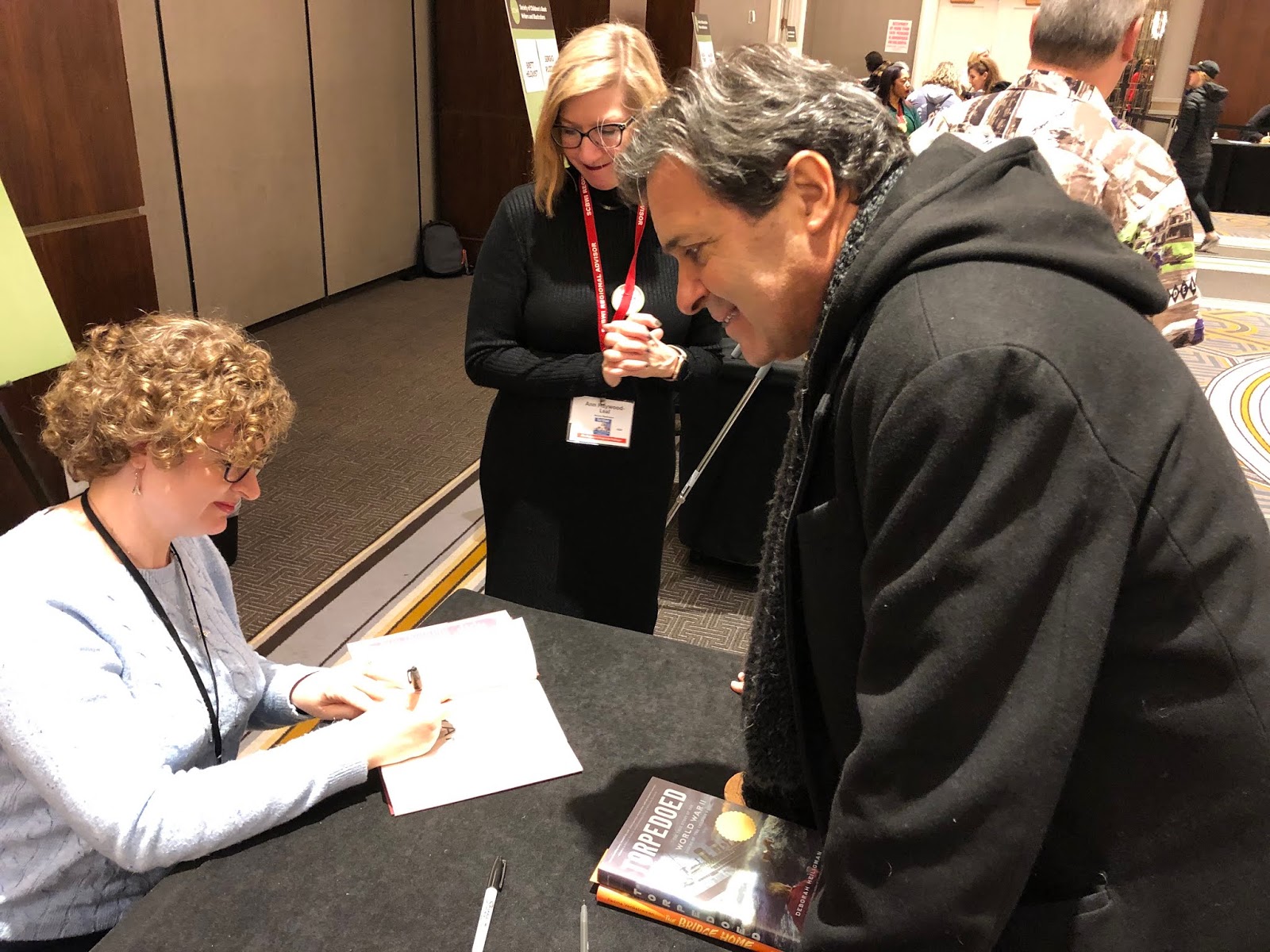
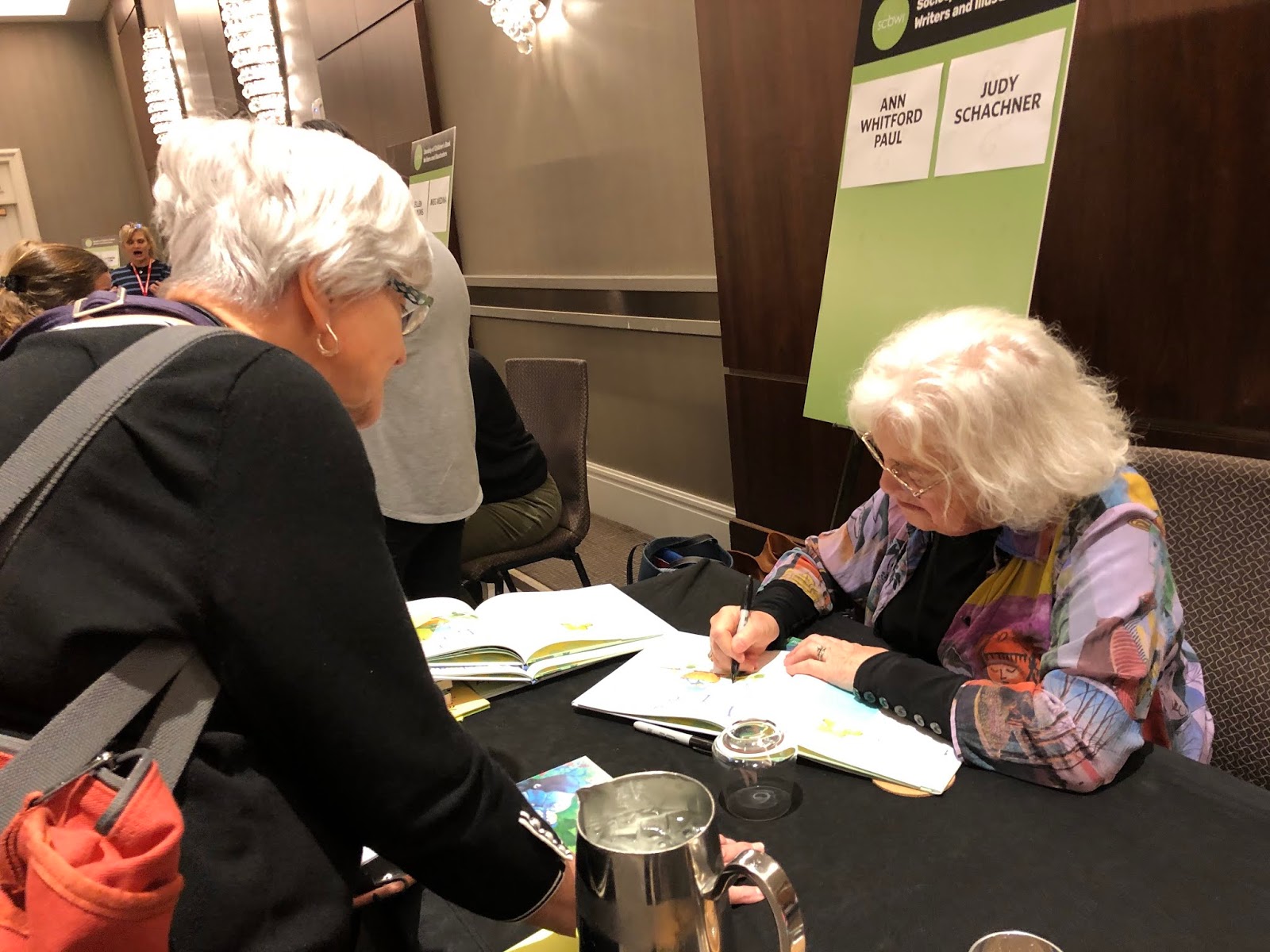
Scene from the Autograph Party #NY20SCBWI

Attendees had their books signed by Laurie Halse Anderson, Derrick Barnes, Tracy Barrett, Peter Brown, Priscilla Burris, Lesa Cline-Ransome, Bruce Coville, Pat Cummings, Vashti Harrison, Brett Helquist, Ellen Hopkins, Peter Lerangis, Meg Medina, Christopher Silas Neal, Lin Oliver, Ann Whitford Paul, Miranda Paul, Alexandra Penfold, Jerry Pinkney, Sergio Ruzzier, Judy Schachner, Heidi E.Y. Stemple, and Paul O. Zelinsky!


Derrick Barnes Keynote: The BLACKEST Book Ever

Award-winning author/illustrator and SCBWI success story, Vashti Harrison introduces award-winning author Derrick Barnes with these words:

His language wraps [his characters] up and hugs them . . .

And her astute observation of his work couldn’t be truer. Derrick is a writer who writes universal stories, but as the title of his keynote declares, he is also the writer of The BLACKEST Book Ever!


In opening, Derrick celebrates Black History Month by giving away four of his books to the first attendees who could recognize some Black greats in the children’s book writing world including Alice Walker, Walter Dean Myers, Virginia Hamilton, and Mildred Taylor. He also gives a special mention to fellow #NY20SCBWI keynote, Jerry Pinkney, the first African American Golden Kite Award winner in 1991 for his picture book Home Place (Aladdin) by Crescent Dragonwagon.

Derrick speaks of his love of family, his legacy, and the reason why he writes: Black children.

            “I think every child deserves to see themselves as the hero and the prettiest 
one in the story.”

Multi-awarding winning title


He talks about how 2018 changed his life with all the praise and accolades that came his way for his picture book Crown: Ode to the Fresh Cut (Denene Millner Books) illustrated by Gordon C. James. He also mentions how his road to this success was not always easy and how he spent 2011-2014 with his head down writing books none of the gatekeepers were interested in taking on. Books that spoke to his experience. The Black experience. Books he knew deserved a place on shelves. 

His dedication to his craft produced between 20 - 30 manuscripts during that time.

But clearly that dedication paid off! 


New titles on the horizon.

We are fortunate to have more of Derrick’s books coming soon, where characters and children are guaranteed to be wrapped in a hug.  


Derrick closed to a standing ovation.

Editor and Agent Panel: Kirby Kim, Alvina Ling, Marietta Zacker


With a panel of six industry leaders moderated by Lin Oliver, this post features highlights from literary agent Kirby Kim, editor Alvina Ling, and literary agent Marietta Zacker. 

left to right: Kirby Kim, Alvina Ling and Marietta Zacker


 Kirby Kim is an agent at the Janklow & Nesbit Literary Agency.

Alvina Ling is VP and editor-in-chief at Little, Brown Books for Young Readers (a division of Machete Book Group).

Marietta Zacker is an agent at Gallt Zacker Literary Agency.


Things opened up with the question what do you look for in a submission:


Kirby wants writers to focus on one book at a time and do it well.

"I want to see stakes. I like high stakes in my novels. Create an urgency so your character is backed into a corner." 

Alvina gravitates to fresh concepts and voice.

"I’m a sucker for books that make me laugh and cry and important books. I’m always   looking for that feeling, that spark. I want to fall in love."

Marietta is looking for people who create stories and illustrations no one else can create.

"Something unique." 


On themes that are important to them:

Kirby believes forecasting is a difficult thing to do. So when a story idea comes, writers “should focus more on what they want to say and build out a world that encounters that.” Marietta stressed the importance of understanding that writing to trends does not work and to instead start thinking ahead. "What do you want young readers and young adults to be reading four years from now?"


On final thoughts:

Alvina:

            "Follow your compass, and not your clock."

Kirby:

            "Get way below the surface of what you are doing."

Marietta:
            
            "Make room for folks whose voices have always been there but have not been given a chance."

Agent and Editor Panel: Patrice Caldwell, Susan Dobinick, Connie Hsu

With a panel of six industry leaders moderated by Lin Oliver, this post will feature highlights from literary agent Patrice Caldwell, editor Susan Dobinick, and editor Connie Hsu.

left to right: Patrice Caldwell, Susan Dobinick, and Connie Hsu

Patrice Caldwell is an agent at the Howard Morhaim Literary Agency.

Susan Dobinick is Senior Editor, Nonfiction at Bloomsbury Children’s Books.

Connie Hsu is an executive editor at Roaring Brook Press at Macmillan Publishing.


On what they're looking for in a submission:

Patrice: She's not looking for books that adults would tell a kid are "important."

"What is that story that would have hooked me? What is super engaging? What's going to make [young people] put down their phones and read a book?"

Susan:

"Deep thinkers"

Connie:

"Voice and the quality of the writing is the top line that drives you in." Then, on a deeper level, I wonder is the reason for the book to be.
On graphic novels:

Connie speaks about Shannon Hale's script for a graphic novel, and how it had emotional resonance.

Susan chimes in with the advice: "write the full script," which the whole panel agrees with.

Patrice shares that she's worked on a lot of graphic novels, and notes that for the ones acquired in 2018, will won't come out until 2021. Script has to be complete and edited, and then the art.

There's discussion on so much more, including the strength of nonfiction and the ongoing interest in middle grade.

Final nuggets of wisdom shared:
Connie:
The core story remains the same as our favorites from when we were kids, but thinking about what kids are absorbing right now. Toxic masculinity, sexism, body image, periods, Don't lose the timeless heart and emotion...
Patrice:
It's not about being preachy, it's about infusing contemporary issues.


Shout out (and a standing ovation) to the SCBWI Staff

Lin introduces the SCBWI staff


Read more about the wonderful SCBWI staff here!

The #NY20SCBWI Awards - Sunday Morning!

The room is awash with waves of applause for...


The winners of the SCBWI IPOC Women's Scholarship, Kesha Grant, Rae Rose, Natelle Quek


Junghwa Park accepts the Grand Prize for the Portfolio Award


Congratulations to all!