Saturday, January 29, 2011

LGBTQ Meet and Greet

Always a highlight of the conference, the LGBTQ Meet and Greet was fantastic. Aaron Hartzler set the scene with a great story that really pulled the group together and spotlighted how important it is to talk about LGBTQ issues, and keep talking about them.

Lee Wind did a fabulous job framing the questions and keeping the conversation interesting and enlightening. Joining Aaron and Lee were Ari Lewin, editor at Putnam/Penguin and agent Jim McCarthy of Dystel & Goderich.


While they were talking, Ari said that she would love to see a cute, fun story featuring a gay or lesbian lead. We were all surprised to hear from Jim that only about 2% of his submissions have gay or lesbian themes, but he would love to see more!


Lee opened it up for question from the over 50 attendees. Someone asked if they thought lesbian characters were underrepresented in YA, and Lee mentioned his blog and his thorough list of spotlighted books with gay and lesbian characters.


A great moment came near the end when Lee pointed out to the crowd that writing novels with LGBTQ themes and characters is a huge opportunity in publishing and should be seen as such.
When asked what they were looking for, both Ari and Jim want a book that stands out and is well-written. But Ari did hope to see more teen romance in LGBTQ books.

The event was casual and inclusive and the attendees were engaged in conversation about the current state of LGBTQ literature. Afterwards, many of us hung around to chat--keeping the good vibes going.


Great time! Can’t wait to do again this summer in LA!!

Autograph Party (A.K.A. the Epic Line)

R.L. Stine terrifies an attendee with his signature.

Look at all those people!

Lois Lowry is an autograph giver.

Jules Feiffer practicing his art.
Lois Lowry signs a book for Ann Haywood Leal.

Jane Yolen is writing two books AND signing a third with one hand.
One last signature! Good night!

Jules Feiffer Keynote Address


Jules Feiffer cutting a rug with a dance partner of his own design

Cartoonist, playwright, screenwriter and children’s book author/illustrator Jules Feiffer has had a remarkable creative career turning contemporary urban anxiety into witty and revealing commentary for over fifty years. He won a Pulitzer Prize and a George Polk Award for his cartoons; an Obie for his plays; an Academy Award for the animation of his cartoon satire, Munro; and Lifetime Achievement Awards from the Writers Guild of America and the National Cartoonist Society. Feiffer has taught at the Yale School of Drama, Northwestern University, Dartmouth, and presently at Stony Brook Southampton College. He recently collaborated with Norton Juster (THE PHANTOM TOLLBOOTH) on a new children's book, THE ODIOUS OGRE.

Jules recently turned 82. You can find (like) him on Facebook or his website.

Children's books is a field Jules never intended to enter. He talked about when Ursula Nordstrom introduced him to "a kid named Sendak." He looked at his work, and said, "Well, I think I'll be a political cartoonist. He met Norton Juster 50+ years ago after they both got out of the service. They became roommates and  PHANTOM TOLLBOOTH sort of happened. He didn't think of it as a career move. Every illustration in the book was drawn on tracing paper (as a moving saving tactic) and most of them no longer exist. "Norton neglected to tell me he was writing a classic."


Fifty years later, the worked together on THE ODIOUS OGRE. "Everyone who illustrated for children wants the chance to draw an ogre. I wanted to draw the biggest ogre in the history of children's books. I wanted the readers to feel the weight of him." He said he learned it's important to not just get a physical resemblance of a character, but a physical feel of him, his body language. "It's all about the movement on the page," he says. (Check out the ogre drawings in the book, and you'll see just what he means.)


He says he approaches illustration fully entertaining the prospect of failure and making it work for him. It's always about trying to go through the back door, and have the reader come up onto the stage. "I don't want my readers just to react to my work--I want to make them think; I want to make them feel."  


Jules wrote a memoir, BACKING INTO FORWARD (Doubleday), which relates how persistent failure inspired him to reinvent himself as an artist over and over. (Note to conference-goers--I'ts available in the conference bookstore.)


First Time SCBWI Conference Attendee Patricia McNeill

I met Patricia after the third breakout session on Saturday - just past the halfway point of the conference, and asked her about her experience so far:


Thanks, Patricia!

Namaste,
Lee

Interview with a Conference Veteran

Danielle Youngblood, a three-time conference attendee from Boston
For lots of people, this conference was the first national SCBWI shindig they attended. As transformative as a first conference can be, there's value to going back year after year, as writer Danielle Youngblood from Boston, Massachusetts can attest.

She's here for the third time, and each year she's learned something new that's advanced her career. The first two years, she participated in the writer's intensive, and had a picture book she'd written scrutinized by an editor and an agent (as well as the rest of the people at her roundtable).

Her takeaway? "It just wasn't my niche."

The second time around, she brought a YA sci-fi novel and during the manuscript critique, came to understand that the voice wasn't authentic, and that her readers weren't buying her character motivation. It was a tough realization, to be sure. But valuable--she kept her concept and geared it down to middle grade, the age of the students she happens to teach.

And now, she's confident she's found her format. She uses what she hears in the classroom to make her characters more realistic. And she's sharpened the pieces that will attract the attention of agents and editors.

"It’s more directed at the beginning," she says of her work-in-progress." The reader isn’t guessing who the character is and what the character was about."

With steady attendance at SCBWI conferences, Danielle says she's learned to approach publishing as a business, and not as an emotional experience. "I'm more strategic about getting feedback," she says.

And when she approaches an agent, she'll be ready. She knows the elements she needs to have to succeed.

"We writers have this romanticized idea that we're going to write a book and it's going to get published," she says. "There are so many intricacies of the writing process, of understanding the market, and how publishers work, and even getting acknowledged as a writer. It's a lot of work"--work she couldn't have done without the SCBWI.

Jeannette Larson, Editorial Director: Tips on Submitting To Any Editor

As part of Jeannette Larson, Editorial Director of Houghton Mifflin Harcourt's breakout session: "What Makes Your Work Publishable?" she had a great section on submissions.

Jeannette polled her editors and they came up with a list (not comprehensive) on submissions – what makes them stand up and cheer and what makes them, well, grumpy:


Makes Them Cheer
a professional cover letter that piques their interest and lets them get to what you’ve written.
a great story well told,
characters they love,
an authentic story crafted well


Makes Them Grumpy
long overblown cover letters that compare the work to “The Hunger Games” or “Harry Potter” or whatever else is HUGE at that moment.
submissions that aren't a good match to what they publish - do your homework!
a gimmick with a submission (free t-shirt or snack with your manuscript)

Good advice... now make them cheer!

Jeannette Larson, Editorial Director: What Makes Your Work Publishable

Jeannette Larson, VP & Editorial Director, Houghton Mifflin Harcourt

Jeannette is sharing about her newly merged company: they publish picture books (like “Stella Luna” and “How I Became A Pirate!” as well as middle grade and YA, and she says about their kind of book:


“We have a literary soul.”

She oversees the list and the acquisitions of the other editors, and also edits her own books – mainly pb and middle grade - but she does a little bit of everything. Looking at their list, she comments on there being quite a few funny books and says that “lightheartedness is a hallmark” of the titles they put out.

They’re also publishing older and edgier books for teens, fantasy and reality, and she feels they have a lot of range and diversity on their list.

She’s discussing the market for children’s books, explaining how it’s:

Volatile and changing
Dynamic and challenging
And full of opportunity for those who are willing to embrace it!

She's going into details about those challenges, and some of the surprising upsides of all the changes - including technology (like this blog) that lets people who love books connect and that lets readers find the books they're going to love - and lets authors and publishers get the word out about their books in new ways.

The world of Children's Literature seems to all be in transition, but Jeannette seems optimistic and driven to publish books that are going to really work well and succeed.

And here's my favorite part of her breakout session:

regardless of what’s going on in the market, it comes back to the story and the writing.
All the changes might mean that how the story gets out there looks different, but it all comes back to good stories told well.

And that's something we can all work towards!

Jen Besser: What Makes Your Work Publishable

Jen Besser is VP & Editorial Director at G.P. Putnam's Sons (Penguin).

The floor is open for Q & A during this session. I'll attempt to share some of the good nuggets Jen Besser gives.

-Putnum publishes picture books to young adult. A mix of literary and commercial work.

-Rhyming vs. non-rhyming: A great deal of manuscripts are submitted with bad verse, which is a pet peeve.

-What do you see too much of coming across your desk? Too much writing to the trend. It's been angels (following vampires). Now many twisted fairy tales. Chasing trends is a very dangerous thing.

-You can't underestimate the importance of humor in middle grade.

-Blogs are useful for the unpublished writers because agents are often looking at them.


-Putnam has a teen advisor panel. Nice! 

Denise Cronin: What Makes Your Work Publishable

There are two Denise Cronins in our industry, and so the first step in the right direction of your long walk toward publication is knowing which Denise you're sending your art samples to.

The one you want is right here:
Denise Cronin, Art Director and VP at Viking Children's Books
And honestly, she was so warm and friendly it made me wish I weren't just a very fast typist writer.

Actually, correction: She was warm and friendly to everyone except Cecilia Jung, her counterpart at Penguin, whom she tried to kick out of the room. But Cecilia hung around, and Denise didn't actually seem to mind, so what for a moment seemed like a death match between two famous art directors ended with a shrug.

Denise told us about Viking's deep history in publishing, where only six different people have run the company over a 78-year span. Their backlist is huge: including classic titles such as FERDINAND, CORDUROY, PIPPI LONGSTOCKING, and modern classics such as THE STINKY CHEESE MAN.

And here's what you need to show if you want your work to stand out:

Attitude. Does something have a kick to it? Let’s see a little attitude.

Drawing skills. Has the artist done his homework? Does he really understand what he's drawing?

How does somebody use color? Do they know how to use it to separate foreground from background? 

Can the artist show her the ability to expand a narrative, not just echo the text. (Can she a substory with illustrations?)

Perspective and scale: Are they always showing something head on in the same scale? You need to vary those things, but it needs to make sense in terms of the story.

Is rendered in an innovative way (making her want to take a second look at an ordinary thing)?

You want your work to get noticed, so don't send it in a plain envelope. Illustrate it, or send her a glassine one so she can have a hint of what's inside. At the least, write SCBWI on it.

Finally, here was her best line:


Audience member: My question is about money.

Denise: We work in publishing. There is no money. 

Dan Lazar: What Makes Your Book Publishable

Writers House agent Dan Lazar is tackling the topic of making publishable books. And he has handouts! Yay!


First up Dan is talking about the ins and outs of selling books. Including thoughts on foreign rights and book jackets--how a good agent can help you navigate the publishing world.

Dan is reading from query letters to give the audience an idea of what he's looking for, as well as some first pages of the novels he represents. He said crafting the best query letter and perfecting your approach is important to breaking into the business.

He does a fantastic job showing an agent really can help a writer shape the career that they want. Very in-depth and interesting!! Reading from Savvy is ALWAYS an excellent choice!
Dan points out some of the pieces that can really make a story stand out. Including tone and "magic"--that extra something in the writing.
After reading some pitch letters, Dan explains what about them works and what doesn't. It's a great exercise in voice.

R.L. Stine's Keynote!


R.L. Stine addressing over 1,100 writers and illustrators

Follow along on the scary and funny color commentary and our blog coverage of R.L. Stine's keynote address by following


on twitter!


We'll be posting the full transcript of the silliness later, but you can laugh and be chilled by the conversation between

with our special guest

...and some surprise virtual guests right now!

A Heartfelt Tribute to Nancy Lewis


We paused in our lunch to honor the memory of extraordinary SCBWI member and Regional Advisor Nancy Lewis.

Lisa Sandell: What Makes Your Work Publishable

Lisa Sandell is an executive editor at Scholastic Inc., where she focuses her attention on acquiring and editing middle grade and young adult hardcover novels for Scholastic Press, and she manages the Dear America series. 

With so much negative currently being said about the industry, Sandell sees a lot pointing to the light ahead.

*eReaders

*Accessibility is revolutionary. When someone mentions a book, instead of finding a scrap of paper and jotting it down (to be lost in the bottom of your purse), a person can pull out an electronic device (like the ipad) and instantly own the book.

*New concepts in publishing, like the 39 CLUES series.

*Readers can now connect with authors easily.

No new technology has every obliterated the need for storytelling. Quite the opposite.

What kind of books will succeed in this bright new future?

Some examples from Lisa list:


Ginger Clark: What Makes Your Work Publishable

Ginger Clark has been a literary agent with Curtis Brown since the fall of 2005. [Curtis Brown has been around since 1914, and has three agents that focus on children's books. Curtis Brown was founded by the legendary Marilyn Marlow.]
 
She has more than 30 clients. She's currently looking for MG sci-fi, fantasy and mystery, urban fantasy (no vampires), YA sci-fi, dystopia, space opera, YA cyperpunk and steampunk, YA contemporary and literary. She's taking on new clients and prefers email queries [address: gc(at)cbltd.com].
 
Publishers are finding MG tough right now, she says, because they haven't found a Facebook for MG readers. MG one of the areas of BFYR where you can have successful stand-alone books. You can continue to do that as an MG writer more so than in YA, she says.
 
Children's books are strong and aren't moving to e-books like the adult segment of publishing, and writers don't make as much off of e-books. Kids pass books around, treasure them as possessions. Teen are experiencing digital fatigue, and need books to decompress from technology.
 
YA in a nutshell over the past few years according to Ginger: Vampires led to faeries which led to werewolves which led to angels which led to dystopia. She predicts historical is next in line (the Tudors for teens).
 
Things that came up during Ginger's Q&A:
  • She doesn't send a book out these days unless it's had at least one revision.
  • Step one, right a great novel. Step two, learn to be a professional in this industry.
  • She gets 35-40 e-queires a day, and reads all of them.
  • Your novel draft should be complete and workshopped, revised, etc., before subbing and agent.
  • She would welcome a great MG stand-alone with a great voice.
  • 95% of her day is spent dealing with the business of her current clients. 
  • The publishing industry is going through a massive change because of the iPad.  
  • A good agent realizes her job is no longer just to sell the print rights to a publisher.

Alexandra Cooper, Senior Editor: What Makes Your Work Publishable

Alexandra Cooper speaking to the first of her three breakout sessions


Alexandra Cooper is a Senior Editor at Simon and Schuster Books for Young Reader, and was the editor of the #1 New York Times best seller "Barack Obama: Son of Promise, Child of Hope" by Nikki Grimes, illustrated by Bryan Collier, among many others. Her focus is picture books, middle grade fiction and young adult novels.

She's talking about how much of a commitment it is for an editor to acquire a manuscript - a relationship that's going to be long term, quipping "longer than some celebrity marriages." That gets a big laugh from the capacity crowd!

So what makes her take the plunge?

She's sharing about some of recent picture books she did buy and publish, explaining the reasons behind why she was convinced.

"Not All Princesses Dress In Pink" by Jane Yolen and her daughter, Heidi Stemple, and illustrated by Anne-Sophie Lanquetin.


Love the opening line:

'Not all princesses dress in pink,
some play in bright red socks that stink,"


"Chicks Run Wild" bu Sudipta Bardhan Quallen, illustrated by Ward Jenkins


This one is a SCBWI success story, as Alexandra met the author at a New Jersey SCBWI conference 5 years ago, knew she wanted to work with her, and the book just came out (Spring 2011)!


On Novels -

to really succeed, a manuscript needs to have both a high concept and be literary [really well written]

Now Alexandra is doing the same with novels, explaining what made her commit:

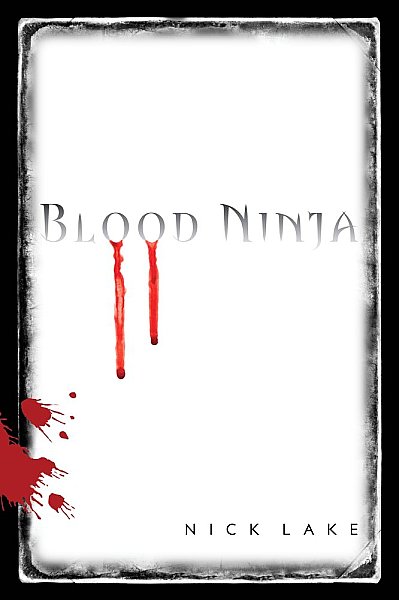
"Blood Ninja" by Nick Lake - Which took the high concept idea of "What if ninjas were really vampires?"


She signed it up as a single title, and once it did well, they signed up the sequels. ("Blood Ninja II: The Revenge of Lord Oda" is out, and another two are coming...)


"The Mother Daughter Book Club" by Heather V Frederick


another book that you know what it is from the title - four very different girls are lumped together in a book club by their mothers. (four books in the series are out, more coming...)


So now she's going to the heart of her talk: how do we use these criteria and look back at our own work... What are the things we can do to made Alexandra (or other editors) take the plunge on committing to our manuscripts?

Some of her tips:

Read what you want to write, so you know what's out there and how your work fits (and how your work is special)

Submit to agents and editors that make sense - if they don't do picture books, it won't help to send your rhyming picture book to them. You want to aim your pitches to find a good fit!

Homework:

Ask yourself: what is your hook? Your elevator pitch? What other books is your book like? What's your twist?

But remember, as Alexandra said of herself and every other editor:

"Everyone's looking for the next sparkling debut"


So much great information!

Jim McCarthy: What Makes Your Work Publishable

Agent Jim McCarthy is vice president at Dystel and Goderich Literary Management and he is also doing a fabulous session right now. For aspiring writers this is the place to be! Jim is talking about trends (and the trends that never were) and what he's looking to represent.

Jim is asking for horror--both YA and adult and hoping for a renaissance in the genre. While opening up the floor to Q&A, Jim was asked to distinguish between YA and adult.


"Voice and perspective distinguish YA from adult. And sometimes the material or tone can lift it to an adult level." Then he talked about The Lovely Bones and pointed out the ways it is more adult than YA.

The Q&A feels like an insider's guide to the industry. Jim talks about the inner working of his agency, some of his author's upcoming books, and how he targets editors. And beyond that, he's keeping the tone very fun! Good times.

Alessandra Balzer: What Makes Your Work Publishable

In real life, Alessandra Balzer isn't this blurry.
 She's the co-publisher of Balzer & Bray, an imprint of HarperCollins, and she told us 10 things she looks for when she's acquiring projects. We'll share five on the blog.

One of the first things, of course, is voice. Even with picture books, it's a critical way of understanding characters without lots of exposition. (Some favorites: Bob Shea's I'M A SHARK, Mo Willems' Pigeon books, and SKIPPYJON JONES.)

You also need a groundbreaking concept. What does the market need that it never knew it needed? She gave a couple of examples, including the picture book JUST BEING AUDREY. Something that isn't out there, or something that gives a fresh take on other stuff.

Thing three for Alessandra is world building. It doesn't have to be sci fi or dystopian--it could just be a really believable high school, created from the atmosphere to the dialogue and clothing. How is speech different? How are social moires different? If you don't figure all that stuff out, it won't work.

Read-aloud quality. This doesn't stop with picture books. She recommends reading your text out loud to yourself. "It really changes things when you hear your own voice doing it," she said. The book CAT SECRETS blends humor with sound effects--the reader is forced to interact.

Heart. This is the X-factor that crosses every genre. "It's the thing that makes you go awww. It's the emotional resonance. It's the thing that makes you want to root for a character."

Patricia Lee Gauch: Creating and Recreating the Picture Book

Patricia Lee Gauch is one amazing woman

Patti is not only a published author herself (Christina Katerina and the BoxThunder at Gettysburg, andThe Knitting of Elizabeth Amelia), she has edited some of the finest writers in the business: Brian Jacques, T.A. Barron, Andrew Clements, Jane Yolen, Janet Lisle, Katherine Erkskine, and Barbara Joosse.

She's worked with artists Eric Carle, David Small, Ed Young, Loren Long. Three books she  edited have won Caldecott Medals: Owl Moon,Lon Po Po, and So You Want to Be President. (Stolen from Martha Brockenbrough's blog interview with Patti.)
Patti spent many years as the Executive Editor at Philomel Books from where she recently retired.
Lin says of Patricia Lee Gauch, "Patti has become one of the guiding lights for picture books of our times."
And personally, Patti is one of the most generous editors I've ever come across. 

As an editor, to notice a manuscript, it can not be merely adequate.

A picture book writer a storyteller. 
"I believe the stuff of story is right in you. It's in your gut. It's stored stuff."
"The child in you is crucial in writing a picture book."
"Don't live only in your head if you are going to write a picture book."
Mischief leads to attitude which leads to voice. 
“Let go to story!”


Mark Teague: Creating and Recreating the Picture Book Panel

Conference goers were told that panelist David Small could not be here this morning due to a death in the family. Our condolences to David and his family.

Mark Teague is here in David's stead. You may know him from his great picture books like DEAR MRS. LARUE, and the HOW DO DINOSAURS series (written by a little-known author named Joan Yelon.)

Mark spoke after Jane. He agreed that her advice applies to illustrators, too, illustrators are in service to the same thing, it's just a different means of telling stories.  

Mark says the first task of an illustrator: Be a good reader.

You want to get the story viscerally, understand the mood and rhythm and put that in your art.

Mark's technical advice to illustrators: 
Learn by trial and error, that's how you find your voice.

It may be a worthy project to study or even imitate other artists, to learn the craft that way, but eventually you need to find your own voice. You find your own voice through just doing the work.

There are no rules for illustrators, but one, says Mark:


Whatever you do as an illustrator, you are always in service to the story. 
 
Will something that looks great in your studio look great in the story? Will it serve the child reader? It's not a podium for your art, it's a book for a kid.
 

More importantly than learning to read from picture books is learning why it is important to read. That's all happening in picture books and affects the rest of a person's life, not to put any pressure on you authors and illustrators out there!

Mark's final comment:You are involved in something important and need to bring your best work.

Jane Yolen: Creating and Recreating the Picture Book

Jane Yolen
Jane Yolen is the author of approximately 16 million books. Oh, but I kid. She won't have written that many until next year.

For now, her fans must satisfy themselves with her  three-hundred some titles, which include the Caldecott-winning OWL MOON and the wildly popular DINOSAUR series, illustrated by Mark Teague, sitting next to Jane on stage.

Jane's fans here are many--when Lin called her name, there was much whooping and clapping.


Her advice to picture book writers:

Know that it takes a long time. Picture book people need to be dedicated. There is a particular kind of writing, illustrating and editing that is very demanding. There is also a great deal that you need to know.

There are 10 key words we need to know: Lyricism, compression, child-centeredness, focus, hook, words, illustratability, motion, emotion, and resolution. I'll explain the thoughts behind the first three (keeping the rest for conference-attendees to savor).

On lyricism: She's a fan of Maurice Sendak's line, "Let the wild rumpus begin." It's more lyrical than "Let the wild rumpus start," because that T in start is a final sound, which stops the action.

On compression: In the last five words of WHERE THE WILD THINGS ARE, Sendak communicates a mother's love, the passage of time according to a child's perspective, and an entire emotional journey.

On child-centeredness: This doesn't mean you need to have a child in the book. Lots of great picture books don't have kids in them. Child-centeredness means the emotional key is something that resonates for kids. (Family, friendship, and frustration are her "three Fs".)

Jane Yolen shares secrets of writing great picture books.

Conference Interview with Little, Brown AD Patti Ann Harris

Illustrators attending the conference today can spend each of their three breakout sessions with a real live art director. Let me know if you want me to pinch you all, because this is definitely a dream come true.

There're two pre-conference interviews for Lucy Ruth Cummins and Denise Cronin already, and here we have one for Patti Ann Harris! Give Patti Ann the thumb's up or a high five if you see her—she art directed recent Caldecott Honor winner DAVE, THE POTTER.

Also art directed by Patti Ann
Jaime: What's your average day like?

Patti Ann: I have to say that there really isn't an average day at the office. Each day is a mix of meetings with editors, phone calls with illustrators, updates with designers, it's a pretty full day. My challenge is always to carve out some quiet time to design and work on my books. There are a few titles each season that I work on from start to finish. Oftentimes, I get a book up and running, sometimes working through the sketch phase or finalizing the details on a new format. Book publishing is a collaborative art and that collaboration has always inspired me. I'm lucky to work with an amazingly talented and dedicated group of designers and editors, so the work day is anything but average.

Jaime: Are you currently acquiring illustrators?

Patti Ann: I can't say that there is a specific style of illustration that I'm interested in. I think I'm more drawn to a strong character or a unique point of view. That's what I respond to most in illustration. I also love to see different media explored like letterpress printing, collage or any blending of traditional medium with digital to invent something new and exciting.

Jaime: Would you like to give us a hint of what your conference session topic will be?

Patti Ann: I'll be giving an overview of the novelty and picture books that we publish at Little, Brown. Our list has a great variety of books that range from cloth and board books for babies, pop-ups, and other fun novelties to more traditional picture books. I'd like to share some themes and subjects that I think resonate. My goal is to help open up illustrators to the many possibilities in book publishing.


Jaime: What's your favorite children's book cover of 2010 (not done by your publishing house)?

Patti Ann: The Quiet Book by Deborah Underwood illustrated by Renata Liwska


Jaime: I love THE QUIET BOOK! Kill, kiss, or marry: Helvetica, Baskerville, or Comic Sans?
Patti Ann:  Comic Sans, not a laughing matter, kill it. Helvetica, loved the film, kiss it. Baskerville, easy on the eyes, marry it.

Jaime: Favorite Pantone color?
         
Patti Ann: Pantone 2935, a peaceful and meditative blue.


Jaime: What is your favorite thing to do in late January in New York?

Also art directed by Patti Ann
Patti Ann: I love to browse in bookstores and New York City has some of the best. I recommend The Strand, Books of Wonder and The Bank Street Bookstore. There's also a great 2 for 1 promotion going on for off-broadway theater tickets. Go to nycgo.com for more info and other fun events in the city.

Jaime: Holy cow, I think Patti Ann might be moonlighting as PR for the city. These are great suggestions! Any not-to-be missed galleries for visiting illustrators?

Patti Ann: Go visit the Society of Illustrators at 128 East 63rd St. There will be a great exhibit of editorial and book illustration beginning Jan. 26th.

Jaime: Thanks so much, Patti Ann! Illustrators, you know you want to see all these great art directors talk today. SCBWI Team Blog promises to fill you in on all the sessions you're missing.